
 Worksheets
Body Mechanics Mastery Quiz
Total questions: 20
Worksheet time: 11mins
Which of the following is a key component of proper lifting techniques?
Bending at the waist
Keeping the load close to the body
Twisting the spine while lifting
Lifting with straight legs
When maintaining proper posture while sitting, which of the following is most important?
Crossing your legs
Keeping your feet flat on the floor
Leaning forward
Slouching in the chair
Which strategy is effective for preventing back injuries during lifting?
Lifting quickly to minimize strain
Using your back muscles to lift
Using your leg muscles to lift
Holding your breath while lifting
What is the recommended way to align your body when standing for long periods?
Shift your weight to one leg
Keep your knees locked
Stand with feet shoulder-width apart
Lean on one hip
Which of the following is a safe patient handling technique?
Pulling the patient towards you
Using a mechanical lift
Lifting the patient by yourself
Twisting your body while lifting
What is the best way to prevent repetitive strain injuries?
Repeating the same motion continuously
Taking regular breaks
Ignoring discomfort
Using only one hand
Which of the following describes proper alignment when lifting an object?
Keeping your back straight and bending at the knees
Bending at the waist and keeping your legs straight
Twisting your torso while lifting
Holding the object away from your body
What is a common mistake that can lead to injury when lifting heavy objects?
Using a wide stance
Lifting with your legs
Twisting your body while lifting
Keeping the load close to your body
Which of the following is a benefit of maintaining proper posture?
Increased risk of injury
Improved circulation
Increased fatigue
Decreased concentration
What is the primary goal of safe patient handling?
To move patients as quickly as possible
To ensure the safety of both the patient and the caregiver
To minimize the use of equipment
To rely solely on the caregiver's strength
Which of the following is a recommended practice for preventing musculoskeletal injuries?
Ignoring pain and discomfort
Using ergonomic equipment
Maintaining a static posture
Overexerting yourself
What is the correct way to lift a heavy box from the floor?
Bend at the waist and lift with your back
Squat down and lift with your legs
Keep your legs straight and lift with your arms
Twist your body while lifting
Which of the following is a sign of poor posture?
Shoulders aligned with ears
Head tilted forward
Spine in a neutral position
Feet flat on the ground
What is an effective way to reduce the risk of injury when handling patients?
Lifting patients without assistance
Using assistive devices
Ignoring patient weight
Relying solely on physical strength
Which of the following is a component of good body mechanics?
Keeping your back curved
Maintaining a wide base of support
Twisting your spine while lifting
Holding objects far from your body
What is a common cause of back injuries in the workplace?
Proper lifting techniques
Ergonomic workstations
Poor body mechanics
Regular exercise
What is the best way to maintain proper posture while using a computer?
Slouching in your chair
Keeping your screen at eye level
Leaning forward towards the screen
Crossing your legs
Which of the following is a recommended practice for reducing the risk of back pain?
Sitting for long periods without breaks
Engaging in regular physical activity
Sleeping on a very soft mattress
Carrying heavy bags on one shoulder
What is a common ergonomic adjustment to prevent neck strain?
Positioning the monitor below eye level
Using a chair without back support
Keeping the keyboard at a comfortable height
Placing the mouse far from the keyboard
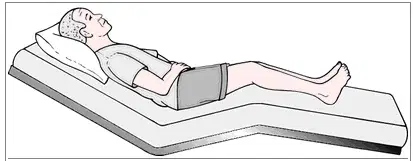
Name this position.
(a)

