
 Worksheets
8 Maths 1st Terminal Assessment
Total questions: 89
Worksheet time: 3hrs 58mins
Solve using the product law of exponents
(55)(53)
258
515
2515
58
Solve using the product law of exponents.
(1012)(104)
1016
1048
10016
10048
Simplify.
(x4) (x)
2x4
x
x5
x4
Evaluate and leave answer as an exponent.
48(48)(4-5)
6411
411
6421
4-21
Use the product law to solve.
(7-17)(7-24)
7 -7
49697
7 -41
49 -41
Simplify
w5(wx)w7
w35x
w13
w12x
w12 + x
Solve.
(y6)(y-11)
y-66
y-5
y5
y17
Solve using the product law of exponents and simplify your answer.
(m)(m6)(m-2)
m-12
m5
m4
m9
Solve and leave answer as exponent.
9-13(93)9-1(913)
92
9-2
9-30
6561507
Solve and leave answer as exponent.
(8n)(82)
642n
8(2 + n)
83
82n
c4⋅c3=
When dividing powers with the same base, you _______________ the exponents.
Add
Subtract
Multiply
Divide
x6 / x2
x4
x12
x3
x8
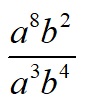


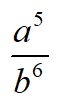
x-3
-x3
1 / x3
1 / x-3
-x-3
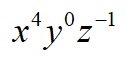
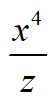

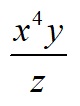

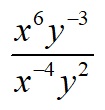
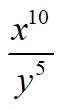
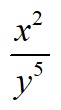


xy-7
Write with positive exponents:
1/a-2
a-2
a2
1/a1
Simplify
(2a2b4z)(6a3b2z5)
8a5b6z6
12a6b8z5
12a5b6z6
8a6b8z5

Simplify
x4/3
3x10
36x10
3x4

2⁵
9²
In this expression
52
The base is ...
2
5
In this expression
75
The exponent is ...
7
5
In this expression
104
10 is the ...
base
exponent
In this expression
34
4 is the ...
base
exponent
In this expression
34
3 is the ...
base
exponent
52=
2 answers
10
25
5 x 2
5 x 5
w-13
42 = 16
23 = 8

What is a rational number?
A rational number is always an integer.
A rational number is a number with an infinite decimal representation.
A rational number is a number that cannot be expressed as a fraction.
A rational number is a number that can be expressed as a fraction a/b, where a and b are integers and b is not zero.
Provide two examples of rational numbers.
2, 3
5/2, 7/3
1/2, -3/4
-1, 0
What is the definition of an irrational number?
An irrational number is a whole number that can be divided evenly.
An irrational number is a number that can be expressed as a repeating decimal.
An irrational number is a real number that cannot be expressed as a fraction of two integers.
An irrational number is a complex number with a real part and an imaginary part.
Give an example of an irrational number.
√2
0
-1
3.14
How can you identify a rational number?
A rational number is always a whole number.
A rational number is a number that can be expressed as a fraction of two integers.
A rational number is a number that cannot be expressed as a fraction.
A rational number cannot be negative.
Is the number 1.5 a rational number?
No, 1.5 cannot be expressed as a fraction.
Np, 1.5 is a whole number.
Yes, 1.5 is a rational number.
No, 1.5 is an irrational number.
What is the decimal representation of the rational number 1/4?
0.25
0.5
1.25
0.75
Can a negative number be a rational number?
Yes, but -2 is not a rational number.
Yes, a negative number can be a rational number. -1 is a rational number.
Negative numbers are always irrational.
No, negative numbers cannot be rational numbers.
Explain why the square root of 2 is considered irrational.
The square root of 2 is considered irrational because it cannot be expressed as a fraction of two integers.
The square root of 2 is equal to 2.
The square root of 2 is a whole number.
The square root of 2 can be written as 1.5.
Is 0.333... a rational number?
Yes, 0.333... is a rational number.
Yes, 0.333... is an integer.
No, 0.333... cannot be expressed as a fraction.
No, 0.333... is an irrational number.
An number that can be written in the form n/d, where n and d are integers and d ≠ 0, is called a ____ number.
The product of a rational number and its multiplicative inverse is ____.
Between 27−15 and 27−20 , the greater number is _____
A rational number in simplest form and equivalent to 4520 is _____
There are ____ rational numbers between any two rational numbers.
The multiplicative inverse of -1 is ___
The operation of ____ is commutative over rational numbers.
If ba+dc = 0, then dc is the _____ inverse of ba .
There are ___ rational numbers between 0 and 1000.
999
State the property shown by the numerical statement.
−115×−97=−97×−115
State the property shown by the numerical statement.
[32+87]+[−21]=32+[87+[−21]]
State the property shown by the numerical statement.
−196+0=0+[−196]=−196
If the rational number ba is positive,
then ab ____ 0
If the fractions −52,−257,101,−419,−5129 are arranged in ascending order of their values, then which one will be the first?
Match the following numbers with types of numbers.
Natural Numbers (N)
1, 2, 3, ...
Whole Numbers (W)
0, 1, 2, 3, ...
Integers (Z)
... , -3, -3, -1, 0, 1, 2, 3, ...
Rational Numbers (Q)
-8, -2 , 0, 2.48, 5
Real Numbers (R)
3, 0, 1.5, √5
Match the following
3−64
-4
(-6)2
36
− 64
-8
(-3)3
-27
-62
-36
Which statement is NOT true?
√169 = 13
152 = 225
42 = 16
√164 = 18
104 is between the two whole numbers (a)
x2 = 64
x = 8
x = 32
x = -8, 8
x = -32, 32
-32 + 22
13
-5
10
-2
When would it be appropriate to use the ± symbol? Choose TWO correct answers.
x2=16
16
42=x
(−4)2=x
64
9
27
-8
81
15
76
What is the cube root of 1000?
(a)
The cube of an odd number is always an (a) number.
(a) The multiplicative inverse of - 1 is 1.
True
False
(b) The operation of subtraction is commutative over rational numbers.
True
False
(c) -2/5 lies between -1 and 1/5.
True
False
(d) If c/d is the additive inverse of a/b then -a/b +c/d = 0.
True
False
(e) There are 999 rational numbers between 0 and 1,000.
True
False

