
 Worksheets
Benchmark Practice
Total questions: 25
Worksheet time: 34mins
____________ provides the energy needed for photosynthesis.
Water
Plants
Atoms
Sunlight
Plants release ___________ into the air during photosynthesis.
sodium
glucose
oxygen
carbon dioxide
What chemical equation below BEST represents photosynthesis?
Light = Oxygen + Glucose
Glucose + Carbon Dioxide + Water = Oxygen + Light
Light + Carbon Dioxide + Water = Oxygen + Glucose
Light + Air + Water = Oxygen + Splenda
What type of energy does a plant convert "solar energy" to?
Heat energy
Chemical energy
Solar energy
Mechanical energy
What do plants produce after photosynthesis has occurred?
Water and Carbon Dioxide
Glucose and Carbon Dioxide
Glucose and Oxygen
Sunlight and Xylem
The original source of energy for a food web is...
plants
sun
producers
decomposers
Decomposers get energy from...
the sun
eating plants
eating animals
dead things and waste

Arrows in a food web represent...
eating
sunlight
energy
matter
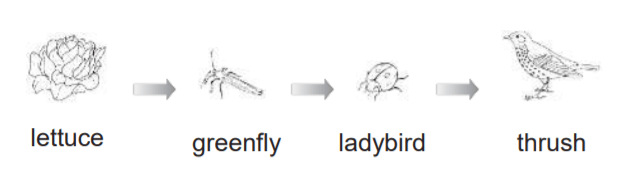
Who is the producer?
lettuce
greenfly
ladybird
thrush


Which of these is a possible food chain for this environment?
Sun → grass → fly → frog
frog → fly → grass → Sun
Sun ← grass ← fly ← frog
Sun → fly → frog → snake
Which kind of ecosystem is a combination of salt water and freshwater?
an estuary
an ocean
a lake
a pond
A food chain is shown.
plant -> grasshopper -> bird -> snake -> owl
What will most likely occur if there is a decrease in the bird population?
The owl population will increase.
The snake population will increase
The plant population will decrease.
The grasshopper population will decrease.

Which two ecosystems are terrestrial?
ponds and lakes
forests and estuaries
oceans and grasslands
forests and grasslands
Which ecosystem can you most likely find permafrost (frozen ground year round)?
Deciduous Forest
Rain Forest
Desert
Tundra
Which two ecosystems are aquatic?
grassland and marsh
swamp and forest
desert and grassland
estuary and marsh
Which is a terrestrial ecosystem?
swamp
marsh
grassland
estuary
What is one way humans can reduce the amount of pollution in the air?
Drive as much as possible
carpool to work
not ride the city bus
drive cars that give off harmful gases

What is vegetation?
All the plants found in a particular area.
Something valuable that we can use.
A small body of freshwater that flows into a river
How does turning off the water while you brush your teeth help Earth?
It reuses water.
It conserves water.
It recycles water.
It keeps the noise from being annoying.
How can human activity impact an ecosystem?
destroying and changing ecosystems
building houses
building roads
all the above
Explain what people can do to reduce their damaging effects on Earth. Tell what you know about what is being done to protect Earth's resources and environments.
reduce
reuse
recycle
all the above
converting energy from the Sun into electrical power
geothermal
renewable resources
solar power
fossil fuels

