
 Worksheets
Topic 1 Matter and Chemical Reactions Review
Total questions: 50
Worksheet time: 17mins
How many elements are in this chemical formula?
NaOH
1
2
3
4
How many atoms of Carbon are in this formula? C6 H12O6
6
1
12
What is the total number of atoms in this chemical formula? C8H3NaBr12
18
12
25
24
Is this an element or a compound? CaSO4
Element
Compound
This number tells how many molecules are in a chemical equation.
How many H2O molecules are present?

How many Oxygen (O) atoms are in 4Mg(OH)2?
4
6
8
12
How many Oxygen (O) atoms are in 6C6H12O6?
6
12
72
36
How many Magnesium (Mg) atoms are in 4Mg(OH)2?
4
6
8
12

In this image, the symbol to the right of the arrow (in black) are called _______.
Products
Reactants
Subscripts
Coefficients
What are the products?
NH3 -------> N2 + H2
N2 + H2
N2
H2
NH3


What are the blue numbers called?
oxidation numbers
subscripts
group numbers
product numbers

How many molecules of KNO3 are shown?
1
2
3
4

Identify the Reactants in this equation.
A
B

What is this?
Atoms of an element
Mixture
Compound
Molecules
What is this?
Element
Mixture
Compound
Molecules

What is this?
Mixture
Compounds
Element
Mixture
What is this?
Mixture
Compounds
Molecule
Mixture

What are these?
Molecules of compounds
Elements
An atom
Mixture
What are these?
Compound
Elements
An atom
Mixture

This is a
Pure Substance
Molecule
Compound
Mixture

This is
an atom.
a molecule of a compound.
an element.
a mixture.
Identify which images are HETEROGENEOUS MIXTURES! (Check all that apply)


Solutions are ___________ mixtures.
Solid
Homogenous
Heterogeneous
Gas


What type of mixture does this diagram represent?
Homogeneous
Heterogeneous
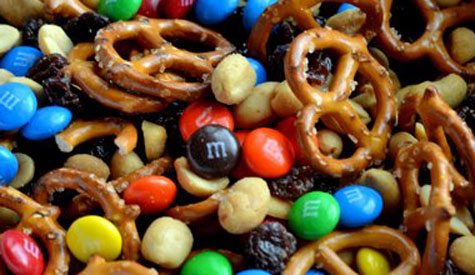
A mixture that contains two or more substances uniformly combined
heterogeneous mixture
homogeneous mixture
suspension
colloid

This picture is a model of a...
element
compound
homogeneous mixture
heterogeneous mixture


This diagram represents...
An element
A molecule
A compound
A mixture of elements and compounds
Surface tension is the property of water in which...
water molecules at the surface tend to stick together.
water spills easily.
water tends to be see-through.
Describe COHESION.
Water molecules attracted to other substances.
Water molecules climbing upwards against the force of gravity.
Water molecules dissolving many substances because of its polarity.
Water molecules attracted to other water molecules.

Water's ability to stick to glass is
adhesion
cohesion
surface tention
capillary action

Refer to the picture; this is occurring because of:
Cohesion
Adhesion
Capillary action
Surface tension
What term describes the attraction between molecules of different substances?
Cohesion
Adhesion
Surface tension
Capillary action
Explain how surface tension makes it possible for small insects, such as water striders, to walk on water.
Surface tension creates a solid surface
Surface tension reduces the weight of the insect
Surface tension allows the insect to float
Surface tension creates a film on the water surface
Which of the following is responsible for water molecules sticking together to form droplets?
A. Cohesion
B. Adhesion
C. Surface Tension
D. Magnetism


Weak acids found in living things are called:
organic acid
mineral acid
concentrated acid
carbonic acid

