
 Worksheets
Sun-Moon-Earth Test Review
Total questions: 35
Worksheet time: 18mins
Name
Class
Date
1.
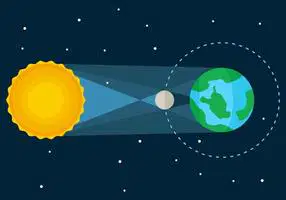
Name the eclipse
a)
Solar Eclipse
b)
Lunar Eclipse
2.
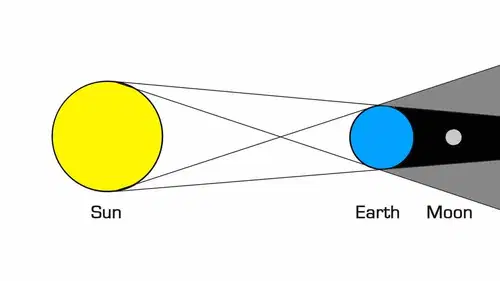
Name the eclipse
a)
Solar Eclipse
b)
Lunar Eclipse
3.
Which is true about a solar eclipse.
a)
It occurs during a full moon.
b)
It occurs during a new moon.
4.
Which is true about a solar eclipse.
a)
It occurs when the Sun’s surface is completely blocked by the Moon.
b)
It occurs when the Moon’s surface is completely blocked by Earth.
5.
Which is true about a lunar eclipse.
a)
It occurs during a full moon.
b)
It occurs during a new moon.
6.
Which is true about a lunar eclipse.
a)
It occurs when the Moon’s surface is completely blocked by Earth.
b)
It occurs when the Sun’s surface is completely blocked by the Moon.
7.
A ___________ eclipse occurs when the Moon passes into the darkest part of Earth’s shadow.
a)
partial lunar
b)
total lunar
c)
moon phase
d)
solar
8.
Where does the moon need to be located for a total lunar eclipse?
a)
in the sun
b)
in the penumbra
c)
in the umbra
d)
out of the shadows
9.

In the diagram letter B shows a __________eclipse. It occurs within the ____________.
a)
total, umbra
b)
total, penumbra
c)
partial, umbra
d)
partial, penumbra
10.
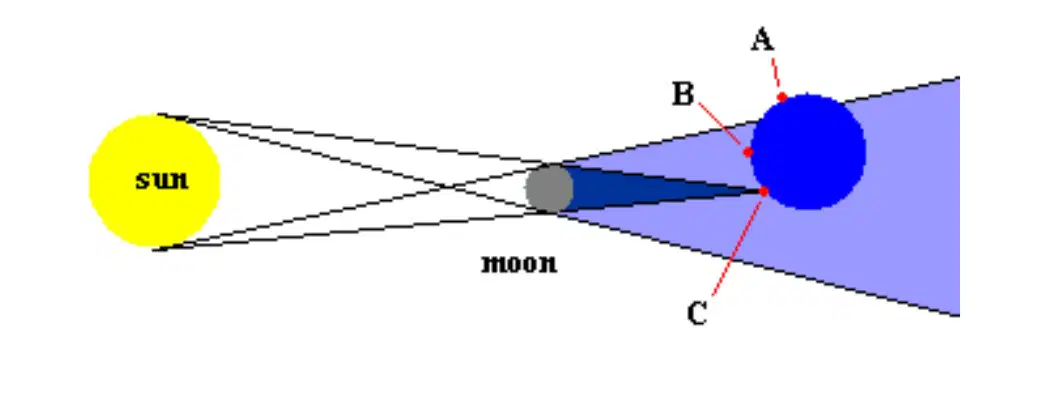
Which letter on the diagram represents no eclipse.
a)
A
b)
B
c)
C
11.
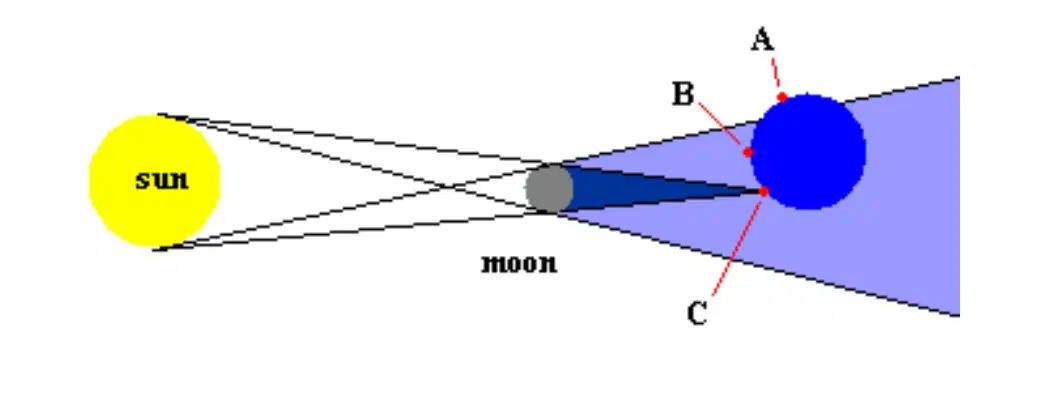
In the diagram letter C shows a __________eclipse. It occurs within the ____________.
a)
total, umbra
b)
total, penumbra
c)
partial, umbra
d)
partial, penumbra
12.
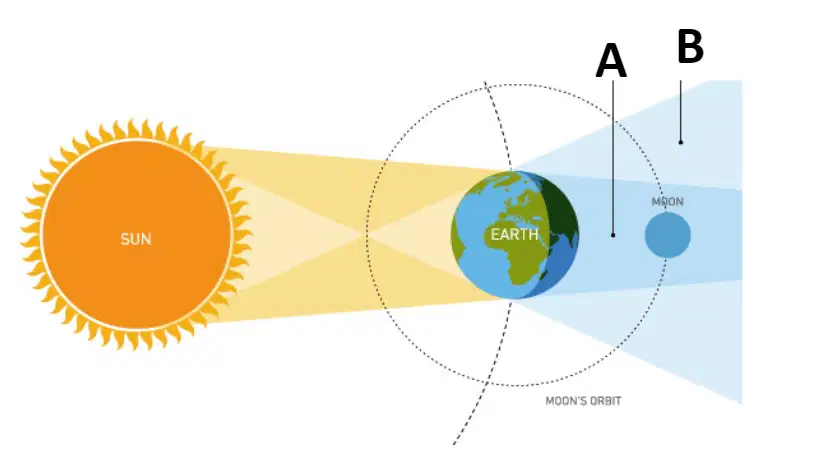
Letter A in the diagram below represents the total shadow of the eclipse. What is the name of the shadow?
a)
penumbra
b)
umbra
c)
solar
d)
really dark shadow
13.
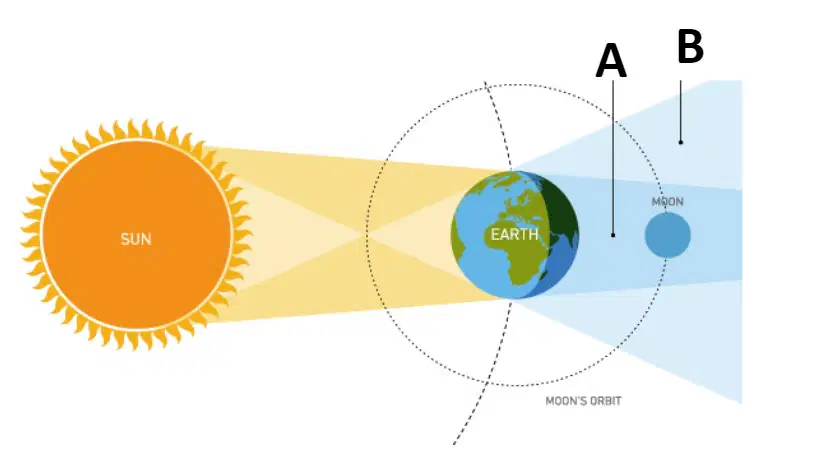
Letter B in the diagram below represents the partial shadow of the eclipse. What is the name of the shadow?
a)
penumbra
b)
umbra
c)
solar
d)
really dark shadow
14.
Explain why we never see an eclipse during a quarter moon. Use scientific reasoning to support your answer.
a)
In order for an eclipse to occur, the Earth and the Moon must be both in the sun's direct light. During a quarter moon, the Moon is at a 180-degree angle.
b)
In order for an eclipse to occur, the Sun, Earth and the Moon must be lined up. During a quarter moon, the Moon is at a 180-degree angle.
c)
In order for an eclipse to occur, the Sun, Earth and the Moon must be lined up. During a quarter moon, the Moon is at a 90-degree angle.
15.

What is label A
a)
Full Moon
b)
New Moon
16.
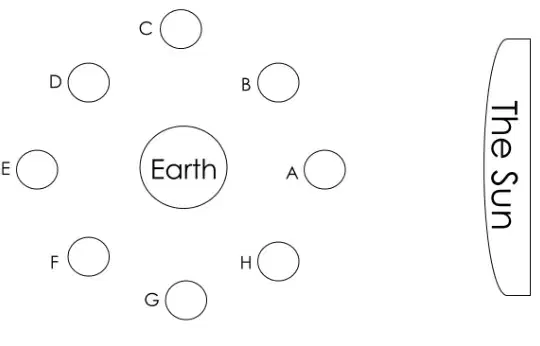
What is label C
a)
Third Quarter
b)
First Quarter
17.
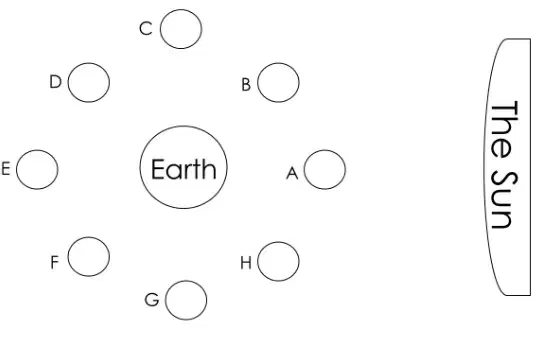
What is label E
a)
Full Moon
b)
New Moon
18.
Describes when the illuminated side of the Moon is increasing
a)
waxing
b)
waning
19.
lunar phase when the illuminated part of the Moon faces completely away from Earth
a)
Full Moon
b)
New Moon
20.
one lunar cycle
a)
One Week
b)
a revolution
21.
describes when the illuminated side of the Moon is decreasing
a)
Waxing
b)
Waning
22.
lunar phase when half of the illuminated side of the Moon faces Earth
a)
Quarter Moon
b)
New Moon
23.
What is the length of one revolution of the Moon around Earth?
a)
365.25 days
b)
29.5 days
24.
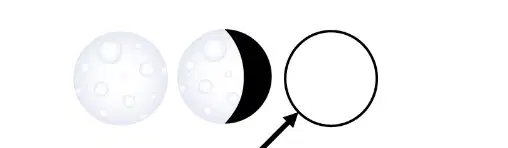
What is the name of the missing moon phase?
a)
1st Quarter Moon
b)
3rd Quarter Moon
25.

Which label corresponds with winter in the northern hemisphere?
a)
A
b)
B
c)
C
d)
D
26.
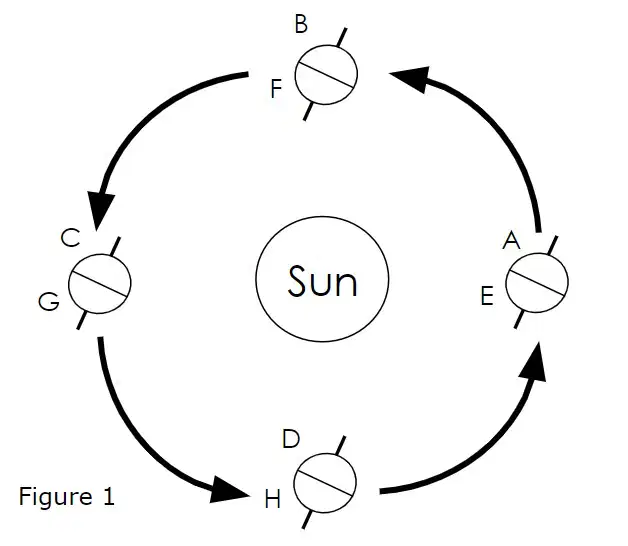
Which label corresponds with summer in the northern hemisphere?
a)
A
b)
B
c)
C
d)
D
27.
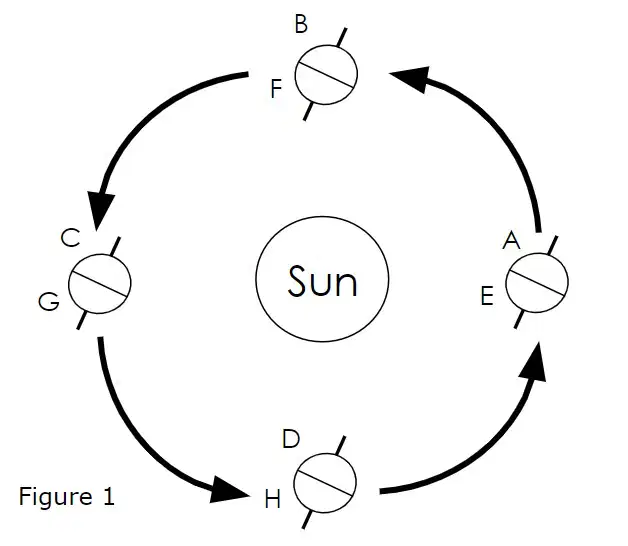
Which label corresponds with fall in the southern hemisphere?
a)
E
b)
F
c)
G
d)
H
28.
Which best describes spring in the Northern Hemisphere?
a)
Northern Hemisphere is tilted away from the Sun
b)
Northern Hemisphere receives the most direct sunlight
c)
equal length day and night at the equator
d)
South Pole receives constant sunlight
29.
Which is true of the Southern Hemisphere?
a)
experiences opposite seasons as the Northern Hemisphere
b)
experiences seasons at the same time as the Northern Hemisphere
c)
receives most direct sunlight in May
d)
receives most direct sunlight in August
30.
When would the autumn equinox happen in the Northern Hemisphere?
a)
March 21
b)
September 21
c)
December 21
d)
June 21
31.

Two students are trying to understand this diagram.
Here is what they think:
Andrew: It is summer in the Southern Hemisphere because it receives more direct sunlight.
Jacob: It is fall in the Southern Hemisphere because the equator points away from the Sun.
Which student is correct?
a)
Andrew
b)
Jacob
c)
Both
d)
Neither
32.
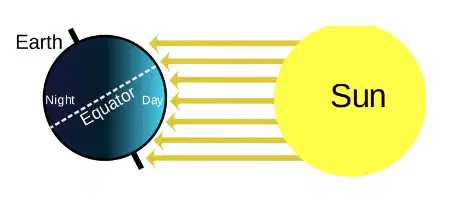
Two students are trying to understand this diagram.
Here is what they think:
Andrew: It is summer in the Southern Hemisphere because it receives more direct sunlight.
Jacob: It is fall in the Southern Hemisphere because the equator points away from the Sun.
Which evidence best supports your answer?
a)
The hemisphere that is tilted towards the Sun experiences summer.
b)
The equator receives more direct sunlight than the poles.
c)
The hemisphere that is tilted away from the Sun experiences summer.
d)
Summer happens when the day and night are equal in length.
33.
Earth is tilted at an angle of 23.5°. How would we experience seasons differently if Earth did not have this tilt?
a)
Parts closest to the Equator would experience winter-like conditions all year.
b)
Nothing would change with the seasons because Earth still rotates.
c)
Parts closest to the Equator would experience summer-like conditions all year.
d)
The north pole would be in summer for half of the year.
34.
The amount of daylight is one of the factors that causes leaves to change color in the fall. In the month of October, trees in states that are farther north change colors before southern states. Explain why this happens.
a)
States in the north receive less direct sunlight than southern states because the pole is pointed away from the Sun.
b)
As fall transitions to winter, the states farther north will experience shorter nights sooner.
c)
States in the north receive more direct sunlight than southern states because the pole is pointed away from the Sun.
35.
There are two days when there are equal length day and night at the equator. Which days are they? What causes this to happen?
a)
summer and winter equinoxes
b)
summer and winter solstice
c)
spring and fall equinoxes
d)
spring and fall solstice
100 %

