
 Worksheets
Q1 QSE Review
Total questions: 51
Worksheet time: 46mins
All ____________ are made up of two or more atoms bonded together.
A recipe for a chemical substance is called a ________ _________.
This number tells the number of atoms present.


Carbon dioxide (CO2) contains how many atoms of oxygen?


Classify the picture with the correct label.
Element
Compound
Mixture of Elements

A substance with two or more different types of atoms bonded together is called...
An element
An atom
A compound

This picture represents...
An element and a molecule
compound
element only

These are examples of-
They are examples of a molecule and compound
They are examples of molecules only
They are examples of compounds only
If an element symbol has no subscript next to it, then this indicates that there is only ________________ atom of this element in the chemical formula.
1
3
4
2
How many elements are in this chemical formula?
NaOH
1
2
3
4
The ________________ which are represented by a single uppercase letter, or represented by an uppercase letter followed by a lowercase letter. This tells you the types of elements in the compound.
metals
element symbols
metalloids
nonmetals
How many elements are in this formula?
HNO3
1
2
3
4
How many elements are in this formula?
Li2O
1
2
3
4
What does the subscript in a chemical formula tell you?
How many molecules are present
How many atoms are present
How many elements are present
How many neutrons are present
How many atoms of Carbon are in this formula? C6 H12O6
6
1
12
What is the total number of atoms in this formula? H2O2
2
4
3
What is the total number of atoms in this chemical formula? C8H3NaBr12
18
12
25
24
H2SO4
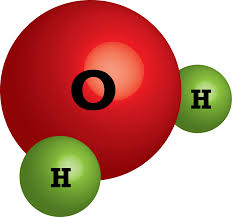
Is this an element or a compound? CaSO4
Element
Compound
Which element has the greatest number of atoms? AgNO3
Silver
Gold
Nitrogen
Oxygen
three hydrogen (H)
one sulfur (S)
four oxygen (O)

How many Oxygen atoms are in H2O?
1
2
0
4
How many elements are present in this compound? (Careful!)
Mg2As3COHNi2
2
4
6
10
How many atoms of Hydrogen are in this compound?
1
2
3
4
Element or Compound? O6
Element
Compound
Element or Compound? H6O5
Element
Compound
How many elements are in the compound Fe2O3?
0
1
2
3
A solution that contains all of the solute that it can hold at a given temperature.
unsaturated solution
homogeneous solution
In Michael's science experiment with salt water, NaCl (salt) would be considered the ______.
Solution
Solute
Solvent
Solvation
You can make a solution more concentrated by adding more __________.
solution
Avery is conducting a science experiment. When water is added to a solution it is called a ______________
dilution
concentration
heterogeneous solution
dissociation
Luna and Daniel are conducting an experiment to see how much __________ can dissolve in a solvent to create saturated, unsaturated, and supersaturated solutions.
sugar
liquid
solution
solute
Jackson is preparing a saltwater solution for his science experiment. Which of the following describes the concentration of the solution?
The amount of solute in a given amount of solvent
The temperature of the solution
The color of the solution
The volume of the solvent
Which of the following is NOT a method to increase the rate of dissolution of a solid solute?
Increasing temperature
Decreasing surface area
Stirring the solution
Increasing surface area
If a solid solute is broken into smaller pieces, how does this affect its dissolution rate?
It decreases the rate
It increases the rate
What is the process of reducing the concentration of a solute in a solution called?
Saturation
Dilution
Evaporation
Precipitation
What is the effect of stirring (agitation) on the rate of dissolution of a solid solute in an aqueous solution?
It decreases the rate
It increases the rate
If you increase the temperature of a solution, what generally happens to the rate of dissolution of a solid solute?
It decreases
It increases
It remains the same
It doubles

