
 Worksheets
Earth/Space Module 2: Exploring the Universe
Total questions: 48
Worksheet time: 32mins
Which does NOT affect how strongly the Sun pulls on an object in space?
the mass of the object
how far the object is away from the Sun
the fact that the Sun is made of a mixture of gases
the mass of the Sun
Some objects in our solar system are classified as moons, even though they are larger than objects classified as planets because
Moons can orbit moons, planets, and suns.
Planets and moons are basically the same thing.
Planets can orbit moons, asteroids, and comets.
Planets must orbit the Sun. Moons orbit planets.
Two of the inner planets are ____.
Venus and Saturn
Mars and Venus
Earth and Pluto
Mercury and Jupiter
The order of the inner planets outward from the Sun is ____. Mark only one oval.
Mercury, Earth, Venus, and Mars
Mercury, Venus, Earth, and Mars
Mars, Venus, Earth, and Mercury
Earth, Venus, Mars, and Mercury
A galaxy that has a shape similar to a football is a(n) ____ galaxy.
Normal Spiral
Barred Spiral
Elliptical
Irregular
Which does NOT describe our Sun?
it is part of the Milky Way galaxy
it holds 99% of the mass in the solar system
it is one of billions of stars
it is the center of the universe
Which of the following is defined as a huge collection of gas, dust, and stars held together by gravity?
nebula
solar system
universe
planet
As the solar system cooled and developed, larger bodies were pushed away from its center by gravity.
True
False
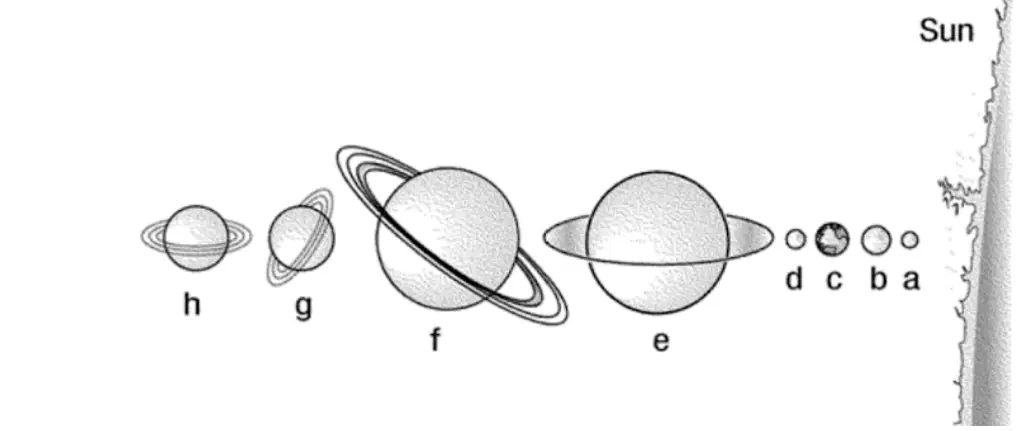
Planet A
Earth
Saturn
Venus
Mercury
Uranus
Planet F
Earth
Saturn
Venus
Mercury
Uranus
Planet B
Earth
Saturn
Venus
Mercury
Uranus
Planet G
Earth
Saturn
Venus
Mercury
Uranus
________ causes cast off gases to clump together to begin forming new stars and planets.
the sun
the moons
gravity
the milky way
Which of the following data can help someone to infer the size of a planet?
If it's gravity is great enough to pull in moons
how far it is from the Sun in km
its surface temperature in degrees
its surface geography
The Milky Way is part of the Local Group, a cluster of about 30 galaxies. What is the largest galaxy in this group?
Milky Way Galaxy
Triangulum galaxy
Andromeda Galaxy
Virgo Supercluster
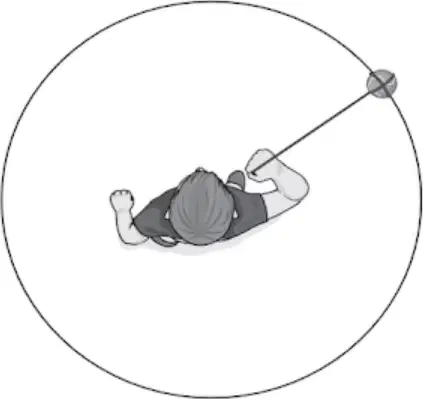
Ben made a model of Earth orbiting the Sun by tying a string to a tennis ball and spinning it around his head. The picture shows the model as viewed from above. The ball represents
The Sun
The Moon
The Earth
Gravity
Ben made a model of Earth orbiting the Sun by tying a string to a tennis ball and spinning it around his head. The picture shows the model as viewed from above. The string represents
The Sun
The Moon
The Earth
Gravity
Ben made a model of Earth orbiting the Sun by tying a string to a tennis ball and spinning it around his head. The picture shows the model as viewed from above. Ben represents
The Sun
The Moon
The Earth
Gravity
Which of the following is a famous theory about the formation of the universe?
Theory of Relativity
Quantum Theory
Big Bang Theory
Plate Tectonics
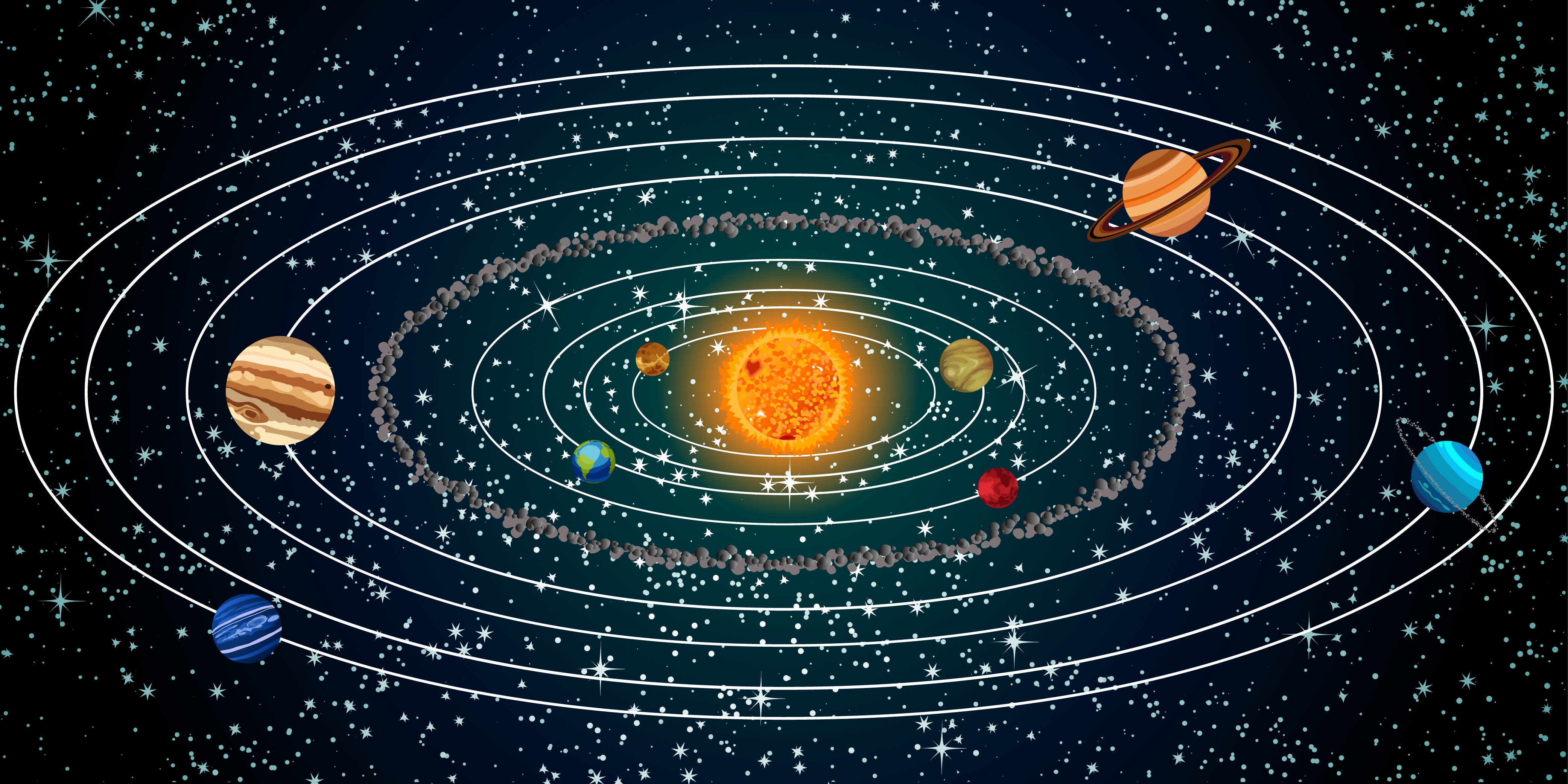
Our solar system is part of a bigger grouping of stars called the ___________ galaxy.
Milky Way
Andromeda
Messier 63
Whirlpool
Sombrero
How many stars are there in our Solar System?
1
2
thousands
millions


What does orbit mean?
to go around something
to spin
to float away in outer space
What is a force that pulls objects towards each other?
Tension
Gravity
Speed
Inertia
Which variables affect gravity?
mass
speed
distance
volume
weight
More mass equals:
less gravity
less distance
more gravity
more distance
Less distance equals:
less gravity
less mass
more gravity
more mass
What measures the amount of force gravity applies on an object?
Weight
Velocity
Inertia
Mass
Choose the image that has the most gravitational pull:


Choose the image that has the most gravitational pull:


What do the 5 dwarf planets orbit?
a star (the Sun)
Earth
Mars
Neptune
what is a nebula?
stars in a mixture of foggy gas
a giant cloud of dust and gas in the space
a collection of asteroids formed around a planet
a solar system
Most of these are located between the orbits of Mars and Jupiter.
Comet
Meteor
Asteroid
It is made of ice, dust, and small rocky particles.
Comet
Meteor
Asteroid
It is rock made up of similar material that formed the planets.
Comet
Meteor
Asteroid
It is made up of dust and rock that burn up in the Earth’s atmosphere.
Comet
Meteor
Asteroid
What's the difference between meteoroid, meteor, and meteorite?
Meteoroids are broken pieces of a comet, meteors are streaks of light in the sky, and a meteorite is the meteors that has landed
Meteoroids are huge, Meteors are the pieces that land, and Meteorites are shooting stars
There are no differences
Meteoroids are small, Meteors are another name for comets, and Meteorites are shooting stars

