
 Worksheets
U.S. as a World Power Part 1
Total questions: 40
Worksheet time: 3hrs 20mins
What is foreign policy?
Donating money to other countries
Having control over a neighboring country's government
How a nation interacts with another nation
The overthrow of a dictator
Another term for Imperialism is-
extermination
expansionism
internationalism
team player
Matthew Perry was able to force this nation to trade with the US-
China
Japan
Taiwan
Korea
Dollar Diplomacy-
encouraged American missionaries to travel to Latin America
encouraged Americans to give to charity
encouraged American businesses to invest in Latin America
restricted trade with Latin American countries
What was the biggest reason why the U.S. was involved in foreign affairs during this time?
Responsibility
Slavery
To help people
Money/Economic
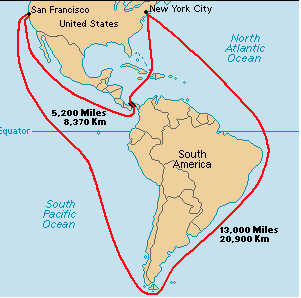
What does this map support?
The US fought the Spanish navy in the Atlantic and Pacific
The Spanish-American War led to new US territories
America became a colonial power in South America by surrounding it
The Panama Canal is critical to US trade
Panama is a damp, tropical jungle, intensely hot, and swarming with mosquitoes. What diseases do these mosquitoes carry?
Small pox and scarlet fever
Influenza and malaria
Rickets and diphtheria
Yellow fever and malaria
What was the significance of building a canal in Panama?
It would take territory away from the Spanish empire
It would allow easier economic and military access to and from the Atlantic and Pacific Oceans
It would make it easier for the US to invade countries in South America
It would allow the US to control worldwide trade
Which territory was promised independence after the Spanish-American War but was actually denied independence?
Guam
Philippines
Cuba
Puerto Rico
What were the two main locations of fighting during the Spanish-American War?
Alaska and Hawaii
Puerto Rico and Guam
Cuba and the Philippines
Spain and the United States
A policy in which a strong nation seeks to dominate other countries politically, economically, or socially. This led to the creation of a number of European empires which extended around the world.
annexation
imperialism
manifest destiny
expansionism

1) Helped to overthrow Queen Liliuokalani
2) Served as President and Governor of Hawaii
Moorfield Storey
Sanford B. Dole
William H. Taft
Andrew Carnegie
Which of the below were causes of the Spanish-American War?
SELECT ALL THAT APPLY:
Yellow Journalism
The defeat of the Rough Riders
The sinking of the USS Maine
De Lome Letter
European countries were enjoying their own special privileges in China. These areas where they enjoyed special privileges is known as .
Platt Amendment
Annexing China
Sphere of Influence
The Anti-imperialist Policy
Which of the following gave the U.S. the right to intervene in all Cuban affairs?
Platt Amendent
De Lome Letter
Open Door Policy
Alfred T. Mahan
Which of the below are reasons why a country chooses to imperialize?
SELECT ALL THAT APPPLY:
Strategic reasons
To expand it's territory
To gain alliances
To gain control of natural resouces

President Theodore Roosevelt said “Speak softly and carry a big stick.” His big stick was a reference to
a. joining military alliances to carry out foreign policy goals
using the navy to accomplish foreign policy goals
a. using the national forests to stimulate building projects
a. supporting woman suffrage to expand civil rights
The _______________ was a volunteer regiment that served during the Spanish-American War and was organized by future president ______________ .
Rough Riders; Franklin Delano Roosevelt
Tuskegee Airmen; Theodore Roosevelt
Progressive Party; William Taft
Rough Riders; Theodore Roosevelt
Prior to the Spanish-American War, William R. Hearst published a letter known as the _______________ written by the Spanish minister to the U.S. which was insulting to President McKinley.
McKinley Letter
de Lome letter
Hearst Letter
Pulitzer Memoirs

What is "annexation"?
When a country takes control of new territory by ADDING it.
When a country frees territory that it controls.
When a country frees another group of people from imperialist rule.
When a country rebels against it's imperial rulers.

What territories did the US gain as a result of its victory over Spain in the Spanish-American War?
Philippines, Puerto Rico, Panama
Philippines, Puerto Rico, Guam, Cuba
Puerto Rico, Panama, Haiti

Yellow journalism
exaggerated and sometimes even manufactured dramatic events that occurred in our country and especially about Cuba.
Taking some truth and stretching into a full length novel
defined as a whisper down the lane
A newspaper with a yellow cover
Anti-Imperialists believe...?
that America should spread our Democratic beliefs across the globe
in overseas expansion and believes the positives outweigh the negatives
overseas expansion will cause the U.S. and/or other nations more problems
that the Spanish deserved to have their colonies taken away.

Which exiled Cuban leader raised money in Ybor City and other cities in Florida to organize a new revolt against Spanish rule in Cuba?
Enrique Dupuy de Lome
Vicente Martinez Ybor
Emilio Aguinaldo
Jose Marti
The _______________ was a foreign policy statement issued in 1823 stating that the U.S. would oppose any intervention by European nations to control nations in the Western Hemisphere.
Monroe Doctrine
Articles of Confederation
Mayflower Compact
Treaty of Paris
The most well-known battle of the Spanish-American War took place in Cuba at _____________.
San Juan Hill
The Alamo
Gettysburg
Havana Harbor
The first military action of the Spanish-American War took place in 1898 in the Philippines at the _____________________.
Battle of Horseshoe Bend
Battle of Manila Bay
Battle of San Juan Hill
Battle of Antietam

Extension of the Monroe Doctrine in 1904 in which the U.S. claimed the right to protect its economic interests by means of military intervention in the affairs of Western Hemisphere nations
Dollar Diplomacy
Open Door Policy
Roosevelt Corollary
Moral Diplomacy
What was the main goal of the Open Door Policy?
To establish exclusive economic rights for the United States in China
To ensure American businesses had access to trade with Chinese markets
To divide China among foreign nations
To demand reparations from China for the Boxer Rebellion
What was the Boxer Rebellion?
An open rebellion against the Chinese government
A rebellion led by the Boxers to expel foreigners from China
A rebellion against the presence of Christian missionaries in China
A rebellion against the dominance of Japan in Asia
What did the US fear would happen if foreign powers established control over parts of China?
The US would lose access to the Chinese market
The US would gain exclusive economic rights over China
China would become a colony of the US
China would become a colony of the foreign powers

