
 Worksheets
Q1 Review
Total questions: 111
Worksheet time: 1hrs 21mins
Which of the following empires is known for its use of gunpowder weapons to establish a centralized government?
Roman Empire
Ottoman Empire
Byzantine Empire
Mongol Empire
What was a significant contribution of the Safavid Empire to trans-regional trade?
Establishment of the Silk Road
Development of the Persian carpet industry
Introduction of the compass
Invention of the printing press
Which empire was primarily located in the Indian subcontinent and known for its cultural contributions such as the Taj Mahal?
Ottoman Empire
Safavid Empire
Mughal Empire
Byzantine Empire
The geographic scope of which empire included parts of Europe, Asia, and Africa, contributing to its diverse population?
Ottoman Empire
Safavid Empire
Mughal Empire
Roman Empire
Which of the following was a cultural contribution of the Mughal Empire?
Development of the Cyrillic script
Construction of the Hagia Sophia
Promotion of Persian art and architecture
Introduction of the Gothic architectural style
The Safavid Empire is best known for establishing which religion as the state religion?
Sunni Islam
Shia Islam
Christianity
Hinduism
Which empire's development was significantly influenced by the use of traditional military technologies combined with gunpowder?
Aztec Empire
Ottoman Empire
Inca Empire
Han Empire
What was a major political innovation of the Mughal Empire?
Feudalism
Centralized bureaucracy
City-states
Tribal confederation
Which empire's geographic location facilitated its role as a cultural and commercial bridge between the East and West?
Safavid Empire
Mughal Empire
Ottoman Empire
Maurya Empire
The Safavid Empire was primarily located in which modern-day country?
Turkey
Iran
India
Egypt
Which of the following best describes the primary religious belief system in ancient Mesopotamia?
Monotheism
Polytheism
Atheism
Animism
What was a key technological advancement in ancient Egyptian society?
Invention of the wheel
Development of hieroglyphics
Creation of the compass
Introduction of gunpowder
Which ancient civilization is credited with the early development of monotheism?
Ancient Egyptians
Ancient Mesopotamians
Ancient Hebrews
Ancient Chinese
Which ancient civilization is known for its development of cuneiform writing?
Ancient Egyptians
Ancient Mesopotamians
Ancient Greeks
Ancient Romans
What was a significant architectural achievement of the Byzantine Empire?
Construction of the Colosseum
Building of the Hagia Sophia
Creation of the Great Wall
Development of the Parthenon
Which empire is credited with the introduction of the civil service examination system?
Roman Empire
Han Empire
Ottoman Empire
Inca Empire
The Bantu spread their influence throughout Africa by doing what?
nothing
migrating
walking around
camping in the deserts
The Olmecs settled in what we know today as?
India
Mexico
Honduras
Haiti
Like the other civilizations we have studied, the Olmecs did not live near a river but still were able to do?
hunted
fished
farmed
built ships
Why didn't the Bantu move into northern Africa?
too far to walk
too cold
the Sahara Desert
too hot
The Olmecs were____________________
polytheistic
monotheistyc
hereditary
burial mounds
The Bantu lived on what continent?
Asia
Africa
Australia
North America
The scattering of people from their homeland (ex. Hebrews/Jews)?
monotheism
execution
diaspora
persecution
Religious belief that only one god exists?
Monotheism
Polytheism
Ziggurat
Monochromia
Hebrew/Jewish prophet who received the Ten Commandments and led the Hebrews/Jews in their flight from slavery in Egypt
Abraham
Moses
Jesus
Mohammed
The holy book for the Hebrew people is known as?
Koran
Torah
Vedas
Diaspora
Symbol for the Hebrews/Jews?


The first group of people to practice monotheism were?
Sumerians
Hebrews/Jews
Egyptians
Phoenicians
Hammurabi’s code reinforced the social hierarchy by assigning the same crime different consequences depending on--
a person's rank in society and rights
gender only of the offender
class only of the victim
class and patriarchy
What type of belief system did the Egyptian people practice--
monotheistic beliefs
polytheistic beliefs
Which of the following locations are river valley civilizations? (check all that apply)
Mesopotamia
Australia
South Asia
Ancient Egypt
How did government maintain their legitimacy through cast systems?
Hammurabi’s code reinforced the social hierarchy by assigning the same crime different consequences depending on the class and gender of the offender and victim.
South Asian societies used social hierarchy to divide people into castes systems that grew rigid over time.
Civilizations used laws to reinforce social hierarchy and make it possible for rulers to exercise power over larger distances
Jewish people are spread across the world. This migration is called the Jewish diaspora.
What was the name of the religious buildings in Sumer?
Ziggurats
Temples
Mosques
Churches
What was the name of Ancient Egypt's written language?
Cuneiform
Symbolica
Hieroglyphics
Papyrus
The egyptian calendar was centered around...
Burial Dates of kings
flooding seasons
Construction days for the pyramids
The birthday of the Pharaoh
What is the Mandate of Heaven?
The ruler of China was a god
Pharaoh was divinely ordained
belief that the gods chose who was in power in Shang China
the Pope is chosen by God
One of the oldest stories that we have evidence of being written is the Epic of _________________________
Enkidu
Hababa
Shamhat
Gilgamesh
Which early civilization is known for using a plumbing and sewage system?
Mesopotamia
Egypt
Indus Valley
Shang China
Because of the geography of ancient Greece, the Greek communities developed
Separate independent city-states
Close ties with each other
One central government
New ways of hunting and gathering
Which description accurately identifies Socrates, Plato and Aristotle?
Philosophers of Ancient Greece
Artist of the Italian Renaissance
Religious leaders of the Protestant Formation
Servants to the Queen of England
Which of the following societies practiced direct democracy?
Egypt
China
Athens
Mesopotamia
What was the primary focus of much of the culture of the city of Sparta?
Music and literature
Painting and sculpture
Fishing and farming
War and fighting
What was the Pax Romana?
200 years of Peace and Prosperity in Rome
A war between Japan and China
The winter season in Europe
A road that lead to the capital city
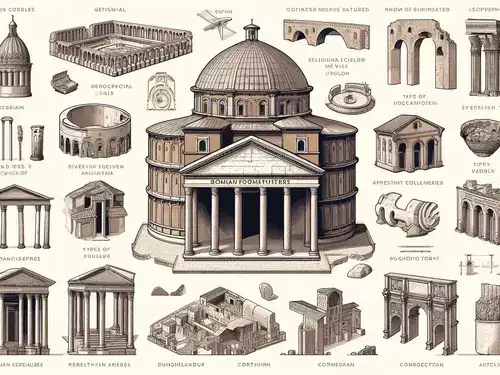
Which of the following is an example of a major architectural style that emerged in Classical Rome?
The construction of pyramid-like structures within major cities
The emergence of stone-based permanent homes
The use of spires in religious centers
The development of arches as a primary means of building development
An immediate result of the fall of the Roman Empire was -
an increase in trade and manufacturing
the growth of cities and dominance by the middle class
a period of disorder and weak central government
a renewed interest in education and the arts
One major religious influence of Rome is –
discrimination against Judaism became institutionalized and spread throughout Europe
belief in and worship of Roman Gods throughout Europe and Southwest Asia
Polytheism dominates religious practices in areas that were part of the Roman Empire
Christianity spreads throughout the Roman Empire and becomes a major world religion
Christianity appealed to the powerless because it-
offered a better life after reincarnation
promised better life after death
gave them hope of advancement in this life
assured them of their place in society

- Nile River
- Hieroglyphics
- Pyramids
Sumer

Torah is to Judaism as _____________ is to Islam
Quran
Vedas
New Testament
Upanishads


Used by the Ancient Chinese to contact ancestors
Oracle Bones
Loess
Monsoons
Untouchables
Book of Confucius teachings
Filial Piety
Analects
Caste System
Acupuncture
Confucius teaching: Respect for one's parents and elders.
Oracle Bones
Untouchables
Filial Piety.
Analects
Which of the following described the Indian cities of Harappa and Mohenjo Daro.
Creation of Pyramids
Streets and roads were aligned in a grid pattern
Surrounding walls for defense
Very small population, likely less than 1,000 people.
Community wells and plumbing system
Which of the following describe the Hindu religion?
Moksha - exit the reincarnation cycle
Reincarnation - rebirth
Karma - Actions in one life, can determine reincarnation
Brahman - creator of all
Began in India
Which of the following was an achievement of the Shang Dynasty of China?
Bronze tools
The building of the Taj Mahal
An accurate calendar
The Hindu religion
The world's first currency
The system of walls linked by Qin Shihuangdi became
the civil division.
terra cotta.
the military division.
the Great Wall of China.
The Qin and Han dynasties both
had strong central governments.
established religions.
started civil wars.
chose officials by birth.
The purpose of the Great Wall was to _____.
keep traders from entering China
protect the northern border from invaders
protect people from entering China in the south
protect traders on the Silk Road
The right to rule a dynasty is called the ______.
Confucianism
Legalism
Civil Service
Mandate of Heaven
China was isolated because of these landforms in the west.
rivers/ deserts
deserts/mountains
mountains/caves
mountains/rivers
(1050 B.C.E - 400 B.C.E.) The longes dynasty in Chinese history. Established a new feudal political order.
Han Dynasty
Qin Dynasty
Zhou Dynasty
Warring States Period
The two main rivers in Ancient China are:
Tigris and Euphrates
Yellow and Nile
Yellow and Yangzi
Yangzi and Xi
This ocean is found between Africa, Asia, and Malaysia
Indian Ocean
Arctic Ocean
Mediterranean Sea
Atlantic Ocean
What was the main religion of the Mali Empire
Islam
Hinduism
Christianity
Judaism
Who was the most important leader of the Mali Empire
Mansa Musa
Sundiata
King Ghana
King Songhai
What were the 2 most important commodities in the Mali Empire (and North Africa)
gold, salt
silver, salt
silver, pepper
gold, pepper
gold, diamonds
Which of the following statements about the effect of monsoon pattern on Indian Ocean trade are correct.
Unpredictable monsoon patterns facilitated trade on the Arabian Sea and Persian Gulf
Changing wind patterns made nonstop round trips possible.
Predictable monsoon patterns led to trade being conducted in stages
The size and stability of large ships did not play a role in how many mariners plotted their course around monsoon patterns

What role did the Swahili civilization play in Indian Ocean Trade?
The controlled the gold mines in the interior
They were the middle-man between the people in the interior of Africa and the Arab merchants in India.
They abducted slaves to be sold on the coast
The created banking houses and accepted bills of exchange
Who spread Buddhism to China?
Indian holy men.
the Mauryan emperor Ashoka.
foreign merchants.
the Koreans.
What unique culture developed in East Africa as a result of the increased Arabic trader presence there brought on by Indian Ocean trade?
Malaysian
Sumatran
Swahili
Turko-Mongol
Which of the following technologies helped cause trade to grow across the Sahara desert?
The domesticated camel
new saddles which could carry more weight
commercial practices like caravans
All of the above
Where did the Roman Gods live?
In the Roman city center
On the top of Mt. Vesuvius
On the top of Mt. Olympus
In Sparta
The Romans worshiped many gods. What vocabulary word means "belief in many gods"?
Monotheism
Multitheism
Polytheism
Manytheism

How were the Roman Catholic Church and the Eastern Orthodox Church similar?
They each agreed on the Holy Trinity
Both were allowed to pray to icons
Both based beliefs on the Bible and Jesus
They each spoke the same language

a law code published by Justinian
Isolation
Criminal Law
Law
Justinian's Code
Who made up the wealthy class of Romans?
Patricians
Plebeians
Who made up the lower to middle/working class of Romans?
Patricians
Plebeians
What is the purpose of an aqueduct?
It delivered fresh water to cities
It was a place for citizens to watch chariot races, gladiators and plays.
It provided a method to conquer barbarians
It provided people and animals with a food source.
Who was the head of the Byzantine Church?
The Emperor
The Pope
The Constable
The President


The ___________________ was largely key to the Mongols success. It provided transportation and food
Cow
Lizard
Horse
Ox
Genghis Khan died in 1227 CE. What happened after is death?
His sons and grandsons continued his campaign of conquest
The Monngol reign ended immediately
The Mongols conquered North America
The Chinese overthew the Mongols
In 1260, the grandson of Genghis Khan became the new ruler of Mongol Empire. His name was
Gerald Khan
Wu Khan
Kublai Khan
Amir Khan
Which mountain range separates Europe and Asia?
Ural Mountains
Himalayas
Tien Shan Mountains
Rocky Mountains
What was the main language used in the Byzantine Empire?
Latin
Greek
Arabic
Hebrew
Which city did Kublai Khan move the Mongolian capital to?
Beijing
Shanghai
Xian
Hangzhou

Ivan the Terrible crowned himself the first __________ of Russia, meaning "caesar" in Russian.
Prince
Nevsky
Czar
Who is considered the founder of modern Russia?
Ivan the Great
Ivan the Terrible
Augustus Caesar
Isaac The Terrible
What group invaded Rus' in the 1200s?
The Teutonic Knights
The Pechenegs
The Muslims
The Mongols

