
 Worksheets
Abby US history civil war
Total questions: 106
Worksheet time: 1hrs 3mins
Where did the First Battle of Bull Run occur?
Gettysburg, Pennsylvania
Richmond, Virginia
Manassas, Virginia
Charleston, South Carolina
What was the outcome of the First Battle of Bull Run?
Union victory
Confederate victory
Stalemate
No clear winner
What was the impact of the Confederate victory on the South?
It led to a peace treaty
It gave the South confidence
It caused the South to retreat
It ended the war
What was the reaction in the North after the First Battle of Bull Run?
They were confident of victory
They were shocked
They were indifferent
They celebrated
What did the First Battle of Bull Run reveal about the war?
It would be a short conflict
It would be a long, grueling conflict
It would end in a month
It would have no impact
The First Battle of Bull Run marked the first time troops would arrive to battle by -
boat
railroad
car
horse
What was the major advantage for the South during the Battle of Bull Run?
Superior weaponry
Better trained army
More experienced generals
Reinforcements arriving by railroad
What technology changed the nature of information during the Civil War?
Telegraph
Telephone
Television
Radio
What was the alternative name for the first Battle of Bull Run?
Battle of Shiloh
Battle of Antietam
Battle of Gettysburg
Battle of Manassas
What was the major advantage for the South during the Battle of Bull Run?
Superior weaponry
Better trained army
More experienced generals
Reinforcements arriving by railroad
Had very few factories to produce weapons and other vital supplies
North (Union)
South (Confederacy)
Strong navy large fleet of trading ships used to transport supplies and troops
North (Union)
South (Confederacy)
Their reason for fighting in the Civil War was to save the Union
North (Union)
South (Confederacy)
Made 90% of the nations manufactured goods
North (Union)
South (Confederacy)
Who was the President of the Confederate States of America?
Abraham Lincoln
George Washington
Jefferson Davis
Robert E. Lee
Their population was 22 million people and they had 4x as many free citizens which allowed for them to have many soldiers to volunteer as well as an abundance of people working in factories making supplies
North (Union)
South (Confederacy)
Their reason for fighting in the Civil War was to protect their agricultural economy and keep their traditional way of life, including slavery
North (Union)
South (Confederacy)
This area was run by the federal government, which allowed for decisions to be made quickly
North (Union)
South (Confederacy)
- He had little experience in national politics or military matters
- Some had doubts about his ability to lead
Abraham Lincoln
Jefferson Davis
Thomas Jefferson
George Washington
Some of the best military officers came from military schools in this area. Hunting was an important part of life.
North (Union)
South (Confederacy)
Instead of defending their home, they were invading unfamiliar land. This made supply lines long and more prone to be attacked.
North (Union)
South (Confederacy)
Who was the President of the Union?
Abraham Lincoln
Jefferson Davis
George Washington
Robert E. Lee
What was the main form of transportation in the South?
Railroads
Roads
Rivers
Underground Railroad
What is a reason many immigrants settled in the North?
They were farmers
They worked in factories
The weather was better
They spoke the same language
What was the population of the North compared to the South during the Civil War?
The North had a larger population than the South.
The South had a larger population than the North.
The populations were approximately equal.
The population sizes are unknown.
What was one big advantage the South had early in the Civil War?
Superior military leadership
Larger population
More industrial resources
Stronger navy
What was a major weakness of the South during the Civil War?
Lack of factories
Strong military leadership
Abundant resources
Advanced technology
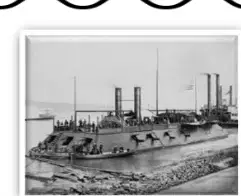
The impact of technology on warfare during the first year of battle in the Civil War was significant. Which of the following best describes this impact?
Introduction of ironclad ships changed naval battles.
Use of drones for reconnaissance missions.
Deployment of nuclear weapons.
Implementation of cyber warfare tactics.
What was the intent of the Union war strategy known as the Anaconda Plan?
to encourage enslaved people to rebel across the Confederacy
to discourage other nations from aiding the Confederacy
to crush the Confederacy by assassinating its leaders
to surround the Confederacy and squeeze it to death
Why did President Lincoln initiate a naval blockade on Southern waterways as part of the Anaconda Plan?
To block the South’s ability to obtain war supplies by trading cotton
To prevent the South from launching a surprise attack on the Union
To reserve Southern waterways for the Union army’s use only
To intimidate the South and convince the Confederacy to return to the Union
How many men were killed, wounded, or captured in the Battle of Shiloh?
About 30,000
About 20,000
About 15,000
About 24,000
What advantage did the Union troops have over the Confederate troops?
Better defensive positions
Larger cavalry units
More advanced weapons
Naval support
Which ironclad warship was built by the Union during the American Civil War?
USS Monitor
USS Merrimack
HMS Warrior
CSS Virginia
What was the primary purpose of ironclad warships?
Better protection against enemy fire
Increased speed and maneuverability.
Enhanced communication capabilities.
Improved offensive capabilities.
Which ironclad warship had a revolving turret?
HMS Warrior
CSS Virginia
USS Merrimack
USS Monitor
Which ironclad warship was previously known as the USS Merrimack?
USS Monitor
HMS Warrior
USS Constitution
CSS Virginia
What was the primary reason for the Battle of Hampton Roads?
To gain control of the Mississippi River
To break the Union blockade of Southern ports
To capture the Confederate capital of Richmond
To destroy the Union's ironclad warship

What was the outcome of the Battle of Antietam for the Union Army?
They won decisively with minimal losses
They lost and retreated
They won but suffered heavy losses
The battle had no clear winner
Why was the Battle of Antietam particularly significant in terms of casualties?
It had the fewest casualties in the Civil War
It was the bloodiest single-day battle in the Civil War
It had no casualties
It had the most cavalry casualties
Who did Grant replace after the Battle of Antietam?
General Zachary Burl
What was the primary reason for the terrible conditions at Camp Sumter?
Lack of guards
Overcrowding and unsanitary conditions
Frequent prisoner escapes
Poor weather conditions
What was the official name of the prison camp located in Andersonville, Georgia?
Camp Sumter
Fort Sumter
Camp Anderson
Fort Anderson
Who was the commander of the prisoners at Camp Sumter?
General Lee
Captain Henry WS
Major Anderson
Colonel Grant

Who is the Northern commander who won the war
U. S. Grant
George McClellan
Irvin McDowell
W. T. Sherman

What was the name of the Southern commander who surrendered and ended the war
Joseph Johnston
Stonewall Jackson
PGT Beauregard
Robert E Lee

Which Battle happened First
Bull Run/Manassas
Antietam
Gettysburg
Appomattox
What was a main military objective of the Union's Anaconda Plan?
To control the Mississippi River
To win the battle of Bull Run
To capture Atlanta
To march to the sea
How did people communicate with one another during the Civil War? (Choose ALL that apply)
letters
phones
in person
telegraph
Which goal did Ulysses S. Grant help the North to achieve in the Civil War?
He successfully led the effort to blockade seaports
He convinced Abraham Lincoln to issue the Emancipation Proclamation
He gained control of the Mississippi River
He invaded and captured Washington D.C.
Why did Abraham Lincoln fire George McClellan?
McClellan had plans to run against Lincoln in the Election of 1864
McClellan was using unethical war practices, such as stealing war plans
McClellan refused to crush Lee’s soldiers as they fled
McClellan publically critiqued the Emancipation Proclamation
Famous Union general, uses Union's advantages of men and resources.
Stonewall Jackson
Ulysses S. Grant
Robert E. Lee
Jefferson Davis
Famous Confederate general who originally opposed secession and often won battles against superior Union armies
Abraham Lincoln
Ulysses S. Grant
Robert E. Lee
Jefferson Davis
Famous Confederate general, gained fame at First Battle of Bull Run and was shot by fellow Confederate troops
Stonewall Jackson
Ulysses S. Grant
Robert E. Lee
Frederick Douglass
In the Battle of Fredericksburg, because the Union lost twice as many men as the Confederates,
General Burnside lost his position as General.
Abe Lincoln was impeached.
Abe Lincoln hired Robert E. Lee.
General Burnside was promoted to 3rd General.
Who led the Union Army in the Battle of Fredericksburg?
General Robert E. Lee
President Abraham Lincoln
General Ambrose Burnside
President Jefferson Davis
What was the risky move that Lee made?
Split his army
attacked the federals
Waited in defensive position
retreating from chancellorsville
Why is the Battle of Chancellorsville considered significant?
It was a major victory for the Confederates achieved by Robert E. Lee against a larger Union army.
It was the first battle of the Civil War.
It resulted in the capture of Washington, D.C.
It ended the Civil War.
Who was the Confederate general whose loss was a large price for the Confederacy at the Battle of Chancellorsville?
General Stonewall Jackson
General Robert E. Lee
General J.E.B. Stuart
General James Longstreet
Gettysburg is the _____ battle in American history.
least important
biggest
4th largest
How many days did the battle last?
1
2
3
4
On Day 3, General Lee thought he could win by attacking the ___ of the Union Army.
left flank
center
right flank
This famous, failed attack is known as
Pickett's Charge
Longstreet's Folly
D Day
By Day 2, the Union Army was pushed back onto the high ground, their lines forming a giant _____.
fishhook
V-shape
W-shape
During Day 1, the _____ army pushed the _____ army through the town of Gettysburg.
Union, Confederate
Confederate, Union
Day 1 was a stalemate
How does the Union Eventually Take the city of Vicksburg?
He uses the Navy to draw attention away from the Army.
They don't, the city remains in the hands of the Confederacy for the entire war
Starves the civilians and Soldiers by not allowing anything in or out of the city
A heavy bombardment of cannon fire on the same section of defensive walls.
How does Grant begin his weeks long siege of Vicksburg?
By dropping bombs from hot air balloons
Sending troops, 20 at a time across old bridge ready to collapse
Marching 6 miles up a steep hill
Sneaking down the Mississippi River at night
The Union states were located in the _____ and the Confederate states were located in the _____.
North
South
South
North
North
East
West
East
Vicksburg was...
the last Confederate stronghold on the Mississippi River.
the single bloodiest day in American history.
Sherman's march to the sea.
where General Lee surrendered to General Grant.
Which of the following is known as the bloodiest single day in the Civil War?
Bull Run
Antietam
Gettysburg
Vicksburg
Which of the following is known as the bloodiest battle of the Civil War?
Bull Run
Ft. Sumter
Gettysburg
Vicksburg
Which battle gave the Union control of the Mississippi River?
Bull Run
Antietam
Vicksburg
Gettysburg
The Emancipation Proclamation did which of the following?
Gain support for the North by focusing the war on slavery
Immediately abolish slavery
End the war
Free slaves only in the Union
Who led the March to the Sea during the American Civil War?
Ulysses S. Grant
William Tecumseh Sherman
Robert E. Lee
Stonewall Jackson
What was the purpose of Sherman's March to the Sea?
To capture important Confederate cities
To negotiate a peace treaty with the Confederacy
To establish a supply line for Union troops
To destroy the Confederate's ability to wage war and demoralize the Southern population.
What impact did Sherman's March to the Sea have on the Confederate morale?
It weakened the Confederate morale.
It had a temporary impact on the Confederate morale.
It strengthened the Confederate morale.
It had no impact on the Confederate morale.
What campaign was led to William T. Sherman capturing the industrial railroad hub of Atlanta?
Sherman’s March to Sea
Sherman’s Atlanta Campaign
Sherman’s March to Savannah
Sherman’s Battle of Chickamauga
The site of General Lee's surrender to Grant
Fort Sumter
Gettysburg
Appomattox
Lexington and Concord
What happened at the Appomattox Court House?


President Lincoln was shot at;
The National Cathedral
The Smithsonian
The Orpheum Theatre
Fords Theatre
According to Lincoln in the Gettysburg Address, what is the stated purpose for meeting on the battlefield?
to set aside a portion of the field as a graveyard for fallen soldiers
to make a commitment to avenging the slain Gettysburg troops
to pledge the nation to the Northern cause
to surrender the nation to God
What is Lincoln’s main purpose in the Gettysburg Address?
to identify the soldiers who have died in battle so far
to argue why the Union will win the war
to seek money for the families of those who died in battle
to explain the importance of the war and inspire support for the Union
According to Lincoln, men gave their lives at Gettysburg ______.
to hallow the ground
so that the nation might live
to stop the Confederate advance into Pennsylvania
so that slavery would be abolished
According to the Gettysburg Address, Lincoln believes that victory in the war will result in _____.
a full measure of devotion
a new birth of freedom
an altogether fitting and proper memorial.
a belief that all men are created equal.
Lincoln believes that victory (for the Union) in the war will result in _____.
full devotion of all citizens to the Union.
women, as well as slaves, will have equal rights.
a proper memorial for those who have died in the war
a new birth of freedom and ALL men will be created equal

