wayground logo

Free Printable Worksheets

Font size

S
M
L
XL
Worksheets

24/25 DPM 1

Total questions: 50

Worksheet time: 33mins

Name
Class
Date
1.
A[n] ___________ tide occurs when the sun, Earth, and the moon are nearly in a line. 
a)
spring
b)
high
c)
low
d)
neap
2.
A[n] ______________ tide occurs when the sun is at right angles to the line between Earth and the moon. 
a)
high
b)
neap
c)
low
d)
spring
3.
A neap tide is a tide with the greatest difference between low and high tides
a)
true
b)
false
4.
a)
spring tide
b)
neap tide
5.
a)
neap tide
b)
spring tide
6.
a)
neap tide
b)
spring tide
7.
a)
neap tide
b)
spring tide
8.
a)
Spring Tide
b)
Neap Tide
9.

The earth's axis is tilted (a)   degrees off center.

10.
Which season is taking place in the Northern Hemisphere in Position 3?
a)
Winter
b)
Spring
c)
Summer
d)
Fall
11.

Why is summer warmer than winter?

a)

The hemisphere experiencing summer is tilted more directly toward the sun

b)

During summer, the entire planet is closer to the sum

c)

The sun radiates more energy during the summer

d)

The earth spins slower on its axis during the summer

12.

How do the seasons happen?

a)

Earth's distance away from the sun

b)

Earth's distance towards the sun

c)

Earth's tilted axis

13.
Which season is taking place in the Northern Hemisphere in Position 3?
a)
Winter
b)
Spring
c)
Summer
d)
Fall
14.
Which season is taking place in the Northern Hemisphere in Position 1?
a)
Winter
b)
Spring
c)
Summer
d)
Fall
15.

How much is the Earth tilted on its axis?

a)

0 degrees

b)

23.5 degrees

c)

47.2 degrees

d)

98.8 degrees

16.
Which season is taking place in the Northern Hemisphere in Position 4?
a)
Winter
b)
Spring
c)
Summer
d)
Fall
17.
What happens when the area in which you live tilts away from the sun?
a)
It is summer.
b)
It is spring.
c)
It is winter.
d)
It is fall.
18.

Where are the sun's rays shining most directly on the spring equinox?

a)

Equator

b)

Northern Hemisphere

c)

Southern Hemisphere

19.
How many high tides does a place have each day?
a)
3
b)
4
c)
5
d)
2
20.
What causes tides?
a)
gravity
b)
wind
c)
spring
d)
neap
21.
Tides are caused mainly by what?
a)
Moon’s gravitational pull
b)
Sun’s gravitational pull
c)
Earth’s gravitational pull
22.
How many times per month does a spring tide occur?
a)
Once
b)
twice
c)
three times
d)
it changes every month
23.
Differences in the moon's and sun's pull on different sides of the Earth cause _________.
a)
gravity
b)
lunar phases
c)
tides
d)
dabbing
24.
A[n] ___________ tide occurs when the sun, Earth, and the moon are nearly in a line. 
a)
spring
b)
high
c)
low
d)
neap
25.

The prefix "Bio" means ____

a)

Life

b)

Earth

c)

Water

d)

Air

26.

The prefix "Geo" means ____

a)

earth, ground and soil

b)

water

c)

life

d)

air

27.

The prefix "Hydro" means ____

a)

ground

b)

water

c)

life

d)

air

28.

The prefix "Atmo" means ____

a)

ground

b)

water

c)

life

d)

air

29.
This sphere is composed of all the living things 
a)
Hydrosphere 
b)
Biosphere 
c)
Atmosphere 
d)
Geosphere 
30.

Pick all examples down below that have to do with biosphere.

a)

Ocean

b)

Human

c)

Sunflower

d)

limestone

31.

What is an example of geosphere?

a)

Creek

b)

clouds

c)

Human

d)

Sand

32.

What is the main sphere represented in this picture?

a)

Hydorsphere

b)

Atmosphere

c)

Geosphere

d)

Biosphere

33.

Will an event in one of Earth's sphere affect another sphere?

a)

yes

b)

no

34.

Which Earth system makes up Earth's minerals, rocks, and soil?

a)

Biosphere

b)

Geosphere

c)

Cyrosphere

d)

Atmosphere

35.
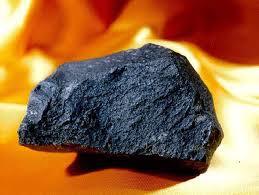
This rock started as lava that cooled and then was heated and put under pressure over time. What type of rock is this?
a)
Sedimentar
b)
Igneous
c)
Metamorphic
36.
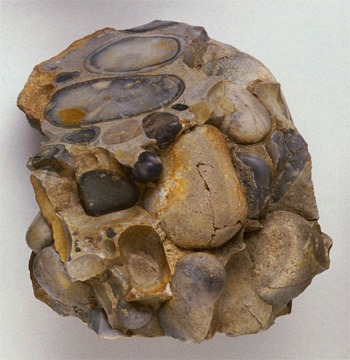
This rock was formed by smaller pieces of rock that settled at the bottom of a lake millions of years ago. What type of rock is this?
a)
Sedimentary
b)
Igneous
c)
Metamorphic
37.
This rock was found near the mouth of a volcano. What type of rock is this?
a)
Sedimentary
b)
Igneous
c)
Metamorphic
38.
Wind, water, and ice breaking down rock is called
a)
Erosion
b)
Deposition
c)
Compaction
d)
Weathering
39.
Which type of rock results from melting and cooling of magma?
a)
Igneous
b)
Metamorphic
c)
Sedimentary
d)
Extrusive
40.
Sedimentary rock can be changed into igneous rock if sediments are –
a)
compacted.
b)
deposited.
c)
weathered.
d)
melted.
41.
Metamorphic rock forms where any kind of rock –
a)
is crystalized after being liquid rock.
b)
contains fossils of marine organisms
c)
is changed by the extreme heat and pressure.
d)
is composed of cemented sediment.
42.
Sedimentary rocks can have layers of different colors. This occurs when –
a)
molten rock seeps into large cracks underground.
b)
extreme pressure causes minerals to separate
c)
different minerals are deposited at different times.
d)
seasonal patterns change the rate of erosion.
43.
Rocks are classified by -
a)
how they were formed.
b)
when they were formed.
c)
where they were formed.
d)
their color when formed
44.

The earth is tilted on its _____

a)

line

b)

axis

c)

equator

d)

core

45.

Earth does a complete revolution every _________.

a)

10 years

b)

12 hours

c)

24 hours

d)

365 days

46.

The earth rotates every _____________.

a)

24 hours

b)

15 hours

c)

365 days

d)

hour

47.

What does the tilt of the earth cause?

a)

heating

b)

seasons

c)

years

d)

atmosphere

48.

What causes day and night cycles?

a)

Mars

b)

seasons

c)

Earth's rotation

d)

moon phases

49.

What is the imaginary line that passes through Earth's center and the North and South poles?

a)

Orbit

b)

Axis

c)

North Pole

d)

South Pole

50.

What do we call Earth's path as it revolves around the sun?

a)

pathway

b)

rotation

c)

orbit

d)

revolution