
 Worksheets
4 Skeletal System Physiology Quiz #1
Total questions: 21
Worksheet time: 11mins
Example of a sesmoid bone.
trapazoid
humerous
vertebrae
patella
sternum
Example of a irregular bone.
trapazoid
humerous
vertebrae
patella
sternum
Blood cells are formed in...
red marrow
yellow marrow
osteon systems
osteocytes
The shaft of a long bone.
epiphysis
diaphysis
compact bone
epiphyseal plate
The process of bone forming from cartilage is called
ossification
callus zone
growth
fracture repair
Where is spongy bone located?
diaphysis
epiphysis
haversian canals
medullary cavity

Bone cells that live within the bone are called?
osteocytes
osteoblasts
osteoclasts
osteons

What is the slippery surface that cover the end of bones and helps absorb shock?
synovial membrane
synovial fluid
ligament
cartilage
Bones that have complex shapes are called...
Flat bones
Irregular bones
Sesamoid bones
Long bones
The femur is what type of bone?
Long Bone
Short Bone
Flat Bone
Irregular Bone
Sesamoid Bone
What are the four main types of bones?
Long, short, medium, thin
Regular, long, flat, short
Flat, short, long, Irregular
None of the options
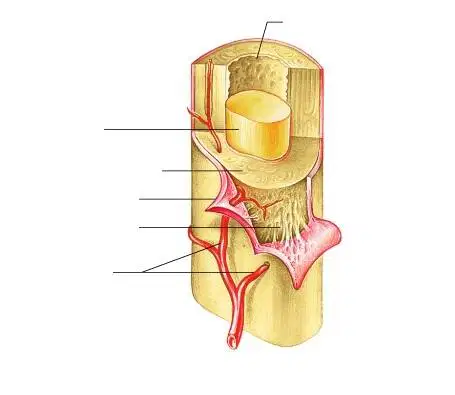
What can be found in the central canal of the haversian canal system?
osteocytes
lamella
blood vessels and nerves
red blood cells

In adults, the medullary cavity contains
red marrow
yellow marrow
osteocytes
bone
This type of ossification forms within sheetlike layers of connective tissue
endochondral
intramembranous
both of these
Neither
Intramembranous ossification bone shape
Irregular
Flat
Long
Proximal
Endochondral ossification
Bone forms from fibrous membrane
Bones form from citrus membrane
Bone forms by replacing hyaline cartilage
Bone forms by replace Areolar cartilage
A living bone's surface is covered with a tough, tight-fitting membrane called the _________________________.
periosteum
cartilage
marrow
compact bone
Osteons are not connected to each other.
False
True

