
 Worksheets
Ancient China Social Class Structure
Total questions: 104
Worksheet time: 57mins
What is a social class?
line of rulers in the same family
people with a similar position in society
heavenly law giving the king the right to command

A member of an upper class of society...
warlord
ancestor
aristocrat
bureaucrat
Most people in ancient China were...
aristocrats.
farmers.
soldiers.
merchants.
The social structure of ancient China is best described as..
made up of 4 social classes (aristocrats, farmers, artisans, and merchants).
a caste system (Bhramin, Kshatryia, Viasya, Sudra, Untouchables).
made up of 4 social classes (the upper class, the middle class, the lower class, and the slave class).
a social pyramid (Pharoah, Nobles/Priests, Soldiers, Scribes, Merchants, Artisans, Farmers, Slaves and Servants).
Which group of people made up most of Chinese society?
warlords
aristocrats
farmers
royals
What was the highest social class in Ancient China?
Aristocrats
farmers
Buddha
warriors
What are aristocrats?
Aristocrats are goods traded in the Silk Road.
Aristocrats are rich landowners in ancient China.
Aristocrats are people that let others borrow money from their banks.
Which class did the merchants belonged in ancient China?
Merchants belonged to upper class.
Merchants belonged to middle class.
Merchants belonged to lower class.

Merchants were below PEASANTS in Ancient China's Social Class.
True
False
Artisans are skilled in making a (a) .
What is a social class?
line of rulers in the same family
people with a similar position in society
heavenly law giving the king the right to command
What do we call a period of time when one family rules a country?
emperor
government
century
dynasty
Slaves were considered
knowledgeable
valuable
property
powerful
These people from important families, held important positions in government.
nobles
scholars
merchants
peasant farmers
These people were disliked because they were seen as profiting from the efforts of others.
slaves
scholars
peasant farmers
merchants
These people were poor but important because they were involved in agriculture.
peasant farmers
slaves
nobles
craftsmen
Women in ancient China were generally considered to be
beautiful
dainty
slaves
inferior to men
A woman could improve her status by....
cleaning and working
honoring her husband
producing a son
getting married
Foot binding was done because
dainty feet were considered beautiful
Chinese women had large feet
it was cheaper to make small shoes
Ancient China was ruled by ____________.
Asia
Confucius
Great Wall
Emperors
Who did the "mandate of heaven" apply to?
gods
The emperor
Peasants
Officials and the Emperor
A Noble in ancient China was ...
Religious men who were ranked high in society
Someone who shows fine personal qualities or high moral principles.
People within a society who have been born into a privileged, high-ranking group and who pass their privileges and standing on to their descendant.
Which social class was wealthy but not respected?
merchants
artisans
aristocrats
farmers
Nobles were...
Poor families who did not own their own land
Wealthy families who owned a large amount of land
To become an Emperor, you had to come from a rich, noble family. True or False?
True
False
Peasants made up ________% of the population
10%
20%
30%
80-90%
Who was lower than a peasant farmer on the social hierarchy?
merchant
slave
craftsman
scholar
What is the system where people exchange land for loyalty?
civil service system
bureaucracy
feudalism
What is the system where the officials are appointed or hand-picked by the one in charge (king)?
civil service system
bureaucracy
feudalism
What is the system where officials were chosen based on their ability and knowledge and taking a difficult exam?
civil service system
bureaucracy
feudalism
What is the time period that refers to 250 years of fighting between lords over land given to them by the king?
Age of Discovery
Warring States Period
Han dynasty
Who was the emperor who brought stability to China by replacing feudalism with a bureaucracy?
Wu Di
Shi Huangdi
Zhou
Who was the emperor who brought change to the social structure of China by implementing the civil service system?
Wu Di
Shi Huangdi
Zhou
What were the benefits of the civil service exam system?
The government was run by educated people.
It let people receive good jobs.
It could let people raise their social status.
All of the above.
In a bureaucracy, how were officials chosen to run the provinces and districts in the empire?
They promised their loyalty to the king.
They completed a difficult civil service exam.
They were hand-picked by the king.
Through feudalism, how were nobles chosen to run the king's land?
They promised their loyalty to the king and would provide soldiers when needed.
They completed a difficult civil service exam.
They were hand-picked by the king.
Which of the following is a TRUE statement about peasants in ancient China?
They rented land from nobles and did not receive profits from that land.
They oversaw the nobles and owned the land.
They received land for service to the king and fought for the king.
What is a social class?
line of rulers in the same family
people with a similar position in society
heavenly law giving the king the right to command
A member of an upper class of society...
warlord
ancestor
aristocrat
bureaucrat
Most people in ancient China were...
aristocrats.
farmers.
soldiers.
merchants.
The social structure of ancient China is best described as..
made up of 4 social classes (aristocrats, farmers, artisans, and merchants).
a caste system (Bhramin, Kshatryia, Viasya, Sudra, Untouchables).
made up of 4 social classes (the upper class, the middle class, the lower class, and the slave class).
a social pyramid (Pharoah, Nobles/Priests, Soldiers, Scribes, Merchants, Artisans, Farmers, Slaves and Servants).
Which group of people made up most of Chinese society?
warlords
aristocrats
farmers
royals
What was the highest social class in Ancient China?
Aristocrats
farmers
Buddha
warriors
What are aristocrats?
Aristocrats are goods traded in the Silk Road.
Aristocrats are rich landowners in ancient China.
Aristocrats are people that let others borrow money from their banks.
Which class did the merchants belonged in ancient China?
Merchants belonged to upper class.
Merchants belonged to middle class.
Merchants belonged to lower class.
Merchants were below PEASANTS in Ancient China's Social Class.
True
False
Artisans are skilled in making a (a) .
The Yangtze River provides rich soil for farming.
True
False
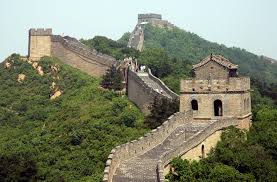
Which of the following were barriers from keeping enemies out of China?
(more than one answer)
Huang He (Yellow River)
Himalayan Mountains
Gobi Desert
The Silk Road trading route
A class system where the king provided lands to nobles for military support, and peasants worked the land in exchange for protection
Feudalism
Filial Piety
Bureaucracy
Legalism
After the ruling family, they made up the highest- ranking social class. They fought/lead in the king’s armies
Aristocrats
Nobles
Artisans
Daoism
A piece of bone or shell heated and cracked by holy men to seek advice from a king’s ancestors
Confucianism
Standardize
Oracle Bones
Logograph
A large organization that operates using a fixed set of rules and conditions. At each level of the
organization, people direct those who are at the level below them.
Bureaucracy
Civil Service
Legalism
Meritocracy
To make the same (same laws, same money, same language for everyone)
Civil Service
Standardize
Bureaucracy
Logograph
Rich landowners at the top of the social classes
Aristocrats
Nobles
Artisans
Daoism
Skilled workers that included potters, stonemasons, and workers crafting items of bronze and jade
Aristocrats
Nobles
Artisans
Civil Service
When people in government or holding power are selected based on their abilities.
Civil Service
Meritocracy
Bureaucracy
Mandate of Heaven
A form of writing that uses characters that stand for words
Oracle Bones
Standardize
Seismograph
Logograph
Belief that the right to rule comes from the gods (the gods say that you should be in charge/king/queen)
Feudalism
Oracle Bones
Daoism
Mandate of Heaven
A Chinese philosophy based on the importance of strict and harsh laws
Legalism
Confucianism
Daoism
Feudalism
A belief system that teaches about the respect and loyalty in five relationships to bring goodness to society
Legalism
Confucianism
Daoism
Feudalism
A Chinese philosophy focused on obtaining long life and living in harmony with nature
Legalism
Confucianism
Daoism
Feudalism
The responsibility children have to respect, obey, and care for their parents and grandparents
Filial Piety
Confucianism
Meritocracy
Mandate of Heaven
A stone-and-earth structure about 1,500 miles long, first built during the Qin dynasty to defend China’s northern boundary
Silk Road
The Great Wall
Seismograph
Logograph
A trade route covering 4,000 miles from the Mediterranean Sea through Asia
Silk Road
The Great Wall
Seismograph
Logograph
A healing technique that involves thin needles are inserted into specific parts of the body.
Acupuncture
Moxibustion
Meritocracy
Oracle Bones
An instrument that measures details of an earthquake
Silk Road
The Great Wall
Seismograph
Logograph
A healing method in which a moxa—a small cone of powdered leaves or sticks—is placed on or near the skin and burned
Acupuncture
Moxibustion
Meritocracy
Oracle Bones
Working in/for the government
Bureaucracy
Legalism
meritocracy
Civil Service

