
 Worksheets
MSS Revision Quiz
Total questions: 66
Worksheet time: 33mins
Most hand injuries are caused by broken handles, poor gripping and slipping which due to
poor eyesight.
low concentration.
wrong application.
defective hand tools.
Which one of the following is to be avoided when handling electrical power tools?
Expired power tools.
Using loose clothing.
Working in wet places.
Working with a partner.
Tripping hazard in the workshop is caused by
bad workmanship.
poor housekeeping.
combustible materials.
inadequate ventilation.
The main objective of personal safety in industrial work is to
save money.
prevent accident.
slow down production.
become the best employee.
When an accident occur with the rotating parts of a machine, one should immediately
stop the machine.
inform the training staff.
apply first-aid if necessary.
call for ambulance if injury is too serious.
What is the purpose of safety helmets in the workshop?
To protect feet from falling objects
To protect hands from burns
To protect the head from injury
To improve visibility
Which of the following is a consequence of poor housekeeping?
Increased productivity
Tripping over loose objects
Enhanced storage capacity
Improved safety
Good housekeeping helps to reduce
Workplace cleanliness
Fire hazards
Employee benefits
Work hours
The abbreviation "DIA" used in engineering drawing means
diestock.
diameter.
dimension.
dial indicator.
The abbreviation "RPM" indicated in the engineering drawing represents
rolls per mile.
rounds per mile.
reverse per minute.
revolutions per minute.
The abbreviation "CSK" used in engineering drawing means
Countersunk.
Counterbore.
Centre skew.
Cold rolled steel.
In the Orthographic projection drawing, the symbol "℄" refers to
cent.
centre.
cross.
centre line.
In the Orthographic projection drawing, the symbol "Ø" refers to
depth.
radius.
diameter.
thickness.
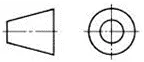
The symbol shown in Fig above indicates the drawing is done in
First Angle Projection.
Second Angle Projection.
Third Angle Projection.
Fourth Angle Projection.
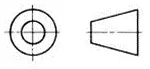
The symbol shown in Fig above indicates the drawing is done in
First Angle Projection.
Second Angle Projection.
Third Angle Projection.
Fourth Angle Projection.
The advantage of using isometric projection over orthographic projection is
it is the most accurate projection.
it shows the length, width and height in one view.
all the hidden details are shown in isometric drawing.
isometric projection had replaced orthographic projection.
To draw the three views for Orthographic drawing, we need to have two
vertical planes.
horizontal planes.
vertical planes and one horizontal plane.
horizontal planes and one vertical plane.
A workpiece has an overall length of 100 mm by width 50 mm, and it is to be drawn to a length of 200 mm by width 100 mm. What is the scale used for this drawing?
1: 1.
1: 2.
2: 1.
2: 2.
A workpiece has an overall length of 200 mm by width 100 mm, and it is to be drawn to a length of 100 mm by width 50 mm. What is the scale used for this drawing?
1 : 1.
1 : 2.
2 : 1.
Any scale.
What type of file is used for general shaping works?
Rough cut.
Second cut.
Smooth cut.
Bastard cut.
What is the drilling speed for countersinking drill?
20% of that used for drilling.
30% of that used for drilling.
50% of that used for drilling.
75% of that used for drilling.
What type of file is used for surface finishing works?
Rough cut.
Second cut.
Smooth cut.
Bastard cut.
What is the drilling speed for counter bore drill?
25% of that used for drilling speed
100% of that used for drilling speed
50% of that used for drilling speed
60% of that used for drilling speed
What is the drilling speed for spot-facing drill?
¼ of that used for drilling speed
¼ of that used for
spot facing
½ of that used for drilling speed
½ of that used for spot facing
Which one of the following pulleys is receiving the power?
Idle.
Driver.
Driven.
Jockey.
What is the disadvantage of vee belt?
Quiet in operation.
Lubrication is required.
There is a tendency to slip.
Low power transmission rate.
What should be checked after replacing a vee belt?
Belt size only
Alignment and tension after 24-48 hours
Motor speed
Belt material
Which of the following is an advantage of vee belt drives?
Requires lubrication
Continuous belt operation
Complex replacement procedure
No slippage
What is the primary function of a vee belt?
Power transmission through friction
Power reduction
Lubrication of moving parts
Reduce noise in machines
What happens when pulleys are not properly aligned?
Increased power output
Belt slippage and rapid wear
Decrease in tension
Enhanced durability
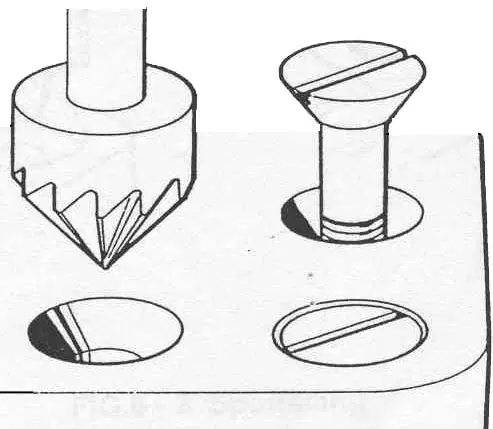
Identify the process in following Fig.
counterboring
countersinking
spotfacing
spot welding
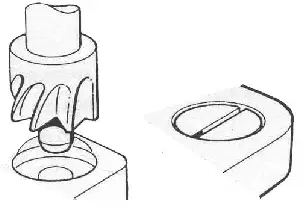
Identify the process in following Fig.
counterboring
countersinking
spotfacing
spot welding
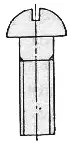
Identify the type of screw shown
Cheese-head screw
Countersunk-head screw
Round-head screw
Square-head screw
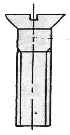
Identify the type of screw shown
Cheese-head screw
Countersunk-head screw
Round-head screw
Square-head screw
The capacity of the pump is rated by
water pressure
air temperature
fluid flow in newton
fluid flow in litres per minutes
Which type of the pump uses a piston to lift the
water?
centrifugal pump
reciprocating pump
balanced vane pump
internal gear pump
Which type of pump is sensitive to fluid
temperature changes?
propeller pump
reciprocating pump
metering pump
internal gear pump
Which type of pump is normally operated in a
vertical position?
centrifugal pump
reciprocating pump
balanced vane pump
turbine pump
Which type of pump is normally used if we need
to transfer fluids directly from barrels to other
containers?
centrifugal pump
reciprocating pump
balanced vane pump
turbine pump
The only moving part in the centrifugal pump
which is subjected to be in contact with the fluid
is
motor
casing
impeller
bearings
Which part of a centrifugal pump applies high
energy force to the fluid?
shaft
casing
impeller
bearings
Keys may be classified into
keyway and tapered keys
plain and tapered keys
plain and keyway keys
keyseat and tapered keys
The function of the keys is to
lock the nuts on shaft
retain component on shaft
secure the bolt and nut
secure drive wheels to shaft
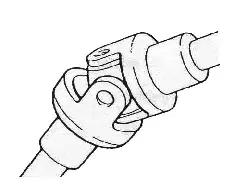
Identify the type of coupling shown
gear coupling
Hooke’s coupling
flange coupling
sleeve coupling
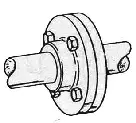
Identify the type of coupling shown
gear coupling
hooke’s coupling
flange coupling
sleeve coupling
One of the functions of lubrication is to
reduce noise
provide heating
increase friction
increase corrosion
The viscosity of oil is a measure of its
density
temperature
heat content
ability to resist flow
The lubrication method to lubricate the plain
bearings is
oil bath lubrication
splash lubrication
ring type oiler
drip feed oiler
Oil bath lubrication is suitable for
low speed machinery
high speed machinery
medium speed machinery
high temperature machinery
Splash lubrication is suitable for
low speed machinery
high speed machinery
medium speed machinery
high temperature machinery
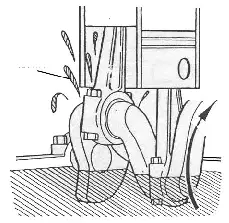
Identify the lubrication method shown
oil bath
splash
ring type oilers
oil mist
One of the functions of a lubrication system of
a petrol engine is to remove
water
petrol
lubricating oil
unwanted heat
Contaminant in lubrication oil which causes the
engine wear can be removed by
crankcase
oil filter
piston
crankcase breather
What is the function of an engine?
circulate the air
pump the compressed air
cool the external air
convert heat to mechanical work
The sequence of the 4-stroke engine is
compression-power-intake-exhaust
intake-exhaust-compression-power
intake-power-exhaust- compression
intake-compression-power-exhaust
The intake and discharge valves are
closed when the 4- stroke engine is in
intake stroke
compression stroke
induction stroke
exhaust stroke
Which type of engine completed the
4 processes in 2 strokes cycle?
4 stroke engine
3 stroke engine
2 stroke engine
1 stroke engine
The main component in an engine is the
piston
compressor
condenser
evaporator
The component that ignites the air/fuel mixture
in the petrol engine during the compression
stroke is the
compressed air
crankshaft
camshaft
spark plug
The air is drawn into the cylinder only at the
induction stroke
compression stroke
power stroke
exhaust stroke
The function of injection pump is to
deliver diesel to cylinder
deliver air to cylinder
deliver water to cylinder
deliver petrol to cylinder
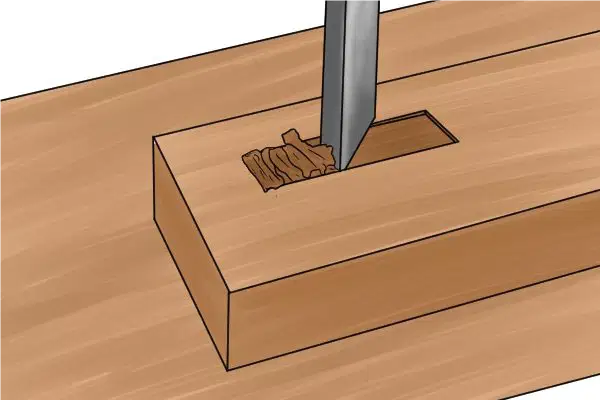
the removal for the recess to accommodate the hinge is done using
sliding bevel.
paring chisel.
spoke shave.
mortise chisel.
The strike plate for the cylindrical door lock set must be mounted onto the door
closer
handle.
jamb
spindle
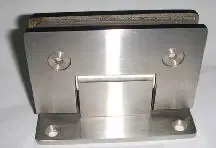
The hinge shown is used for
glass door.
metal gate.
wooden drawer.
main wooden door.
To allow the adjustment of the door speed, the door closer usually comes with
oil pump.
sliding level.
spring return.
hydraulic damper.
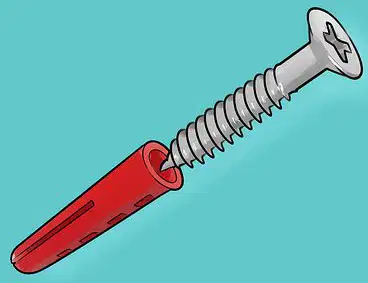
The piece of plastic that is fixed onto the wall and allows the screw to be installed as shown is known as
Rawl plug.
Wood cock.
Plastic peg.
Wall plug

