
 Worksheets
AP World History Units 1-3
Total questions: 116
Worksheet time: 1hrs 10mins
What role did the Swahili civilization play in Indian Ocean Trade?
The controlled the gold mines in the interior
They were the middle-man between the people in the interior of Africa and the Arab merchants in India.
They abducted slaves to be sold on the coast
The created banking houses and accepted bills of exchange
What changes did Trade bring to West Africa?
Islam was introduced to Mali
Buddhism was introduced to Mali
Women gained more rights
Great Zimbabwe became a center of learning
A time period of extended peace on the Silk Road..
Pax Mongolia
Pax Romana
Indian Ocean Pax
Convassarai


What innovation facilitated the expansion of the Silk Roads?
Steam engines
Caravanserai
Automobiles
Airplanes
Which empire grew wealthy due to participation in the trans-Saharan Trade Network?
Mali
Roman Empire
British Empire
Ottoman Empire
What was a major consequence of increased connectivity in the period 1200 to 1450?
Cultural diffusion
Decline in trade
Reduction in technological innovations
Decrease in city populations
Which city-state became powerful due to the Indian Ocean trade?
Swahili city-states
Venice
Athens
Tokyo
What was the primary reason for the expansion of the Indian Ocean Network?
Decrease in piracy
Decrease in monsoon intensity
Technological innovations
Global warming
Which of the following was NOT a technological innovation that facilitated Indian Ocean trade?
Submarines
Magnetic compass
Improved astrolabe
Chinese junk ships
What was the primary type of goods traded along the Silk Roads?
Electronic goods
Raw minerals
Agricultural products
Luxury goods
Which of the following was a cultural consequence of increased connectivity?
Spread of Buddhism
Decline of religious practices
Uniform global language
Decrease in artistic activities
What facilitated the spread of the Bubonic plague?
Wildlife migration
Personal hygiene practices
Air travel
Trade routes
Which empire was known for facilitating significant increases in trade and safety along the Silk Roads?
Persian Empire
Mongol Empire
Byzantine Empire
Maurya Empire
What was the primary effect of the Mongol Empire on trade networks?
Focus on local trade only
Isolation of trade routes
Increased trade and safety
Decreased trade due to warfare
Malian Emperor Mansa Musa’s pilgrimage to Mecca in 1324 can best be understood in the context of which of the following?
The expansion of Islam throughout Afro-Eurasia
The development of new transportation technologies
The diffusion of African culture to the Middle East
The territorial expansion of West African empires
Ibn Battuta traveled widely across the Middle East, South Asia, Southeast Asia, and Africa in the fourteenth century. His travels serve as evidence for the
unifying influence of Islam
excellent condition of roads in Africa and Asia
political unity of Africa and Asia
widespread use of paper money
A significant example of the interaction among Indian, Arab, and European societies by 1200 C.E. was the transfer of knowledge of
iron and copper mining techniques
the flying shuttle and spinning jenny
the science of optics and lens design
numerals and the decimal system

Khan
relating to ancient barbarians
a native or inhabitant of Mongolia
Mongol ruler
the language of the Mongols


True or False. The Crusades were where Christians tried to retake the Holy Land from the Muslims.
True
False
What was one affect of the Crusades?
Muslims took over and controlled all of Europe
Christian Crusaders became more powerful as a result of all the fighting
Crusaders were introduced to math, science, foods, and other knowledge that they brought back to Europe.
Everything went back to normal
What was one impact of the bubonic plague during the middle ages?
Peasants were able to demand higher wages and better working conditions
The church increased its power
Feudalism became stronger and continued to last for hundreds of years
Everything was normal
What is the Holy Land to Christians, Jews and Muslims?
Mecca
Savannah
Jerusalem
Medina
How did the Crusades effect trade?
Restarted trade in spices, fabrics
Exported European goods
Expanded the Roman road system
Robbed merchants
How did the plague impact Europe?
People started to question the church
1/3 of the population died
It contributed to the decline of feudalism
All are correct
When did the Black Plague occur?
Mid 1400s
Mid 1500s
Mid 1300s
Mid 1600s
What religion did the Ottoman Empire help spread throughout their empire?
Buddhism
Christianity
Shintoism
Islam
What city did the Ottoman Empire conquer in 1453 putting an end to the Byzantium Empire?
Rome
Constantinople
Athens
Vienna
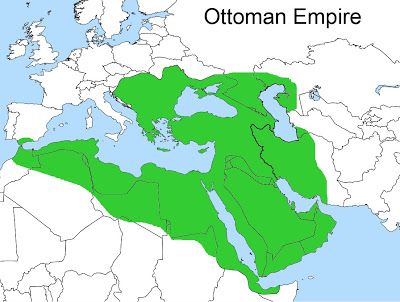
Which continents did the Ottoman Empire have some control over? Click all that apply.
Europe
Asia
Africa
North America
South America
One of the reasons for the wealth of the Ottoman Empire was
its control over the Eastern Mediteranian
the usage of trans-saharan trade routes
because they found the Americas first
strong diplomatic ties with the Genghis Khan
____ were an elite guard of Ottoman soldiers.
sinans
ulema
pashas
janissaries
Which technology, first developed by the Chinese, enabled the Ottoman Empire to expand militarily into western Asia, Europe, and northern Africa?
woodblock printing
wheelbarrow
gunpowder
magnetic compass
Which of the following was a system in which the Ottomans took Christian boys, converted them to Islam, and had them work in the military and government?
Millet System
Sultan System
Vizier System
Devshirme System
Empire started by Shah Ismail?
Ottoman
Safavid
Muhgal
What Trade Route went through the Safavid Empire?
Rich Route
Spice Route
Silk Road
Amber road
Who was the founder of the Mughal Empire?
Nanak
Barbur
Akbar
Aurangzeb
The __________empire used Gunpowder and was a Muslim empire in India.
This land based empire took over Constantinople or the Byzantine capital in 1453 under Mehmet II.
_____________ was a ruler that made people dress differently, connected Russia to the sea in the north, and developed a more European style empire.
Qing, Ming
Song, Ming
Qing, Yuan
Ming, Qing
The Ottomans captured Constantinople and renamed it Istanbul in what year?
1322
1987
1453
1076

Which of the following world history processes was most responsible for the eighteenth-century cityscape of St. Petersburg, Russia, shown above?
Isolation
World Climate Changes
Westernization
Democratization
Which of the following contributed most to the emergence of Russia as an expanding Eurasian power in the period between 1450 and 1750?
Its absorption of traditions and technology from the Byzantine Empire and western Europe
The eradication of Islam from Central Asia
The use of its strong navy to acquire colonial holdings worldwide
The fall of the kingdoms of Poland and Prussia
Which of the following is true of both the Ottoman Empire and the Mughal Empire between 1450 and 1750 ?
Christianity was prohibited in both empires.
Both empires experienced a drastic decline in population after 1500 owing to the spread of diseases brought as a result of contact with Europeans.
Both empires were established by skilled warriors on horseback who came originally from Central Asia.
The rulers of both believed in strictly separating secular and religious concerns.
Which of the following most directly led to the collapse of the Byzantine Empire in the fifteenth century?
The expansion of the Umayyad and Abbasid caliphates
The expansion of the Ottoman Empire
The expansion of Crusading activities in the Mediterranean region
The expansion of the Mongol Empire
Islam became a prominent religion in India because of-
trade with Africa
the rule of the Mughals
an invasion by the Persians
alliances with Southwest Asia
What was the system used by the Ottomans to collect taxes?
Tribute system
Devshirme system
Tax farming
Civil service examination
What was a common feature in the militaries of land-based empires during this period?
The use of chariots in battle
The use of cavalry units
The use of gunpowder-based weapons
The reliance on naval power
What was the main cause of conflict between the Ottomans and the Safavids?
Territorial disputes
Religious differences
Economic competition
Political alliances
What was the purpose of monumental architecture in land-based empires?
To showcase the wealth and power of the ruler
To provide housing for the emperor
To house government bureaucracies
To serve as religious temples
What is a land-based Empire?
An Empire whose power comes from its religious beliefs
An Empire whose power comes from its trade routes
An Empire whose power comes from its naval fleet
An Empire whose power comes from its territorial holdings
Which Empire had a policy of enslaving Christians and converting them to Islam?
Safavid Empire
Ottoman Empire
Mughal Empire
Qing Dynasty
Which Empire was Shia Muslim?
Mughal Empire
Qing Dynasty
Ottoman Empire
Safavid Empire

The responsibility of children to respect, obey, and care for their parents...
Mandate of Heaven
filial piety
Legalism
Dao
What country was NOT overrun by Chinese armies to become a tributary state?
Vietnam
Korea
Tibet
Japan
What do Vietnam, Japan, and Korea have in common?
They all have languages that stem from the same linguistic family.
China left a lasting cultural and religious imprint on them.
All were once colonies of the Mongols.
All were conquered by the Song dynasty and ruled by the imperial bureaucracy.
A canal linking northern and southern China improved during the song dynasty
Suez Canal
Panama Canal
Grand Canal
Suzhou Canal

Bureaucracy
large system of government officials following with different levels of authority
the customary code of polite behavior in society, especially between children and parent
the official document or set of rules governing affairs of state or diplomatic occasions
a formal or official record of trade and business interactions between states

Scholar-gentry
elite social class that placed a greater emphasis business and trade than on education
class of educated citizens who passed civil service examinations and worked in the government
the official style of Buddhism adopted by China during the Song Dynasty that emphasized daily study of Buddhist texts

Merit System
don't choose this one
the practice of giving unfair preferential treatment to one person or group at the expense of another based on their level of wealth or social class
system in which people are hired and promoted based on talent and skills rather than wealth or social status
the practice among those with power or influence - who favor relatives or friends, especially by giving them jobs and land ownership.
Tribute
payment or gift to demonstrate loyalty and inferiority to a stronger political power or state
A buddhist tradition of donating money to the poor
the quality of being honest and having strong moral principles
The Song Dynasty is strongly associated with the invention of which weapons technology?
Gunpowder
Grenades
Landmines
Huge warships
What is the most significant impact of the introduction of champa rice in China?
New agricultural technology
Increased trade with tributary states
New forms of labor
Urbanization and population growth
Under the major Chinese Dynasties, candidates for government jobs had to pass official exams that places a large focus or emphasis on . . .
Buddhist teachings
Confucianism
Mathematics and engineering
Sea navigation and survival
The division of Islam between Sunnis and Shias was similar to other conflicts in history that began as-
a dispute between upper and lower classes
a rivalry over who should succeed an important leader
a battle for control of a natural resource
a debate over how to interpret a law
The most important global impact of Islam coming to Sub-Saharan Africa was that-
the region participated more in interregional trade than before
the Islamic faith became more militant
religious wars erupted in the region
diseases indigenous to the African continent spread throughout Eurasia
Which statement best summarizes the influence of the bureaucracy during the Song Dynasty (960-1279 CE)?
It promoted foreign trade, but made tax collection difficult
It made managing the empire more efficient, but it was very expensive
It ended corruption, but it weakened the scholar gentry class
It strengthened Buddhism, but it undermined Confucianism
Though the Koreans had to kowtow to the Chinese, one advantage in the tributary relationship was that-
China subsidized (paid for) the Korean education system
Korea and China had a healthy trade relationship
China protected Korea from Japanese and Mongolian invasion
The Korean peasantry benefitted from a weakened nobility
One major difference between the political structures of South Asia and East Asia in the six centuries following 600 C.E. was that-
South Asia was often fragmented under several governments, while East Asia was often ruled by one centralized government
South Asian governments attempted to expand their borders, while East Asian governments were content with the size of their territory
South Asian societies isolated foreigners while East Asian societies promoted interaction with non-Asians
South Asia was dominated by secular rulers while East Asia was controlled by religious leaders
How did contact with China assist Muslims in the spread of Islam across South Asia and Southeast Asia?
Repeated attacks by Chinese military forces in South Asia weakened empires there
Chinese merchants introduced Muslim merchants to the Khyber Pass, the historic invasion route into the subcontinent
Many Chinese converted to Islam and became allies with armies from the Middle East
The adoption of Chinese sailing technology by Muslim traders allowed them to increase their activity in the Indian Ocean
Buddhism declined in South Asia after
Islam was introduced from the west
Hinduism adopted many of its features
Jainism developed into a separate faith
Zoroastrianism spread throughout northern India
Unlike the Mississippian culture or the Incas, the Aztecs successfully constructed-
Large earthen mounds
A city on a lake
An extensive network of roads
Waru waru to expand their agricultural land
Which of the following is a common characteristic shared by the Mississippian, Aztec, and Inca cultures?
Organization of labor for massive building projects
An egalitarian society
The deification of Quetzalcoatl
A great respect for the accomplishments of women
The most important reason the Aztec practiced human sacrifice was probably to-
Decrease population
Advance medical knowledge
Pay their debts to their enemies
Appease the gods
What would be most responsible for the spike in population in China in the postclassical era?
the perfecting the manufacturing of Porcelain
the prolific trade on the Silk Road
the introduction of Champa rice to the Chinese diet
the high demand for Chinese silk
Which of the following is an indicator of increasing patriarchy in China?
Civil Service Exam
Veiling of Women
Footbinding
Issuing of Dowry's
Decentralization in Japan could be seen through the system of
Rapid Modernization
Feudalism
Tributary System with China
Emperor having total control

What political system form due to the collapse of the Roman empire in Europe?
Feudalism
Communism
Republic
Confucianism

What region built canals and irrigation for agriculture, trade, and political control around Hindu temples?
Southeast Asia
East Asia
South Asia
Europe

What institution held tremendous power and gave people hope in Europe during the Middle Ages?
Catholic Church
The Patriarchy
Serfs
Crusaders
Muslim Scholars
focused on Chinese learning
ignored all earlier knowledge
preserved Greek and Indian learning
worked solely with East African scholars
What country was NOT overrun by Chinese armies to become tributary states?

Muslim mystics and missionaries would be characterized as
Ulama
Imams
Sufis
Shi'a

Of the following, what reflects the role Islam played in intellectual exchange and innovation?
The Ka'aba
The Taj Mahal
Borobrodur
The House of Wisdom

The Seljuk Turks...
Controlled the Middle East
Pressured the Byzantine Empire
Fought against both the Crusaders and Mongols
All of these

Unlike the Seljuk Sultanate, the Delhi Sultanate
was a minority in the land they controlled
controlled trade in their lands
did not have Turkish roots
were less committed to Islam
were able to read the works of Aristotle and other Greek philosophers

How did the kingdoms of Srivijaya grow to be powerful and wealthy?
Controlled the waterways and trade in the area
Controlled their empire with military force
Negotiated lasting trade treaties with the China Dynasties
Made other countries attack their competition

Select the technology that was developed in the Song Dynasty.
Increased stability of the compass
Gunpowder being used in warfare
Developed drought-resistant rice
Continuation of the woodblock printing

What two religions spread peacefully on trade routes in Asia between 1200 - 1450 CE?
Islam and Buddhism
Sikhism and Judaism
Hinduism and Animism
Christianity and Judaism

What did the revival of Confucian ideas in Song Dynasty do to women?
They had more restrictions
Their status rose to great heights
They were allowed to work in government
Their status was never changed

What economic system produced everything that was needed for life in Europe during 1200- 1450 CE?
Manorialism
Feudalism
Christianity
Pastoralism
The responsibility of children to respect, obey, and care for their parents...
Mandate of Heaven
filial piety
Legalism
Dao
What do Vietnam, Japan, and Korea have in common?
They all have languages that stem from the same linguistic family.
China left a lasting cultural and religious imprint on them.
All were once colonies of the Mongols.
All were conquered by the Sung dynasty.

The Islamic Empire allowed for religious tolerance by charging the ______________ to non-Muslims
Salt Tax
Turks Tax
Jizya Tax
All of the above
This is a movement in religious philosophy derived from Confucianism in China around 1000 CE in response to the ideas of Daoism and Buddhism.
Theravada
Song Taizu
Neo-Confucianism
Mahayana
What was Cahokia?
A pyramid made of packed earth that rose in three major terraces to a height of one hundred feet.
A mound used to enclose sacred ceremonial spaces in which great crowds would gather.
A large circle of cedar posts that numbered in multiples of twelve, indicating a recognition of the number of lunar months in a year.
A city built by American Indians along the Mississippi River almost a thousand years ago.

1.1 - The image below reflects what Confucian concept?
tribute system with nomads
imperial bureacracy
Grand Canal
civil service exam
Who created a meritocracy?
Song dynasty
Heian Japan
Tenochtitlan
Rajput

Who preserved the knowledge of the dark ages in Europe?
Christian Monks in a monastery
Buddhist monk in a temple
Islamic Caliphs in a Mosque
Jewish Kohen in a Synagogue

