
 Worksheets
Benchmark #1 Review
Total questions: 41
Worksheet time: 49mins

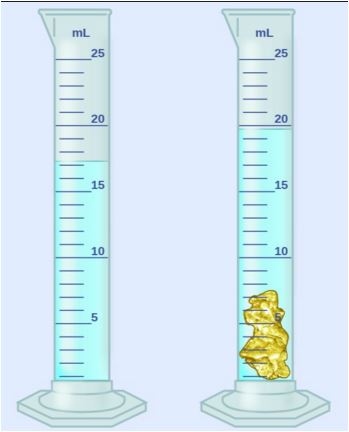

The amount of water displaced is the same as the volume of the object. What is the VOLUME of the object?

Which box has a higher density?
A
B
They are the same
The number of protons in the nucleus of an atom is called the --
atom
proton
atomic mass number
atomic number
A subatomic particle with a positive charge is called --
a proton
a neutron
an electron
a nucleus

What is the label A?
protons
neutrons
electrons
nucleus

What is label E?
protons
neutrons
electrons
nucleus
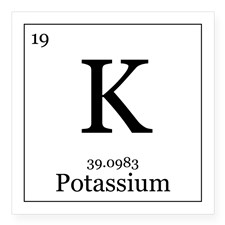

Valence electrons are--
the innermost electrons not available to bond
all the electrons, whether they can bond or not
the outermost electrons available to bond
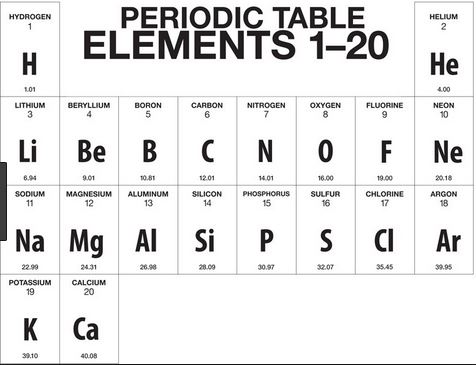
How many valence electrons does Hydrogen Have?
1 Valence electron
2 Valence electron
3 Valence electron
4 Valence electron
5 Valence electron

A super heated gas!
solid
liquid
gas
plasma

A ________ is a state of matter that is like a gas, but also has an electrical charge.
Plasma
Liquid
Gas
Solid

Is this an example of a physical or chemical change?
physical
chemical

Is this an example of a physical or chemical change?
physical
chemical


Rust on an iron bar is an example of chemical change.
True
False
A possible explanation for a problem that has not yet been tested is known as a ___________.
data
theory
hypothesis
fact
Which type of variable in an experiment is the one being deliberately changed by the scientist?
dependent variable
independent variable
data
constants
Energy can't be _____.
transformed
converted
made or created
harnessed or produced
This is energy that is stored for later use.
kinetic energy
mechanical energy
potential energy
electromagnetic energy
This is energy of vibrating molecules that moves through matter
sound
mechanical
thermal
electrical

What are the products of the chemical reaction pictured?
CH4 and CO2
CH4 and O2
CO2 and H2O
O2 and H2O
H2 + O → H2O

Which elements are to the right of the zig zag?
metals
nonmetals
metalloids
The elements located to the left of the stair-step
Metals
Nonmetals
Metalloids
Gases
The elements located along the stair-step
Metals
Nonmetals
Metalloids

What is the image a picture of?
Einstein Model
Bohr Model
Pierre Model
Newton Model

In Rutherford's famous "Gold Foil" experiment, some particles passed through the foil, some were deflected, and some were bounced straight back. This observation made Rutherford conclude
gold atoms have a solid nucleus
gold atoms can conduct electricity
gold atoms are denser than other metals
gold's elections orbit the nucleus at definite distances from the center

Who's model does this picture represent?
Dalton 1803-1808
Rutherford 1911
Bohr 1913
modern model 1920 to the present

