
Font size
 Worksheets
Yr 11 ATAR Functional Anatomy Revision
Total questions: 52
Worksheet time: 38mins


Define 'Flexion'.
Movement away from the midline of the body or body part
Movement toward the midline of the body or body part
Decrease in the angle of a joint by bending
Increase in the angle of a joint; straightening of a joint
Turning the foot inward at the ankle joint
inversion
eversion
pronation
supination
Pronation is:
Turning the foot inward at the ankle joint
Turning onto one’s stomach or turning the hand so that the palm is facing down
Turning onto one’s back or turning the hand so that the palm is facing upward
Circular movement around specific axis
Rotation is:
Turning onto one’s stomach or turning the hand so that the palm is facing down
Turning onto one’s back or turning the hand so that the palm is facing upward
Circular movement around specific axis
Turning onto one’s back or turning the hand so that the palm is facing upward.
Pronation
Supination
Rotation
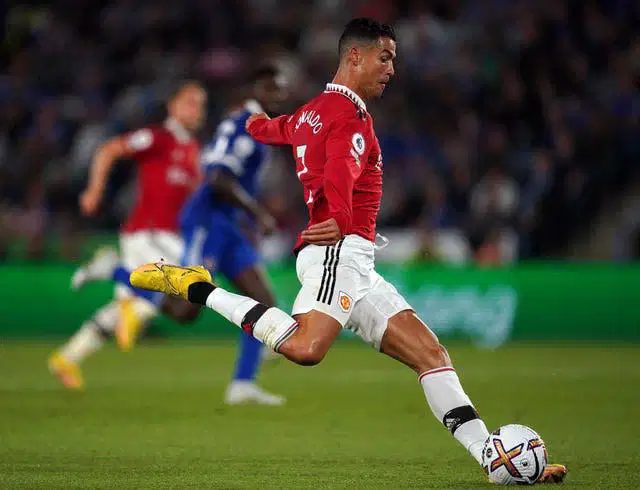
The BACKSWING of a leg when kicking a soccer ball is best described as;
Flexion of the thigh at the hip joint, extension of the lower leg at the knee joint
Extension of the thigh at the hip joint, flexion of the lower leg at the knee joint
Eversion of the thigh at the hip joint, extension of the lower leg at the knee joint
Inversion of the thigh at the hip joint, flexion of the lower leg at the knee joint
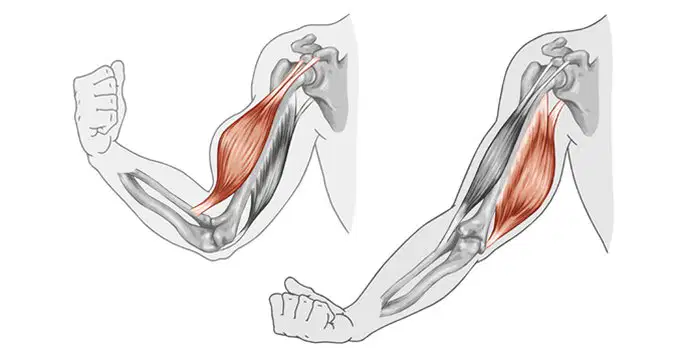
Contractibility of muscles says that;
The bigger the muscle the more forceful contraction
Contractions are all equal
Only the big muscles contract in a movement
Both big and small muscles contract equally
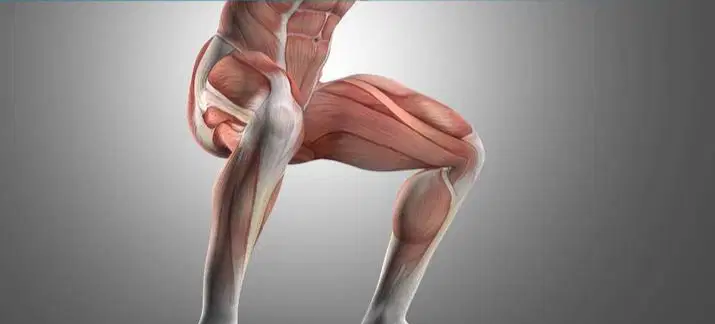
During flexion of the knee which muscle is the agonist (prime mover)?
Gastrocnemius
Tibiallis anterior
Hamstrings
Quadriceps

Which of the following is a ball and socket joint?
Elbow joint
Radio-ulnar joint
Shoulder Joint
Wrist joint

Muscles fibres that are most suited to endurance activities are
fast twitch or type I fibres.
fast twitch or type II fibres
slow twitch or type I fibres
slow twitch or type II fibres

The ability of a muscle to lengthen and then return to its original shape and size is known as the muscles
Extensibility
Elasticity
Excitability
Contractibility

A pair of muscles works together to produce movement. While serving in volleyball, you observed the player extending his elbow as he made contact with the ball. Which pair of muscles would primarily be involved in this process?
Biceps and triceps
Pectorals and trapezius
Biceps and deltois
Triceps and deltoid
Use the diagram to label the bones of the skeletal system
Clavicle
Phalanges
Metacarpals
Scapula
Humerus
Radius
Ulna
Carpals
Use the diagram to label the bones of the skeletal system
Humerus
Spine
Mandible
Skull
Clavicle
Sternum
Ribs
Use the diagram to label the bones of the skeletal system
Tarsals
Pelvis
Femur
Tibia
Fibula
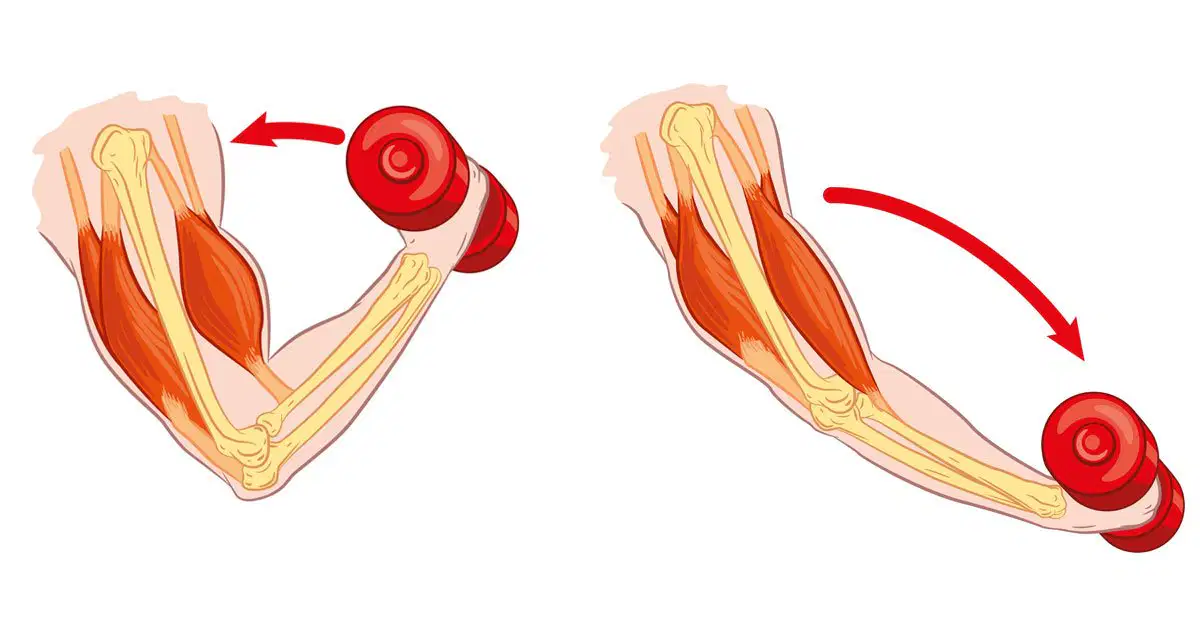
An eccetric contraction (a) in length, with the joint angle .
A concentric contraction (a) in length, with the joint angle (b) .

A isometric contraction (a) in length, with the joint angle (b) the same.
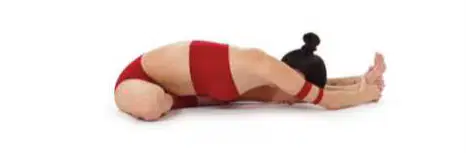
Extendability refers to how far your (a) stretch (b) their (c) length.
This is the ability of skeletal muscle wherein it recoils to its original resting length after it has been stretched
Contractility
Excitability
Extensibility
Elasticity
This attaches your muscle to bone
Tendons
Ligaments
Aponeurosis
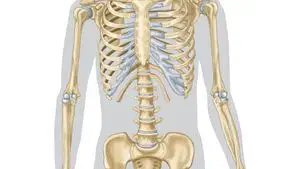
What are the 26 bones that make up your backbone called?
carpals
Tarsals
phalanges
vertebrae

Why is having increased extendibility of your muscles in sport advantageous?
Greater rannge of motion within movement
Allows greater power generation
Allows for a longer amount of time to generate force
All of the above

Which is the prime mover?
iliopsoas
gluteus maximus
Antagonist muscles in the squat pose would be? (think opposite side)
Hamstrings
Hip Flexors
Another name for your calf muscle is.............
Quadriceps
Hamstring
Gastrocnemius
Pectoralis Major is paired with what muscle?
Deltoid
Trapezius
Latissimus Dorsi
Iliopsoas
The hip joint is a gliding joint
True
False
Match the following joint names to their characteristics...

Pivot

Saddle

Gliding or plane

Hinge

Ball and socket
The flow of blood to and from the lungs is referred to as
pulmonary circulation
systemic circulation
autonomic circulation
somatic circulation
The flow of blood to and from the lungs is referred to as
pulmonary circulation
systemic circulation
autonomic circulation
somatic circulation
A pulse can be detected most easily in
an artery
a vein
a capillary
a lacteal
Which statement best describes arteries?
They have thick walls and transport blood away from the heart.
They have thick walls and transport blood toward the heart.
They have thin walls and transport blood away from the heart.
They have thin walls and transport blood toward the heart.
Which body structures have walls one cell thick?
veins and arteries
trachea and bronchi
capillaries and alveoli
lymph vessels and stomach
These apply to inhalation
Diaphragm moves up
Ribs move in
Ribs move out
Diaphragm contracts
Creates larger pressure in thoracic cavity
These apply to exhalation
Diaphragm relaxes
Pressure increases in thoracic cavity
Pressure is less outside the body
Diaphragm moves down
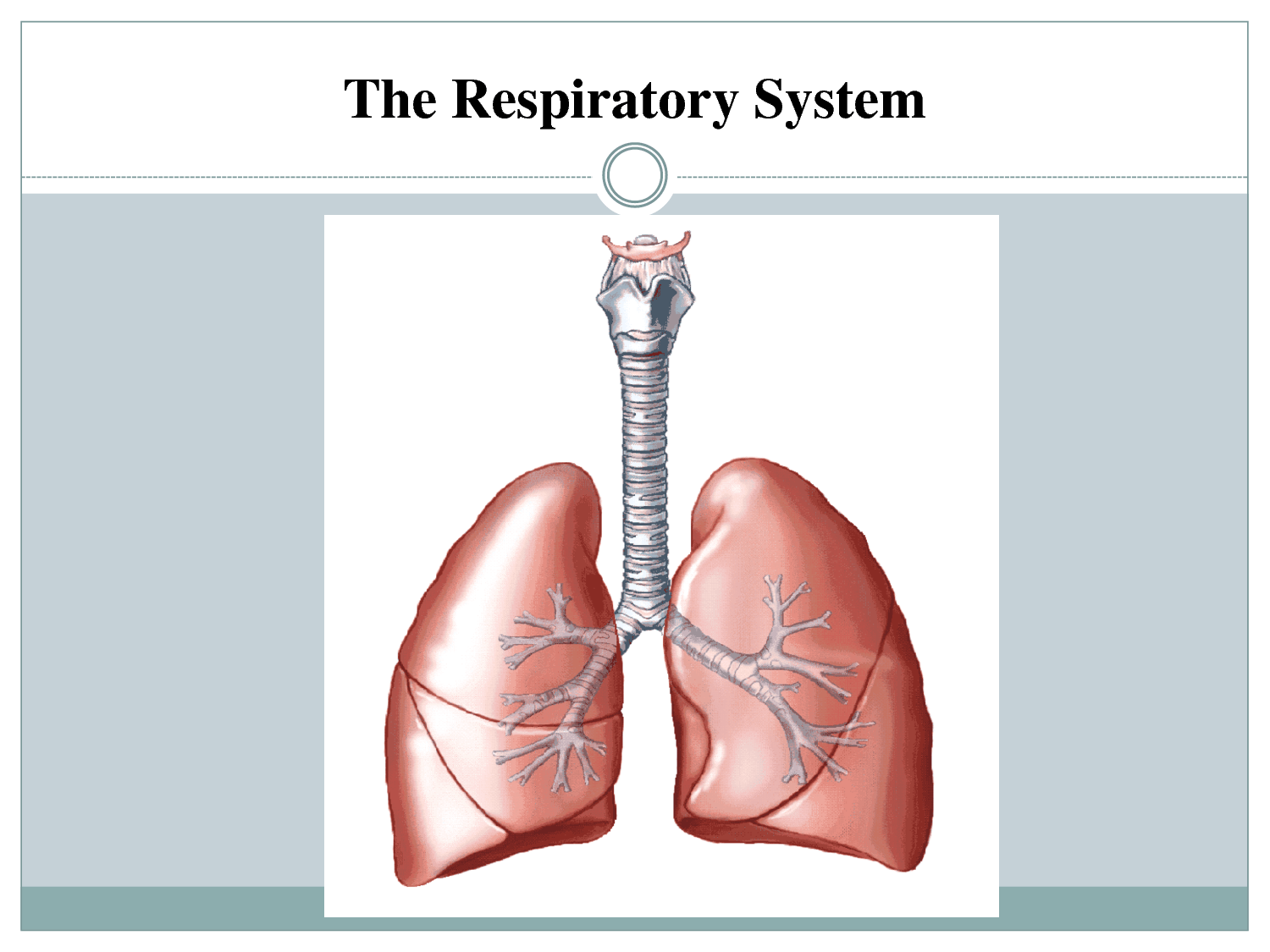
What are the tiny air sacs that allow for diffusion between oxygen and carbon dioxide
Bronchi
Bronchioles
Trachea
Alveoli
Please choose the correct pathway air travels though into the lungs
Nasal passage, pharynx, larynx, trachea, bronchiole, bronchi, alveoli
Nasal passage, pharynx, larynx, trachea, bronchi, bronchiole, alveoli
Nasal passage, pharynx, larynx, trachea, bronchi, alveoli, bronchiole
Nasal passage, trachea, pharynx, larynx, bronchi, bronchiole, alveoli
What is the main function of gas exchange
To remove carbon dioxide and supply oxygen to the body
To remove oxygen from the body
To supply carbon dioxide and remove oxygen from the body
To supply water to the body cells

