
 Worksheets
24-25 TES 5th Science CBA 2 Review
Total questions: 89
Worksheet time: 4hrs 16mins
How much space an object takes up
Volume
Mass
Matter
Object

The picture below shows a balanced scale using a box and a mystery object. Students are investigating using this balance what are they trying to measure
Volume
Size of the box
Density
Mass
The amount of matter in an object
volume
solid
liquid
mass
The state of matter that has NO definite shape or volume with free moving particles
Solid
Liquid
Gas
Matter
The state of matter that has a definite shape and volume with very tightly packed particles
Solid
Liquid
Gas
Matter
The measure of whether an object sinks or floats as compared to water
Observe
Classify
Relative Density
Measure
The state of matter of loosely packed particles that takes the shape of its container as it flows
Solid
Liquid
Gas
Matter
The pulling force of a magnet
Density
Magnetism
Matter
Observe
Anything that has mass and takes up space
Force
Matter
Mass
Volume
How hot or cold something is.
volume
mass
temperature

Objects that are more dense than water will ______.
sink
float
neither

What would you measure with this tool?
volume
density
mass
weight

F
G
H
J

Which objects are electrical insulators?
A) Eraser, toothpick, cotton ball
B) Toothpick, paper clip, safety pin
C) Eraser, paper clip, safety pin
D) Paper clip, safety pin, aluminum foil
A student places objects in a bucket of water to determine if they will float. Which set of items is less dense than water?
F. Plastic paper clip, penny, and cork
G. Toothpick, metal spoon, and plastic paper clip
H. Metal spoon, vegetable oil, and penny
J. Toothpick, cork, and vegetable oil.

A student poured equal amounts of water and cooking oil into a jar. The student placed a lid on the jar and shook the mixture for five seconds and then let the jar sit for ten minutes. The results of this investigation are shown. Which conclusion best compares a property of cooking oil and water shown in this investigation?
Cooking oil is less dense than water.
Water is less dense than cooking oil.
Water dissolves in cooking oil.
Cooking oil dissolves in water.

Which substance is the most dense in this picture?
Vegetable Oil
Dish Soap
Honey
Corn Syrup

The diagram shows a series circuit with three lit bulbs. How many of the bulbs will remain lit if the wire is cut a the point shown by the arrow?
0
1
2
3

A student builds a circuit made up of a battery, two light bulbs, and a switch. What will the student most likely observe in this circuit?
Light bulb 1 and light bulb 2 will both be on
Light bulb 1 will be off, but light bulb 2 will be on
Light bulb 1 and light bulb 2 will both be off
Light bulb 1 will be on, but light bulb 2 will be off

A group of students built the circuit shown above. The lightbulb does not glow. Which statement explains this observation?
The battery is not charged
The lightbulb is not part of a complete circuit
The circuit does not have a switch
The bell uses most of the energy from the battery

Which of these changes to the electric circuit shown above will cause the lightbulb to light up.
Straightening the wire so that the current can flow more easily
Adding a switch and more wire so that the current can flow more easily
Turning one battery so that its positive end connects to the other battery's negative end
Making the length of wire the same on both sides of the lightbulb
Which of these devices is the only one NOT designed to produce both sound and light energy? (5.6A)


A class is learning about states of matter. The teacher shows the students how to set up the investigation shown in the diagram. What kinds of energy are needed in this investigation to change the state of matter of the candle?(5.6A)
Light, mechanical, and thermal
Electrical and thermal
Mechanical, light, and electrical
Thermal and mechanical
what is solubility?
ability of a solid to dissolve in a liquid.
liquids dissolving in a solid.
ability of a liquid to dissolve in a solid
what is a conductor?
material that allows electric current or thermal (heat) energy to pass through easily.
material that allows light energy to pass through easily.
material that allows mechanical energy to pass through easily.
what is an insulator?
material that slows down or stops light energy
material that allows current or thermal (heat) energy to pass through
material that slows down or stops electric current or thermal (heat) energy from passing through
thermal is another word for....
heat
moving
electricity
Which is a force that keeps the planets in orbit around the Sun?
inertia
gravity
magnetism
solar energy
When is friction needed during the course of motion?
to speed up motion
to slow down motion
to keep motion at the same speed
to keep motion in the same direction
A ball was rolling fast and then slowed. Which most likelycaused the ball to slow?
heat
friction
momentum
wind

10. A student investigating the effects of forces, measures the distance a ball can be pushed by air from a small fan. What is the variable (change) in this investigation?
F. The mass of the balls being pushed by air.
G. The length of the surface on which the balls roll.
H. The amount of wind pushing the balls.
J. The type of surface the balls are rolling on.

9. Some students were testing the effects of force on the motion of a water bottle. They set up the experiment picture above and rolled the full water bottle down both ramps. What question were the students most likely trying to answer?
A. How does mass affect the distance a full water bottle will roll?
B. How does friction affect the distance a full water bottle will roll?
C. How does the size of the water bottle affect the distance it rolls?
D. How does ramp height affect the distance a full water bottle will roll?
6. Some students were investigating if the height that a ball was dropped would affect its bounce. The ball was dropped at 60 cm and at 80 cm. What statement is true of the results for each of the heights that the balls were dropped?
F. There was no difference in the results.
G. The ball dropped from 60 cm bounced 20 cm higher than
the ball dropped from 80 cm.
H. The ball dropped from 80 cm bounced higher than the ball dropped from 60 cm.
J. The ball dropped from 60 cm bounced higher than the ball dropped from 80 cm.

5. An experiment is conducted to measure the amount of force required to push a square cardboard box from one side of the room to the other side. What variable is likely to lessen the force required?
A. Adding several heavy weights to the box
B. Tipping the box onto its side
C. Adding another box on top
D. Placing the box onto a wheeled cart

2. By changing the surface over which the car rolls from sandpaper to wax paper, you might be able to test the effect of what force?
A. Magnetism
B. Wind
C. Wind
D. Friction

Pull the spring scale a longer distance.
Cover the table top with a carpet square.
Repeat the same steps using a heavier mass.
Attach a smaller block to the spring scale.

A
B
C
D

A
B
C
D

A
B
C
D

A
B
C
D

What is a circuit with several paths for electricity to flow?
conductor
series circuit
parallel circuit
open circuit

When a circuit is closed, the load is _____________?
On
Off

Wood is a(n) _____?
conductor
insulator

Mr. Reincke attached the parts as shown here and the bulb did not light. The most likely reason the bulb does not light is because-
batteries can’t provide electric energy
the switch must be open for electricity to flow
the switch must be open for electricity to flow
yarn does not conduct electricity
If we touch a live wire carrying current, we get a shock. This is because our body is a(n)-
conductor of electricity
insulator of electricity
source of electricity
None of these
A light bulb will shine brighter when-

This circuit is .....?

Sara wants to make an electric circuit. She gathers the items shown here.
What other item does Sara need to make a complete circuit?
a battery
a switch
an insulator
a conductor

This circuit is a(n)-
A light bulb glows only in a(n)-
closed circuit
open circuit
open circuit if bulb is not fused
in both circuits
Which of these is NOT a conductor?
copper wire
metal coin
rubber band
sea water


Which of the bulbs would light up if the wire was cut as shown in the picture?
D only
E only
Both D and E
None

Which of the bulbs would be lit if the wire was cut as shown in the picture?
Only D would light up.
Only E would light up.
Both D and E would light up.
None of the bulbs would light up.

Which of these bells would ring?
(Hint: Which ones are on the complete loop?)
Bell 1 and 2 only
Bell 1 and 3 only
Bell 1 and 4 only
Bell 1, 3, and 4 only
Which 3 components will make a simple circuit?
Battery, Insulator, and Light Bulb
Light Bulb, Metal Wire, and Bell
Battery, Light Bulb, and Metal Wire
Plastic Wire, Light Bulb, and Battery


Plugging something in is an example of
Being Lazy
Light Energy
Electrical energy
Thermal energy
What happens to electrical energy in a complete circuit with a buzzer?
It is transformed into light energy
It is transformed into sound energy
It is transformed into thermal energy
It is transformed into motion energy
Which of the following is an example of electrical energy being transformed into motion?
A light bulb glowing
A fan spinning
A radio playing music
A heater warming a room
A type of mixture that forms when one substance dissolves in another is known as a
heterogeneous mixture
solution
solute
solvent
Which of the following describes: 'Dissolved particles are distributed evenly and you can no longer see them.'?
conductivity
solution
mixture
metal
If a material does NOT dissolve in a liquid, it is said to be___________________
soluble
insoluble
partly soluble
partly insoluble
Define the term soluble.
Can dissolve in water
Cannot dissolve in water
Partially dissolves in water

What type of energy transformation occurs, when a hawk eats a mouse and then uses the energy from the mouse to fly?
mechanical energy to chemical energy
thermal energy to mechanical energy
chemical energy to mechanical energy
mechanical energy to thermal energy
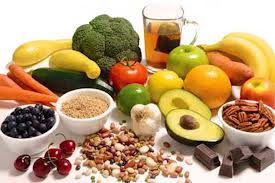
What kind of energy is represented in the picture?
Thermal
Chemical
Sound
Kinetic

What energy transformation occurs when a crock pot is plugged into an outlet and then the control knob is turned "on"?
thermal to electrical
mechanical to thermal
electrical to thermal
electrical to sound

What type of energy is stored in batteries or food?
Potential energy
Thermal energy
Chemical energy
Mechanical energy

What sort of energy transformation is this?
Chemical to Thermal
Thermal to chemical
Kinetic to potential
Open to closed

Describe the energy transformations in the following scenario:
A battery is placed in a flashlight, which completes a circuit (wire), then produces light when turned to the on position.
(a)

The flashlight uses batteries and wires to produce light. What are the energy transformations that occur at each of the three steps?
Chemical, Elastic, Electrical
Nuclear, Chemical, Radiant
Chemical, Electrical, Radiant
Radiant, Electrical, Chemical

