
 Worksheets
Unit 4 Quiz Intro to Investing
Total questions: 40
Worksheet time: 1hrs 20mins
What is a stock?
A type of bond issued by companies
A share in the ownership of a company
A mutual fund investment
A retirement account
Which of the following is a characteristic of bonds?
They represent ownership in a company
They are a type of retirement account
They are debt securities that pay interest
They are a type of mutual fund
What is the primary purpose of the stock market?
To provide loans to businesses
To facilitate the buying and selling of stocks
To manage retirement accounts
To issue government bonds
Which of the following best describes a mutual fund?
A single stock investment
A collection of stocks, bonds, or other securities
A type of bond
A retirement savings account
What is a key difference between ETFs and mutual funds?
ETFs can only be bought at the end of the trading day
Mutual funds are traded on stock exchanges
ETFs are traded like stocks throughout the day
Mutual funds have lower fees than ETFs
Which of the following is a benefit of investing in mutual funds?
Guaranteed returns
Professional management
No risk involved
Tax-free income
Which of the following is true about a 401(k) plan?
It is a type of bond
It is a retirement savings plan offered by employers
It is a government-issued savings bond
It is a type of mutual fund
What is the main advantage of a Roth IRA over a traditional IRA?
Contributions are tax-deductible
Withdrawals are tax-free in retirement
Higher contribution limits
Employer matching contributions
What is the primary goal of a 529 account?
To provide immediate income
To save and invest for future retirement needs
To buy and sell securities
To fund future higher education expenses
Which of the following is a common feature of both mutual funds and ETFs?
They both require a minimum investment of $10,000
They both offer diversification
They both guarantee returns
They both have no fees
Which of the following is a tax advantage of a 401(k) plan?
Contributions are taxed at a higher rate
Contributions are tax-deductible
Withdrawals are tax-free at any time
There are no tax advantages
What is the main risk associated with investing in stocks?
Guaranteed loss of principal
Interest rate risk
Market volatility and potential loss of value
No risk involved

Which would be considered the highest risk investment type?
Stock
Mutual Fund
Bond
Money Market Account

If Jonathan is earning 2% on an investment and inflation is increasing by 3%, what is happening to his purchasing power?
It's increasing
It's decreasing
It's not changing
Inflation and purchasing power are not related

What is the main appeal of an index fund?
They are always actively managed to add a human touch
They are typically low cost and diversified investments
They always carry Large Cap Domestic Stocks.
They give you partial ownership of a single company

A diversified portfolio is desirable because
It limits investment choice
It's a good predictor on rate of return
It increases risk and return
It decreases risk
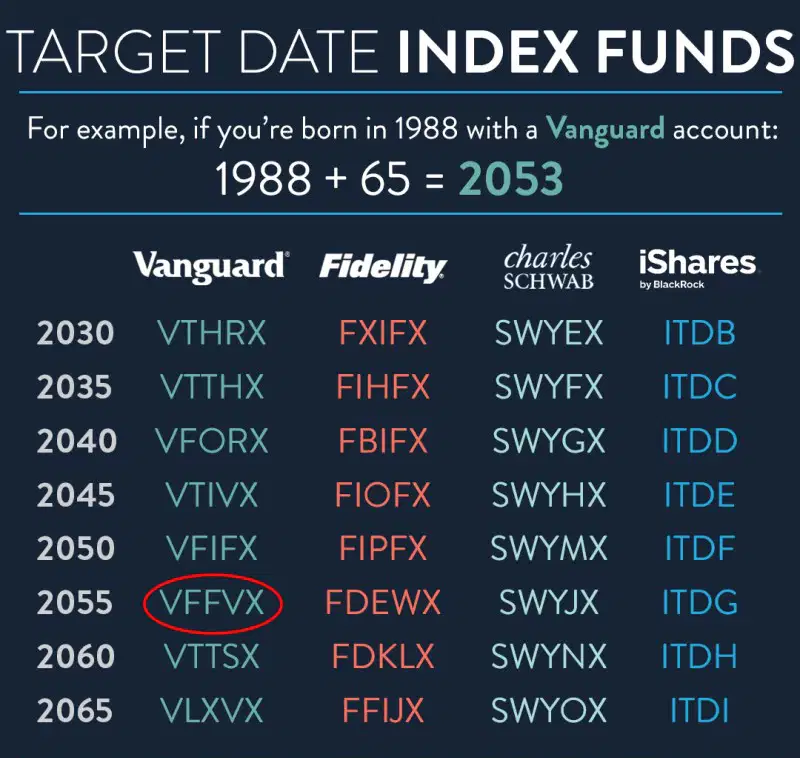
What is the benefit of a target date fund (TDF)?
TDFs come with lower fees
TDFs adjust assets allocation automatically based on retirement year
TDFs are insured against loss for the first 5 years
TDFs guarantee a certain rate of return by the target date

What is one advantage of investing in a bond fund compared to an individual bond?
A bond fund offers diversification by holding multiple bonds
A bond fund guarantees a fixed return unlike an individual bond
A bond fund is only available through government agencies
A bond fund has a fixed maturity date like an individual bond
Why might a company decide to issue shares to the public?
To allow investors to gain a higher return on investment
To generate capital for business expansion
To share the financial risk with more stakeholders
To enhance the company's public profile
A Bull Market
A Bear Market
A Monkey Market
A Mongoose Market
Company profits that are distributed to shareholders during profitable times are called
Stocks
capital loss
capital gains
dividends

What is a penny stock?
A Stock whose share price is worth $0.01
Any stock that doesn't trade on the New York Stock Exchange
Stocks of companies that are financially healthy and steadily growing.
Any stock valued under $5 per share.
High risk Corporate bonds are called.
Penny stocks
T-Bills
Junk bonds
Exchange Traded Funds
An advantage of having an Individual Retirement Account (IRA) is
you manage and control the account.
your employer puts money into your account.
you can withdraw money when you want without penalty.
you set it up through your your employer.
What is a possible reason a company would sell stock?
To hire more people
To expand its business
To develop new technology
All of the above
Which Stock Index is made up of the 30 largest American Corporations?
The New York
Stock Exchange
The NASDAQ
The Dow Jones
The S & P 500
Investors nearing retirement will typically shift their investment portfolios to include a higher proportion of
Bonds
Small Cap Stocks
Emerging Market Stocks
International Stocks
What type of Mutual Fund is sold to the investor commission free?
Private Equity Funds
No Load Funds
Load Funds
Hedge Funds
What type of mutual fund would be most appropriate for an investor who wants tax-exempt income from investments?
Income Fund
Industry Fund
Global Stock Fund
Municipal Bond Fund
What type of mutual fund would be most appropriate for a person who wants to invest in a blend of stocks and bonds?
Balanced Fund
Growth Fund
Income Fund
Municipal Bond Fund
If someone wants to invest in a mutual fund that is based on the Nasdaq or S & P 500, which type should they look into?
Value Fund
Growth Fund
Index Fund
Balanced Fund
If an investor was interested in purchasing a variety of Stocks in Large established Domestic Corporations, what would be their best option?
An ETF that tracks the S & P 500
A Mid Cap Growth Fund
An ETF that invests in a Total Market Index
A Bond Mutual Fund
What does it mean if a stock is described as "volatile"?
It pays high dividends.
Its price does not change.
It has a stable market.
Its price can change rapidly in a short period.
Which investment is the most conservative from the selection below?
US Treasury Bonds
Leveraged ETF
Junk Bonds
Mid Cap Stocks
What does ETF stand for?
Exchange-Traded Fund
Equity Trading Fund
Exchange-Traded Finance
Electronic Trading Fund
What is a ticker symbol?
The price per share that a stock trades for.
A unique series of letters assigned to a publicly traded company’s stock.
A signal that the market is about to experience volatility.
A unique drawing used to identify a corporation.
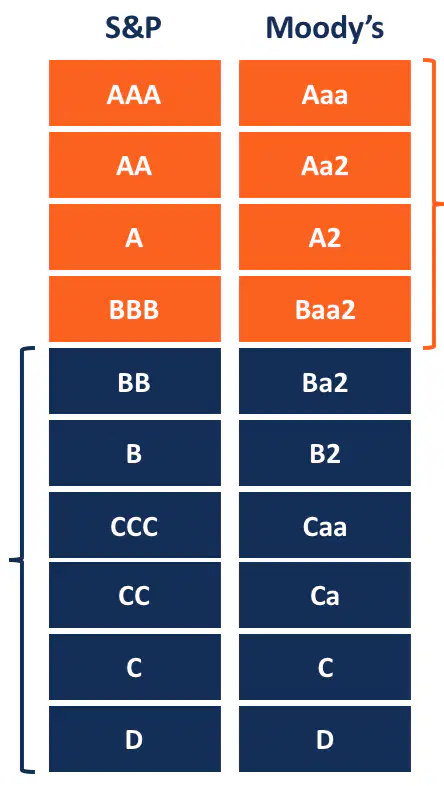
AAA, AA, A, BBB, are examples of what?
Investment Grade Bonds
Speculative Stocks
Major League Baseball Designations
Junk Bonds
Shares of stock are also known as:
Bonds
Money market funds
Debts
Equities
Glenn has committed to investing $100 each month in his favorite stock. Last month, when the stock price was $20, he bought five shares. This month the stock price is $25, so he bought just four shares. This strategy is called:
dollar cost averaging.
growth investing.
diversification.
buy-and-hold.

