
 Worksheets
Electricity Final Quiz
Total questions: 29
Worksheet time: 47mins
Which of the following best describes the role of electrons in creating static charge differences?
Electrons are stationary and do not contribute to static charge.
Electrons move from one object to another, creating a charge imbalance.
Electrons cannot move out of the atom.
Electrons are only involved in current electricity, not static electricity.
Which of the following is an example of static energy?
A battery powering a flashlight
Lightning during a thunderstorm
A fan spinning
A light bulb glowing
In an electric circuit, what does the water pump represent?
A resistor
A switch
A battery
An insulator
Which of the following materials is a good conductor of electricity?
Rubber
Glass
Copper
Wood
What is the primary difference between conductors and insulators?
Conductors allow electricity to flow easily, while insulators do not.
Insulators allow electricity to flow easily, while conductors do not.
Both conductors and insulators allow electricity to flow easily.
Neither conductors nor insulators allow electricity to flow.
How is potential energy transformed into kinetic energy in an electric circuit?
By increasing the resistance in the circuit.
By converting energy stored in a battery to electrical energy.
By decreasing the voltage in the circuit.
By using a switch to stop the flow of electricity.
What does the letter "V" represent in an electric circuit?
Current
Resistance
Voltage
Power
If a circuit has a current of 2 amps and a resistance of 6 ohms, what is the voltage across the circuit? Use Ohm's Law: V=IR .
8 volts
10 volts
12 volts
14 volts
What is the main difference between AC and DC electricity?
AC electricity flows in one direction, while DC electricity changes direction.
DC electricity flows in one direction, while AC electricity changes direction.
Both AC and DC electricity flow in one direction.
Both AC and DC electricity change direction.
Which symbol represents a resistor in an electric circuit diagram?
A zigzag line
A straight line
A circle
A triangle
What tool is used to measure voltage, current, and resistance in a circuit?
Ammeter
Voltmeter
Multimeter
Ohmmeter
What is the unit of measurement for current?
Volts
Amps
Ohms
Watts
Convert 500 milliamps (mA) to amps (A).
0.05 A
0.5 A
5 A
50 A
Which of the following is a source of AC power?
A battery
A solar panel
A wall outlet
A car battery
Which of the following symbols represents a light bulb in an electric circuit diagram?
A zigzag line
A series of short and long parallel lines
A circle with a cross inside
A triangle
If I add a light bulb to a circuit, what happens to the current through the circuit?
Current increases
Current decreases
Current doesn't change.
Current moves into 2 directions.
Which of the following is a characteristic of DC electricity?
It changes direction periodically.
It flows in a single direction.
It is used in household power outlets.
It is not used in batteries.
What does the letter "I" represent in an electric circuit?
Voltage
Current
Resistance
Power
If a circuit has a voltage of 9 volts and a resistance of 3 ohms, what is the current flowing through the circuit? Use Ohm's Law and Ohm's Triangle to solve: V=I x R .
1 amp
2 amps
3 amps
4 amps
Which of the following symbols represents a battery in an electric circuit diagram?
A zigzag line
A series of short and long parallel lines
A circle with a cross inside
A triangle
Where does the a cart moving on this section of a roller coaster have its MAXIMUM POTENTIAL ENERGY?
Where does the a cart moving on this section of a roller coaster have its maximum KINETIC ENERGY?
Draw an electric circuit USING SYMBOLS containing:
1. Battery
2. Resistor
3. Light bulb
4. Switch
Indicate the VOLTAGE, CURRENT and RESISTANCE USING LETTERS, and 1 ARROW.

Voltage
Potential Energy
Amps
Flow of electricity
Resistance
Measured in Ohms
Insulator
Does not conduct electricity
Draw an electric circuit USING SYMBOLS containing:
1. AC power
2. LED light
4. Switch
Indicate the VOLTAGE, CURRENT and RESISTANCE USING LETTERS, and 1 ARROW.
Organize these options into the right categories
Copper
Wood
Plastic
Ceramic
Brass
Iron
Label the following part of this circuit with only the 3 CORRECT LABELS.
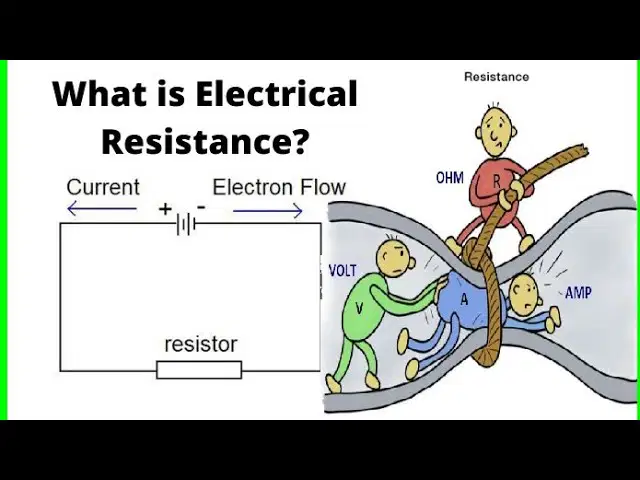
Why do we need to have resistance in an electric circuit?
Give 1 reason with an examples of a device that would need that.

