
 Worksheets
U1L5 HW Intro on Quizizz
Total questions: 44
Worksheet time: 3hrs 47mins
What is the main topic students will learn about in U1L5 Intro to Business?
Marketing strategies
Factors of production
Financial accounting
Business ethics
What are students asked to do at the beginning of the lesson?
Start a group discussion
Put phones away and start bellwork
Begin a quiz
Watch a video
What are the three kinds of economic resources needed for production?
Natural resources, Human resources, Capital resources
Financial resources, Technological resources, Human resources
Natural resources, Technological resources, Financial resources
Capital resources, Financial resources, Technological resources
What are natural resources?
Resources that come from the earth, water, and air
Resources that are man-made
Resources that are unlimited
Resources that are only found in forests
What is a characteristic of most natural resources?
They are renewable
They are non-renewable
They are always available
They are man-made

Which of the following is an example of a primary industry?
Technology
Banking
Agriculture
Retail

What does "Human Resources" involve?
The labor needed to create goods and services
The materials used in production
The technology used in manufacturing
The financial capital for business operations
What are capital resources?
Resources that are consumed quickly
Resources that last for a long time and require serious investment
Resources that are easy to replace
Resources that are used for personal expenses
Which of the following is an example of a capital resource?
Office supplies
Buildings
Food items
Clothing

What is the difference between liquid and non-liquid capital?
Liquid capital is harder to spend than non-liquid capital
Liquid capital is easy to spend, while non-liquid capital is harder to spend
Both are equally easy to spend
Non-liquid capital is easy to spend, while liquid capital is harder to spend
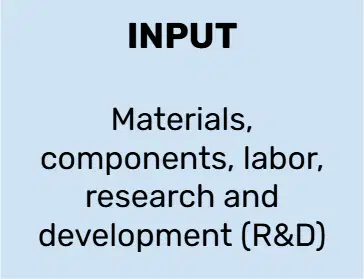
What is included in the 'INPUT' stage of the production process?
Production lines and management
Materials, components, labor, research and development (R&D)
End product and customer satisfaction
Information and new ideas
Which stage of the production process involves 'Production lines, assembly lines, management and skills'?
INPUT
PROCESSING
OUTPUT
FEEDBACK
What is the focus of the 'OUTPUT' stage in the production process?
Materials and labor
Production lines and skills
End product, customer satisfaction and employee satisfaction
Information and expertise

What type of information is gathered during the 'FEEDBACK' stage of the production process?
Materials and components
Production lines and management
End product and satisfaction
Information, new ideas, expertise and customer feedback
What is the main concern of management in terms of productivity?
Allocating resources
Increasing sales
The quantity and quality of work performance
Employee satisfaction
What does effectiveness in productivity refer to?
Minimizing costs
Completing tasks or achieving goals
Increasing profits
Reducing employee turnover
What is an example of effectiveness in a production setting?
Reducing the number of employees
Meeting a daily production quota in terms of quality
Lowering production costs
Increasing the speed of production
What does efficiency in productivity focus on?
Increasing the number of products
Minimizing costs and time
Improving employee skills
Enhancing product quality
What is one way businesses can improve productivity while maintaining quality?
Reducing employee wages
Increasing working hours
Training employees
Decreasing production speed
What does automation help with in a business setting?
Increases labor costs
Reduces productivity
Improves productivity and reduces costs
Decreases the need for technology
What is meant by capital investments in the context of improving productivity?
Investing in employee benefits
Investing in new equipment, machines, technology, etc.
Investing in marketing strategies
Investing in office decor
What does it mean when businesses are described as interdependent?
They operate independently without any external help.
They rely on other businesses to help them produce goods and services.
They compete with each other for resources.
They focus solely on consumer needs without collaboration.
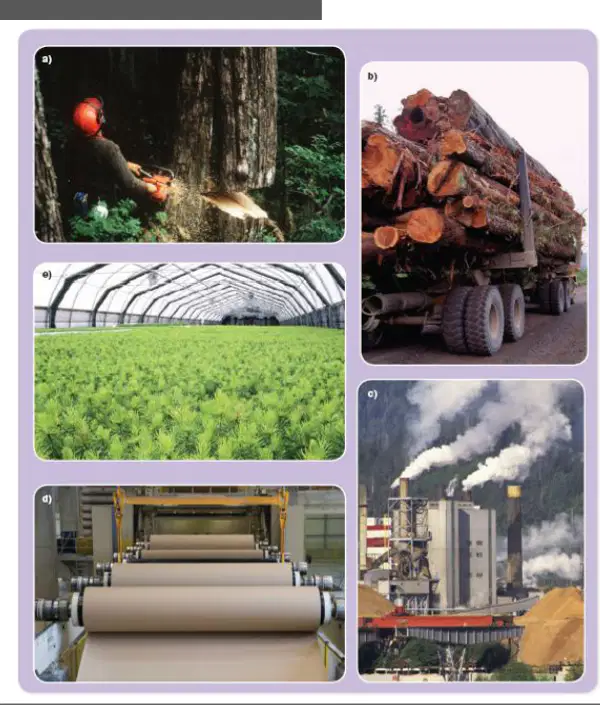
Which of the following is the first step in the relationship between logging and paper production?
Logs transported to a pulp & paper mill
Tree is cut down
Sheets of paper manufactured at the mill
A tree nursery, saplings are planted to reforest
Who is affected by the condition of scarcity?
The rich
Large economies
All societies
Producers (ie: businesses)
Which is NOT a question all societies have to answer due to scarce resources?
When will products be produced?
How will products be produced?
What products will be produced?
Who will gets access to the resources and the products they produce?
Why do we have to make production choices about available resources?
Too many resources for the demand
Limited wants
Unlimited resources
Scarcity
Land includes...
The "gifts of nature" or natural resources not created by human effort.
the tools, equipment, and factories used in production of goods and services
people with all their efforts and abilities
individuals who start a new business or bring a product to market.
Capital refers to...
The "gifts of nature" or natural resources not created by human effort.
people with all their efforts and abilities
the tools, equipment, and factories used in production of goods and services
individuals who start a new business or bring a product to market.
Because of scarcity, people are forced to make _________ about how to use resources.
Choices
Opportunities
Analyses
Investments
Which of the following is a benefit of investing in new technology for a business?
Decreases efficiency
Improves productivity
Reduces product quality
Increases manual labor
What is an example of making a choice due to limited resources?
Using unlimited resources for all needs
Choosing to spend money on education instead of entertainment
Buying both a car and a house at the same time
Ignoring the need for budgeting
Which resource is considered a capital resource in a manufacturing company?
Raw materials
Factory machinery
Natural gas
Employee skills
Which of the following is an example of a human resource in the production process?
Company profits
Raw materials
Employee skills and labor
Factory machinery
Why do businesses need to make choices about resource allocation?
Resources are unlimited
Resources are scarce and must be used efficiently
All resources are renewable
Choices do not affect production
What is the main purpose of feedback in the production process?
To eliminate the need for human resources
To increase the number of products made
To improve future production by learning from results
To reduce the use of capital resources
Which of the following best describes human resources in a business?
Money invested in the company
Machines and equipment used in production
The people who provide labor and expertise
Raw materials used to make products
Why is opportunity cost important when making business decisions?
It eliminates the need for budgeting
It increases the number of available resources
It allows businesses to measure what is gained by choosing one option over another
It helps businesses ignore alternatives
What is one result of scarcity in an economy?
Unlimited choices for consumers
Businesses must prioritize how resources are used
All resources are free
Production is unaffected by resource limits
Which of the following best describes the role of 'PROCESSING' in the production process?
Gathering raw materials
Transforming inputs into finished goods through various operations
Distributing products to retailers
Collecting customer feedback
What is an example of a non-liquid capital resource?
Stocks and bonds
Cash in hand
Factory machinery
Bank account balance
Why do businesses collaborate with other companies in the production process?
To operate independently
To avoid producing goods and services
To access specialized resources and expertise
To reduce competition

