
 Worksheets
Gravity Review
Total questions: 69
Worksheet time: 3hrs 36mins
Which of these is a property of metals?
It's malleable
It's an insulator
It's very brittle
Which element category could have the characteristic of brittle? Choose the best answer.
Metal
Nonmetal
Metalloid
Metalloid and Nonmetal
Silicon is a semiconductor and has properties of both metals and nonmetals. What type of element is Silicon?
Metal
Nonmetal
Metalloid
All of these properties describe metals except...
malleable
conductors
brittle
shiny
All of the following would classify an element as a metal except?
Dull
Lustrous
Malleable
Conductor

Metal
Nonmetal
Metalloid

Metal
Nonmetal
Metalloid

Metal
Nonmetal
Metalloid
Metals are malleable and ductile.
A physical change...
changes the physical properties of an object, but does not create a new substance.
creates a new substance and cannot be undone.
A chemical change
changes the physical properties of an object, but does not create a new substance.
creates a new substance and cannot be undone.

Is this an example of a physical or chemical change?
physical
chemical

Is this an example of a physical or chemical change?
physical
chemical

Is this an example of a physical or chemical change?
physical
chemical

Is this an example of a physical or chemical change?
physical
chemical

Is this an example of a physical or chemical change?
physical
chemical

Is this an example of a physical or chemical change?
physical
chemical
How many Hydrogen atoms are in 4H2O?
6
8
2
4
How many Oxygen atoms are in H2O?
1
2
0
4
How many Magnesium atoms are in 10MgCl2?
10
5
20
How many atoms are there TOTAL in H2SO4 ?
6
5
7
3
Which Chemical Equation is Balanced?
CH₄+O₂------CO₂+2H₂O
H₂+O₂-----2H₂O₄
4Al+3O₂-----2Al₂O₃
Which Chemical Equation is Balanced?
Fe4+O2------4FeO2+O2
2H2+O2-----2H2O
3Cr+4O₂-----2Cr₂O₃

Kermit rides his bike at a constant speed of 12 miles per hour. How long will it take him to travel 24 miles?
12 miles per hour
6 hours
2 hours
24 miles

Vocabulary Check:
What is the difference between speed and velocity
Speed is based on time and velocity is not
Velocity has distance and speed does not
Speed has direction
Velocity has direction
Steve runs 20 m North in 4 seconds. What is his velocity
5 m/s
4 m/s south
5 m/s south
5 m/s north
speed =
speed x time
distance ➗ time
mass x velocity
distance ➗ speed
Anthony and his family went on a road trip with a friend to New York. They drove 1000 miles in 25 hours. What was Anthony’s family’s speed?
(a)

Calculate the average speed of the object between 1 and 3 seconds.
20 m/s
1 m/s
30 m/s
12 m/s
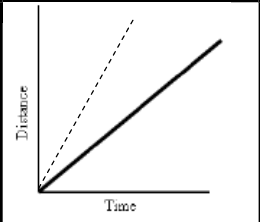
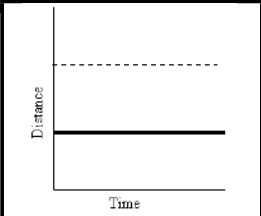

Why do the values on the graph form a straight line?
The speed is constant
The distance remains unchanged.
The direction of motion stays the same.
The speed gradually increases over time.

During which interval is the object speeding up?
A to B
B to C
D to E
E to F
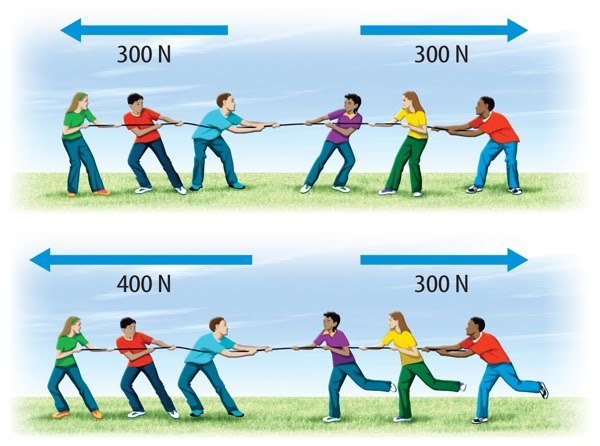
Forces that have a net force of Zero (0) are ______________.
Balanced force
Unbalanced force

How will this object move?
It won't move.
It will move to the right.
It will move to the left.
It will move up.

How will this object move?
It won't move.
It will move to the left.
It will move in both directions.
It will move to the right.

What is the net force?
1000 N upward
500 N right
40 N right
0 N

These forces are ______________
Balanced Force
Unbalanced Force


This guy can throw a card 10 meters in 2 seconds (and then it explodes). His throwing speed is (a) .

Some random, really tall guy off the street can run 10 miles in 1 hour. His speed is (a) miles per hour. Only enter the number.

What is the speed of an underwater object that travels 60 meters in 4 seconds? (a)

Spiderman goes from 0 to 180 m/s in 2.5 seconds. Match the following
Speed
72 m/s
Velocity
72 m/s towards downtown
Acceleration
72 m/s2
Where am I getting these numbers?
(180 - 0) /2.5

What law is best described
1st
2nd
3rd
law of motion
What law is best described
Equal and Opposite
1st
2nd
3rd
speed

Which star stage does our Sun belong to?
Supergiant
Giant
Main Sequence
White Dwarf


Aldebaran is a ____________
red giant
white dwarf
main sequence star
supergiant

What kind of galaxy is this?
Ring
Spiral
Irregular
What type of galaxy do we live in?
Milky Way
Red Giant
Pluto
Kit Kat

Our Sun and solar system are located
near the edge of the Milky Way.
about 2/3 from the center of the Milky Way.
near the middle of the Milky Way.
near the galactic bulge.

