
 Worksheets
Nuclear Chemistry Review
Total questions: 42
Worksheet time: 22mins
What occurs in a nuclear power plant when Uranium-235 splits into two smaller isotopes?
nuclear fusion
nuclear fission
a chemical reaction
a neutralization reaction
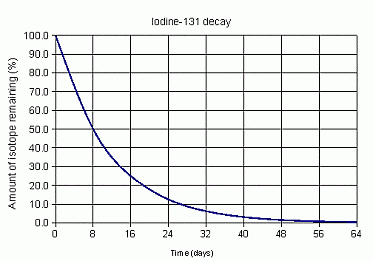
The half-life for a 100-gram sample of radioactive element X is 5 days. How much of element X remains after 10 days have passed?
25g
50g
75g
100g
How many half-lives does it take a radioactive substance to decay until only one-eighth of the original substance remains?
two
three
six
eight
The high energy yields created by nuclear fission are due to...
binding nuclei.
hydrogen bonding.
secondary recovery.
chain reactions.
Nuclear reactors convert heat energy into mechanical energy, used to generate electrical energy, by...
harnessing electromagnetic discharge.
turning a turbine with steam.
gathering solar radiation.
using an electron transfer system.
Which of the following BEST describes what occurs in a fusion reaction?
Two low mass nuclei are joined to form one nucleus and gives off energy.
A single nucleus divides into two or more nuclei and gives off energy.
Electrons are shared between the nuclei.
A chemical reaction occurs between the nuclei.


This type of reaction supplies the energy that powers the stars and our Sun.
Fission
Fusion
Spontaneous emission from the nucleus of an atom
Positron
Radioactivity
Alpha particle
Gamma radiation
Beta particle
What is the radioactive isotope placed in someone to track how a molecule travels through the body called?
Tracer
Detector
Emitter
Tracker
What is the release of radiation particles due to the disintegration of an atom's nucleus called?
Radioactivity
Photovoltaic
Thermodynamics
Magnetism
Organize these options into the right categories about Nuclear Reactors
Tons of energy from very little materials
No greenhouse gases emitted
Water system pollution
Radioactive waste
Exposure to workers
Poorly maintained facilities

When the isotope 5024X releases an alpha particle we get another element Y that looks like
5022Y
4622Y
4820Y
5426Y
What is meant by the statement that 3215P has a half life of 14 days
It takes 7 days to go down to 50% radioactivity each time
It takes 14 days to lose 50% of its current isotope
After 14 days it starts to become less radioactive
It takes 14 days to go up by 50% radioactivity each time
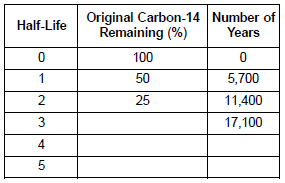
After 22,800 years, approximately what percentage of the original carbon-14 remains?
15%
12.5%
6.25%
3.125%
What is the correct # of protons, electrons, and neutrons for Cobalt - 59?
27 protons, 59 electrons, & 27 neutrons
59 protons, 59 electrons, & 86 neutrons
27 protons, 27 electrons, & 32 neutrons
27 protons, 32 electrons, & 27 neutrons
Which subatomic particle(s) determine the mass of the atom?
protons & neutrons
protons only
protons & electrons
neutrons & electrons
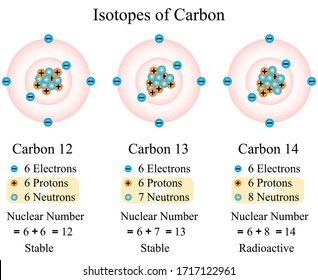
What is an isotope?
Atoms of the same element with different masses.
Atoms of the same element with different # of protons.
Atoms of the same element with different atomic numbers.
Atoms of the same element with the different # of electrons.
In the symbol 167N what does the 7 stand for?
Mass number
Atomic number
Atomic mass
Number of neutrons
When two small nuclei combine into a larger nucleus.
fission
fusion
alpha decay
beta decay

What is likely to happen to unstable nuclei with too many, or too few, neutrons?
They will decay by emitting radiation.
They will loose all their electrons.
They will bond with other atoms.

