
 Worksheets
HBS Activity 1.2.1 - Sliding Filament Theory
Total questions: 20
Worksheet time: 14mins
The contractile unit of a muscle:
sarcomere
motor unit
fascicle
myofibril
Thick filaments within a myofibril are:
ATPase
Sarcoplasmic reticulum
Actin
Myosin
Thin filaments in a myofibril are
Sarcomeres
Sarcoplasm
Actin
Myosin
The energy needed to perform a muscle contraction comes directly from
ATP
Oxygen
Glucose
Calcium

The neurotransmitter stored in the axon terminal identified as #3
Calcium Ion (Ca2+)
Protein Channel
Acetylcholine (Ach)
Synaptic Cleft
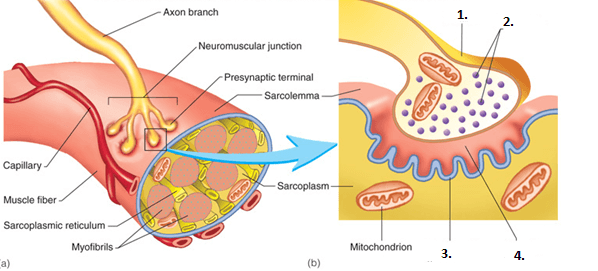
synaptic cleft of Neuro-muscular junction (synapse)

The neuron that transmits an impulse from the central nervous system to the muscle is called a:
sensory neuron
motor neuron

Do the lengths of the thick and thin filaments change during contraction?
Yes
No
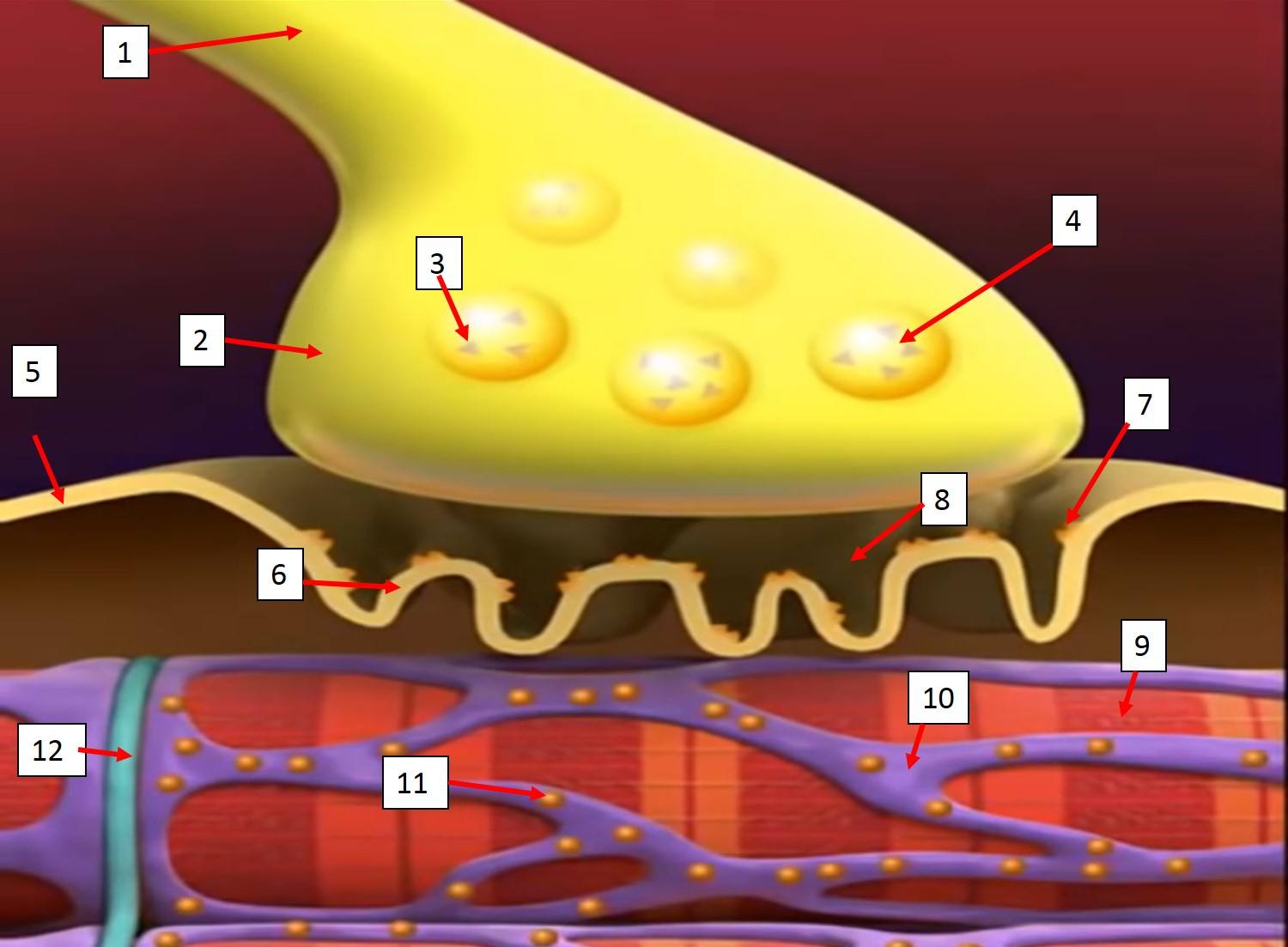
Motor Neuron
Cardiac Muscle
___ and ___ are the two proteins bound to actin.
Troponin and tropomyosin
Myosin and actin
Calcium and Oxygen
Glycogen and hemoglobin
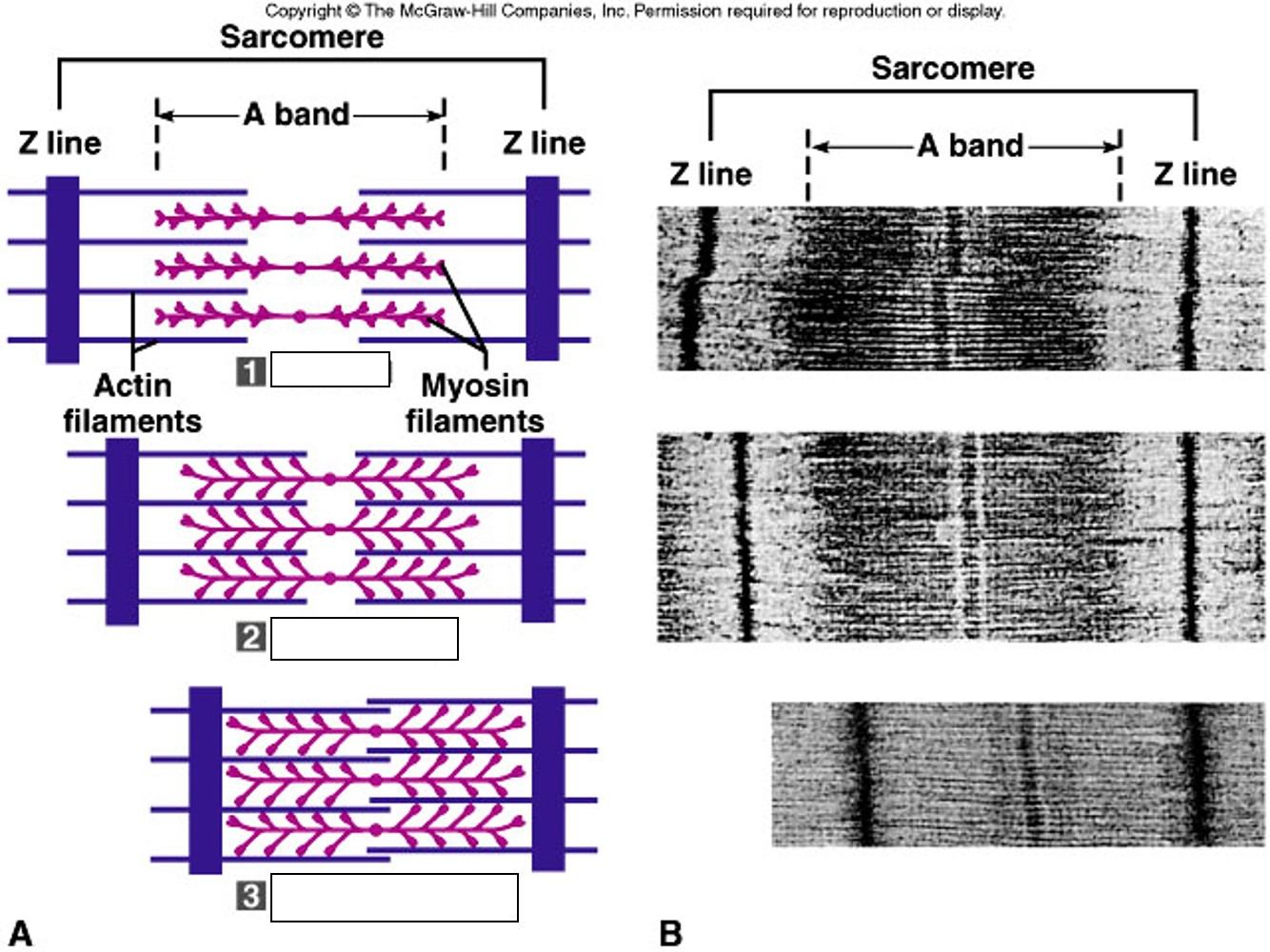
According to the sliding filament theory, a muscle fiber contracts when myosin filaments pull actin filaments closer together and thus shorten sarcomeres within a fiber. When all the sarcomeres in a muscle fiber shorten, the fiber contracts.
True
False

