
 Worksheets
August - October Review
Total questions: 114
Worksheet time: 4hrs 38mins


What is the dependent variable?
What is the independent variable?
A scientific theory may change because
the public doesn't like it
new evidence is found
an important scientist says it isn't true
theories never change
A scientist uses another scientist's procedures to perform the same experiment. This is an example of
pseudoscience
repetition
replication
analyzing data
Using one or more of your senses to gather information is called
Inferring
Observing
Predicting
Hypothesizing
Which of the following best describes repetition?
Repeated trials in your own experiment
Using your five senses to gather information
When an experiment is copied by another person
Explaining an observation you have made
A hypothesis is:
An estimate
A question
An explanation that can be tested
A variable
Read the hypothesis below:
If you run barefoot, then your speed will increase.
Which of the following is the independent variable?
Your speed
Running barefoot
The surface you run on
Running
Matt is conducting an experiment on dish soap and has just finished analyzing his data. What will his next step be?
Share his results
Write a conclusion
Write a hypothesis
Form a question
Cathy is designing an experiment to investigate how the material a cup is made of will affect how long it will keep her drink cold. Which step will increase the accuracy of her results?
Putting some of the cups in the fridge while placing the other cups outside in the sun.
Using a different drink in each cup.
Conducting multiple trials and having other scientists replicate her experiment.
Putting ice in some cups but not in the other cups.
I am conducting an experiment to see how changing the amount of light someone has while studying affects their test scores. In this experiment, which of the following would be the outcome variable?
The students
Test scores
The amount of light
Studying
Which of the following is an explanation for how a natural phenomenon works?
Fact
Hypothesis
Law
Theory
Read the hypothesis below.
If you drink soda before bed, then it will take you longer to fall asleep.
Which of the following would be the control group in this experiment?
None of these
The group of participants that do not drink soda before bed.
Both red & green
The group of participants that drink soda before bed.
A hypothesis is only useful if:
It is correct
It can be tested
The result is already know
It is incorrect
Information collected using my 5 senses is known as:
A hypothesis
An observation
An inference
An independent variable
I am conducting an experiment to see how eating carrots affects people’s vision. What would be a possible constant variable between the experimental group and control group?
Their vision results after completing the experiment
The age of the participants
The type of carrots they eat
The amount of carrots they eat
Which of the following is the variable that you are measuring?
Test Variable
Outcome variable
Independent variable
Constant variable
You should only share your experimental results if your hypothesis is correct.
True
False
Susan is looking at a cell through a microscope and is trying to find where the DNA is located. Where should Susan look to find the cell's DNA?
The nucleus
The Golgi apparatus
The cell wall
The cell membrane
Which of the following is NOT a characteristic of the Cell Theory developed by Schwann and Virchow?
All cells contain a nucleus
All cells come from existing cells
The cell is the basic unit of all organisms
All organisms are made of one or more cells
All unicellular organisms:
Have a nucleus
Are made of only one cell
Are made of multiple cells
Do not have a nucleus
Part of the cell theory states that all living things are made of one or more cells, but scientists had to find ways to test this theory. Which investigation should scientists use to test this part of the cell theory?
Heat plant or animal tissues on a hot plate
Measure the mass of plant or animal tissue
Test plant or animal tissue with a pH meter
Examine plant or animal tissues with a microscope
Which of the following structures do BOTH plant and animal cells have?
Chloroplasts
Cell wall
Mitochondria
Large central vacuole
Which organelle is the site of cellular respiration, the process that uses food to create energy?
Chloroplasts
Cell membrane
Mitochondria
Nucleus
Adam is studying a new type of organism he has found. He observes that the cells of the organism have mitochondria, a cell membrane, and a nucleus. He also observes that the cells do NOT have a cell wall. What type of organism has Adam most likely found?
An animal
A plant
A bacteria
A prokaryote
Which of the following correctly pairs a cellular structure with its function?
Nucleus - protects the cell
Large central vacuole - stores water
Cytoplasm - controls what enters and exits the cell
Mitochondria - stores DNA
Which of the following structures is found in plant cells but NOT animal cells?
Cell membrane
Nucleus
Cell wall
Cytoplasm
Which structure plays the most important role in protecting an animal cell?
Cell membrane
Cell wall
Cytoplasm
Mitochondria
Sarah is a scientist that is trying to identify a mystery organism. She knows that the organism makes its own food using a process called photosynthesis, and it gets energy from that food after completing the process of cellular respiration. Based on the given information, which type of organism is Sarah most likely looking at?
A bird
A dog
A human
A sunflower
What is a benefit of using the 3D cell model instead of the 2D cell model?
It provides a way to understand the concept of the cell.
It provides a more detailed view of a cell's structure.
It shows all the organelles in the cell.
It provides a visual model of the cell.
An archeologist and paleontologist are working on the same dig site. How will their methods of data collection be similar?
Both scientists will use the same tools to collect evidence for analysis and developing scientific explanations.
Both scientists will take samples of evidence from the site to analyze and develop scientific explanations.
Both scientists will use the same computer software to analyze data and develop scientific explanations.
Both scientists will use fossils to develop scientific explanations.
Which of the following correctly lists the products of photosynthesis?
Water, light energy, and carbon dioxide
Carbon dioxide and oxygen
Oxygen and glucose
Water, energy, and carbon dioxide
It took many years and many scientists to create our modern cell theory. Over time, these scientists observed lots of different cells and noted the similarities and differences between them. This led to a lot of improvements in the cell theory, which could not have happened without advancements in technology. Which of the following types of technology played the biggest role in the creation and advancement of the cell theory?
Thermometer
Microscope
Scale
Telescope

Location inside of a plant cell where the process of photosynthesis occurs.
nucleus
mitochondria
chloroplasts
cytoplasm

A gas that plants release during photosynthesis
oxygen
methane
propane
carbon dioxide

A gas that plants take in through small holes in their leaves for the process of photosynthesis.
oxygen
methane
propane
carbon dioxide

A product in photosynthesis
carbon dioxide
oxygen
water
energy

Which of the following are reactants in photosynthesis? Select all that apply.
glucose
oxygen
water
carbon dioxide
Which type of organism would directly benefit from increased levels of carbon dioxide?
human
tree
bird
cat
Which of the following is produced during the process of cellular respiration?
carbon dioxide
glucose
oxygen
sugar
Which statement accurately describes an interaction between plants and animals?
Animals release carbon dioxide, which is required for photosynthesis.
Animals release oxygen, required for photosynthesis.
Plants provide humans with carbon dioxide.
Plants provide humans with light energy.
What are the reactants for photosynthesis?
oxygen and carbon dioxide
light and water

What is one of the reactants (raw materials) going into cellular respiration?
Energy
Sugar (Glucose)
Carbon dioxide
Water

Which statement about photosynthesis is correct?
Plants get the energy they need for photosynthesis from water.
Plants get the energy they need for photosynthesis from soil.
Plants get the energy they need for photosynthesis from sunlight.
Plants do not require energy to perform photosynthesis.
Which organism(s) go through cellular respiration?
animals only
plants only
both animals and plants
Which organism(s) perform photosynthesis? Select all that apply.
plants
humans
algae
animals
some bacteria
What is the largest level of organization?
Molecule
Cell
Organism
Organ
Which level of organization is made of many cells working together?
Tissue
Organ
Organ system
Molecule
The heart is an example of which level of organization?
Tissue
Organism
Organ
Cell
Many cells work together to form a(n) _______.
Organ
Organism
Atom
Tissue
Which level of organization classifies something as living or nonliving?
Atom
Molecule
Cell
Tissue
Which of the following is a function of the skeletal system? Select all that apply.
Convert food to energy
Movement
Mineral storage
Blood cell production
_____ are a type of connective tissue that connects muscles to bones.
Tendons
Ligaments
Cartilage
Joints
Which structure provides a smooth, cushioned surface at the end of bones?
Ligaments
Tendons
Joints
Cartilage
Besides connecting two bones, what is another function of a ligament?
Allowing movement
Connecting muscles to bones
Cushioning the ends of bones
Pulling on bones to create movement
_____ muscle is found in the heart.
Skeletal
Smooth
Cardiac
Voluntary
Which of the following is an example of involuntary muscle? Select all that apply.
Smooth
Cardiac
Skeletal
Which type of muscle can you control?
Skeletal
Smooth
Cardiac
Involuntary
Voluntary
Internal organs like the intestines are made of ______ muscle.
Cardiac
Skeletal
Smooth
Your hamstring muscle (in your leg) is an example of which type of muscle tissue?
Skeletal
Smooth
Involuntary
Cardiac
What happens when a muscle pulls on a bone?
It relaxes and lengthens
It contracts and shortens
Muscles do not pull on bones
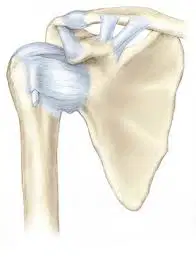
What type of structure is shown here, holding the bones together?
Tendon
Cartilage
Muscle
Ligament
Molly goes to the doctor with stomach pain. Her doctor says the muscle making up her stomach has been damaged. What type of muscle did Molly damage?
Smooth
Skeletal
Cardiac
Which of the following connects your bicep (muscle) to your humerus (bone)?
Ligament
Tendon
Cartilage
Cardiac muscle
What is made up by the combination of multiple cells?
Tissues
Molecules
Atoms
The digestive system is made up of multiple organs, like the stomach, small intestine, and large intestine, that work together to maintain homeostasis. What is the digestive system an example of?
Cells
Atom
Organ system
Organism
Where in the body could you find skeletal muscle?
Stomach
Heart
Bicep
Lungs
How do muscles and bones work together?
Muscles push the bones
Bones pull the muscles
Bones push the muscles
Muscles pull the bones

How many bones does an adult have in their body?
100
206
150
What are organs make up the skeletal system?
muscles
lungs
heart
bones
What are the functions of the muscular system. Select all that apply.
Helps you see
Helps you move
Helps fight diseases
Creates heat
Helps your heart beat
How do pairs of skeletal muscles work together?
One contracts and the other stretches.
While one muscle in the pair contracts, the other returns to its original length.
Both muscles extend at the same time.
One muscle in the pair pulls on a bone, while the second muscle pulls on the first muscle.
The skeletal system has several jobs. Select one of the following that describe its jobs.
send messages between the brain and the body
makes red blood cells and stores minerals
creates hormones
carries blood through out the body
Which of the following is NOT a type of muscle?
smooth
rough
cardiac
skeletal
Approximately how many muscles are in our body
600
200
350
12
What is it called where two or more bones connect
Joint
Tendon
ligaments
cartilage
Which part of the skeletal system protects the brain?
pelvis
ribs
scapula
cranium/skull
Which part of the skeletal system protects the heart and lungs?
cranium/skull
pelvis
scapula
ribs
Which part of the skeletal system protects the spinal cord?
pelvis
cranium/skull
vertebra
scapula
The type of involuntary muscle that lines the heart is the ___________ muscle.
skeletal
cardiac
smooth
bicep
This type of voluntary muscle is responsible for the movement of the skeleton.
skeletal
cardiac
smooth
heart
The muscles that line the digestive system are _____________ muscles.
cardiac
skeletal
smooth
intestinal

Check ALL the boxes that describe the function of the Skeletal system.
Gives shape and support
Protects vital organs
Creates blood cells
Stores and produces calcium
Breaks down food
A skull has immovable joints
True
False

All skeletal muscles are voluntary muscles.
True
False
Skeletal muscles _____ and _____to move
contract and relax
contact and reflex
cringe and remove

