
 Worksheets
🤗HW18: 10.26
Total questions: 109
Worksheet time: 58mins

When methane (CH₄) burns in oxygen (O₂) to produce carbon dioxide (CO₂) and water (H₂O), which statement is true?
The number of hydrogen atoms is halved in the products
More carbon atoms are found in the products than in the reactants
The total number of oxygen atoms is different in the reactants and products
The number of atoms of each element is conserved throughout the reaction

Sarah finds this equation for photosynthesis: 6H₂O + 6CO₂ → 6O₂ + C₆H₁₂O₆. Does this equation obey the Law of Conservation of Mass?
Yes, because there is the same amount of each type of atom on both sides
No, because there is a different amount of each type of atom on both sides
No, because there is a different number of reactants and products
Yes, because there is the same number of reactants and products

Which chemical equation correctly shows the Law of Conservation of Mass?
H₂ + O₂ → 2H₂O
2H₂ + O₂ → 2H₂O

Carlos writes this equation: C6H12O6 → CO2 + C2H5OH. What can we say about this equation?
It's balanced and follows the Law of Conservation of Mass
It's not balanced and does not follow the Law of Conservation of Mass
It's correct because glucose turns into these products
It's wrong because chemical reactions can't happen

In the reaction 2Fe + 3O2 → 2Fe2O3, how many iron atoms are needed to make the equation balanced?
2 iron atoms
3 iron atoms
4 iron atoms
6 iron atoms

What does the Law of Conservation of Mass tell us about chemical reactions?
Matter can be created during reactions
Matter can be destroyed during reactions
The number of each type of atom stays the same before and after
Chemical reactions always make new types of atoms

A student counts atoms in this reaction: NaCl + AgNO3 → NaNO3 + AgCl. What should they find?
More atoms on the left side than the right side
More atoms on the right side than the left side
The same number of each type of atom on both sides
Different types of atoms on each side

In the equation CH₄ + 2O₂ → CO₂ + 2H₂O, how many oxygen atoms are on each side?
2 on the left, 2 on the right
4 on the left, 4 on the right
2 on the left, 4 on the right
4 on the left, 2 on the right

Why do we use coefficients (numbers in front of formulas) in chemical equations?
To make the equation look more complicated
To balance the number of each type of atom on both sides
To show which chemicals are more important
To indicate the temperature of the reaction

A student writes: 2Al + 3O₂ → Al₂O₃. Is this equation balanced?
Yes, it follows the Law of Conservation of Mass
No, there are different numbers of aluminum atoms on each side
No, there are different numbers of oxygen atoms on each side
Yes, because aluminum and oxygen react together

In a chemical reaction, atoms can:
Be created from nothing
Be destroyed completely
Change from one element to another
Rearrange to form new compounds

The equation Fe + O₂ → Fe₂O₃ is not balanced. What needs to be fixed?
Add coefficients to balance the number of each type of atom
Change the chemical formulas
Remove some atoms
Add new elements

For the reaction NaOH + HCl → NaCl + H₂O, a student counts: Left side: 1 Na, 1 O, 2 H, 1 Cl Right side: 1 Na, 1 Cl, 1 O, 2 H What can they conclude?
The equation is balanced
The equation needs more sodium
The equation needs more chlorine
The equation is impossible

What happens to the total mass during a chemical reaction?
It increases because new matter is created
It decreases because some matter is destroyed
It stays the same because atoms are conserved
It changes depending on the temperature

A student balances this equation: ___Fe + ___O₂ → ___Fe₂O₃. What coefficients make it correct?
1, 1, 1
2, 3, 2
4, 3, 2
6, 3, 3

Which statement about atoms in chemical reactions is true?
Atoms of one element can turn into atoms of another element
The total number of atoms increases during reactions
The total number of atoms decreases during reactions
Atoms rearrange but the number of each type stays the same

In the equation C + O₂ → CO₂, how many carbon atoms are on each side?
1 on the left, 2 on the right
1 on the left, 1 on the right
2 on the left, 1 on the right
2 on the left, 2 on the right

Why is it important to balance chemical equations?
To make them look professional
To show that the Law of Conservation of Mass is followed
To make calculations harder
To use more chemicals

A student sees the equation: ___H₂O → ___H₂ + ___O₂. What coefficients balance this equation?
1, 1, 1
2, 2, 1
1, 2, 1
2, 1, 2

The main idea of the Law of Conservation of Mass is:
Chemical reactions always produce gases
Chemical reactions always release energy
Atoms are never created or destroyed in chemical reactions
Chemical reactions always require heat

What does the Law of Conservation of Mass state?
Mass can be created or destroyed
Mass is always conserved in a chemical reaction
Atoms disappear during reactions
Mass is irrelevant in chemical reactions

What is the process of making sure the number of atoms for each element is the same on both sides of a chemical equation called?
Chemical equation balancing
Reactant formation
Product analysis
Coefficient addition

In a chemical reaction, the substances that start the reaction are called ______ and the substances formed are called ______.
reactants; products
products; reactants
catalysts; inhibitors
substrates; enzymes

What are coefficients in chemical equations used for?
To show the number of molecules or atoms involved in the reaction
To indicate the speed of the reaction
To balance the color of the reactants
To change the temperature

Interpreting a chemical formula involves understanding the types and numbers of ______ present in a compound.
atoms
molecules
ions
elements

Atoms can be created or destroyed in a chemical reaction.
True
False

Which of the following is a common mistake when balancing chemical equations?
Balancing equations by changing formulas
Counting the number of atoms correctly
Using coefficients properly
Understanding conservation

What does misunderstanding 'conservation' mean in the context of balancing equations?
It means not understanding that the number of atoms of each element must be the same on both sides of the equation.
It means thinking that equations must always have coefficients of one.
It means believing that only the total mass matters, not the atoms.
It means assuming that the products and reactants must look identical.

What is a sign that a chemical reaction has happened when a match is lit?
The match gets shorter
The match gives off light
The match becomes too hot to hold
The match produces smoke and ash

A teacher puts zinc metal in a balloon and attaches it to a flask with hydrochloric acid. After shaking, the balloon inflates. What does this show?
A chemical reaction occurred because a gas was released
A chemical reaction did not occur because bubbles formed
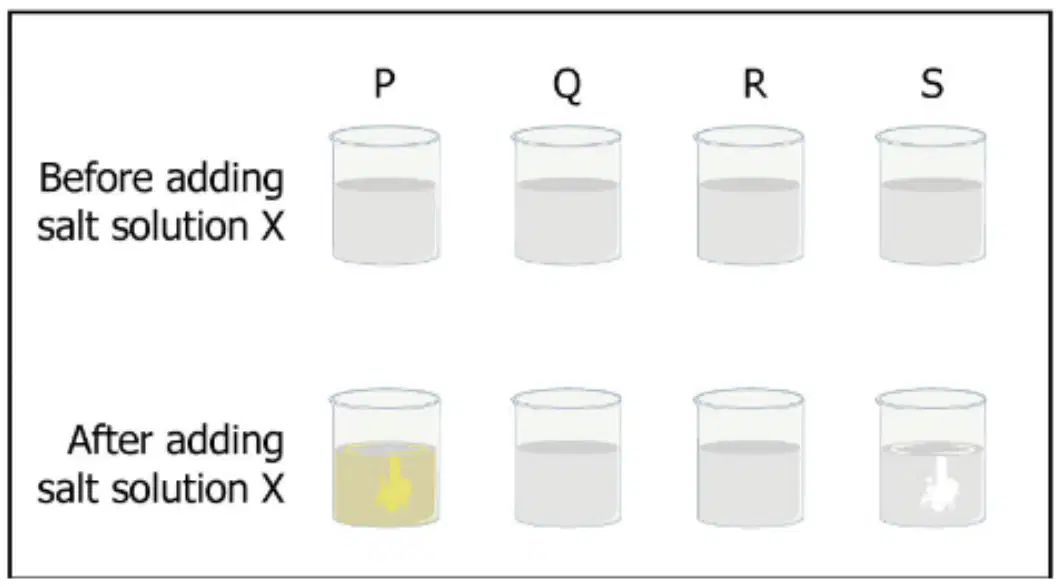
Students add a colorless salt solution to four different salt solutions (P, Q, R, S). Solutions P and S change color after adding the solution. What does this color change tell us?
The solutions got warmer
The solutions mixed together
A chemical reaction happened in P and S
The solutions changed their state of matter
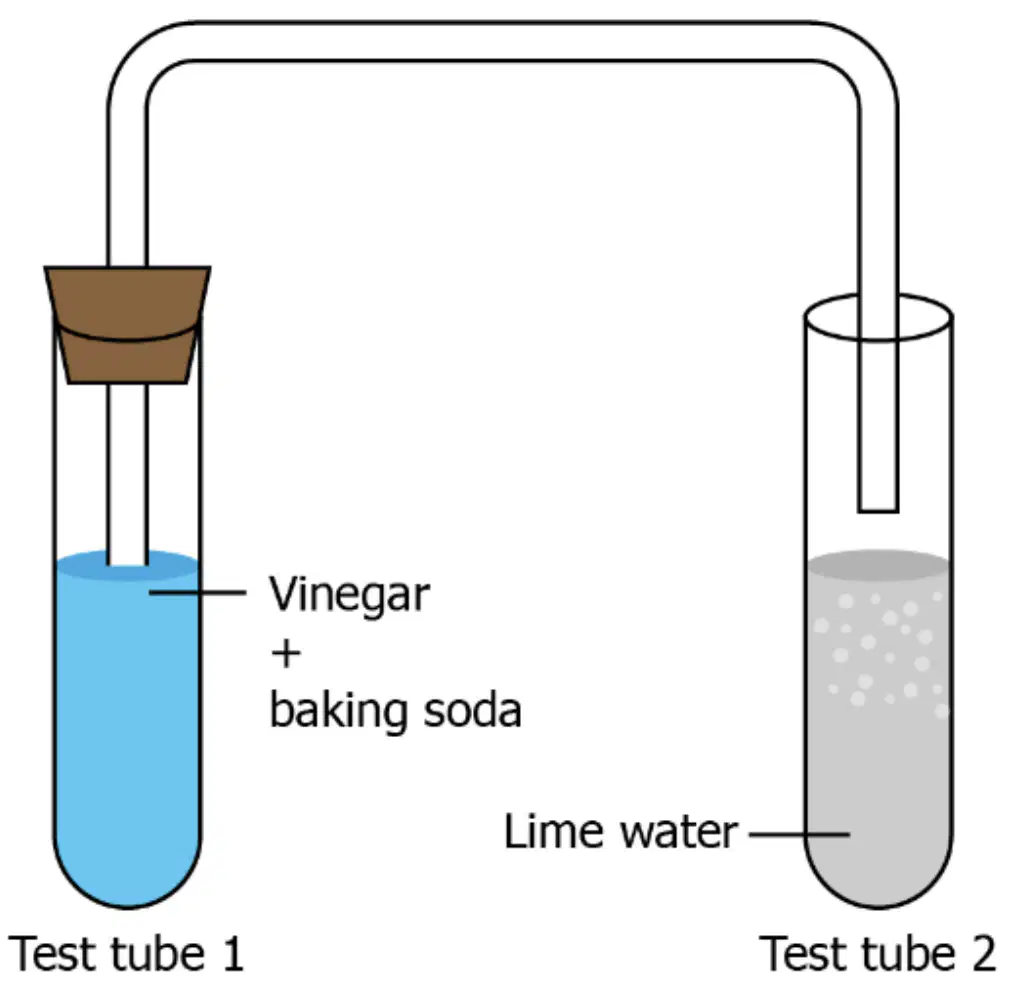
Students mix vinegar and baking soda in one test tube, and the gas produced goes into another test tube with lime water. The lime water turns milky. In which test tube did students see evidence of a new substance forming?
Only the first tube, because bubbles formed
Only the second tube, because the color changed
Neither tube, because only physical changes occurred
Both tubes, because new substances formed in each

During a chemistry lab, students observe a tablet dissolving in water. The temperature drops from 22°C to 15°C. What type of reaction occurred?
An exothermic reaction releasing energy to the surroundings
An endothermic reaction releasing energy to the surroundings
An exothermic reaction absorbing energy from the surroundings
An endothermic reaction absorbing energy from the surroundings

Students design cold packs for the school nurse. They test four chemical combinations and measure the temperature after mixing. Room temperature is 22°C. Which combination would work best for a cold pack?
One that increases temperature to 35°C
One that decreases temperature to 10°C
One that keeps temperature at 22°C
One that increases temperature to 25°C

Students mix iron filings and sulfur powder. Before heating, a magnet picks up the iron filings. After heating, the mixture becomes a dark lump and the magnet no longer picks up the iron. What happened?
A new mixture formed because the color changed
A chemical reaction occurred because the iron lost its magnetic properties
A mixture formed because the components can still be separated
A physical change occurred because the properties look different

Understanding the Atom's Structure.
Accurately identify the property of each subatomic particle.
Negatively charged subatomic.
e-
Located in the Electron Cloud.
Smallest of the three subatomics.
Positively charged subatomic.
p+
Located in the Nucleus with n0.
Unique to each element.
Neutrally charged subatomic.
n0
Located in the Nucleus with p+.
Does not affect the charge of the Nucleus.

Blue subatomic particle

Green subatomic particle

Red subatomic particle

Match the following.
Subatomic particle with +1 Charge.
Proton
Subatomic particle with -1 Charge.
Electron
Subatomic particle with 0 Charge.
Neutron
Center Region of Atom, Positively Charged.
Nucleus
Outer Region of Atom, Negatively Charged.
Electron Cloud
Match the following.
Center Region of Atom, Positively Charged.
Nucleus
Outer Region of Atom, Negatively Charged.
Electron Cloud
The Number of Protons.
Atomic Number
The amount of Nucleons.
Mass Number
Occurs with different amounts of Neutrons.
Isotope


Match each of these Transformations of State with its correct State Change.
G → S
Deposition
S → G
Sublimation
G → L
Condensation
L → G
Vaporization
S → L
Melting

Select the State Changes that are Endothermic.
L → G
G → L
S → G
S → L
G → S

What is the Law of Conservation of Mass?
It states that no matter can be created or destroyed.
It states that no energy can be created or destroyed.
It states that matter can be created or destroyed.
It states that no sound can be created or destroyed.



Match each of these functions with its organelle.
Brain of the cell; controls all cellular functions.
Nucleus
Site of photosynthesis; process that converts carbon dioxide and water to glucose.
Chloroplasts
Detoxifiers of the cell; trashman.
Lysosomes
Jelly of the cell; maintains organelle motility and cellular shape.
Cytoplasm
Powerhouse of the cell; converts cellular food into cellular energy (ATP).
Mitochondria


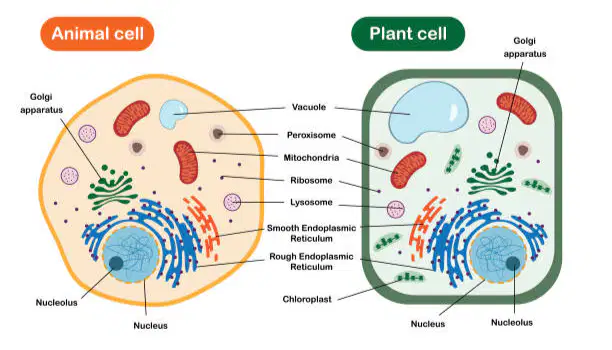


Which of statement best describes the function of the cell membrane?
It allows things to freely enter and exit the cell.
It controls which substances enter and exit the cell.
It prevents substances from entering the cell.
It prevents substances from leaving the cell.

Match each of these functions with its organelles.
Factory that prepares proteins for distribution throughout the cell.
Endoplasmic Reticulum
Located in the center of the nucleus; most concentrated area of DNA.
Nucleolus
Synthesizes proteins.
Ribosomes
Provides structure and supports cellular pressure.
Cell Wall
Flatten-sacs that are packaging agents; shipping proteins and lipids in and out of the cell.
Golgi Body
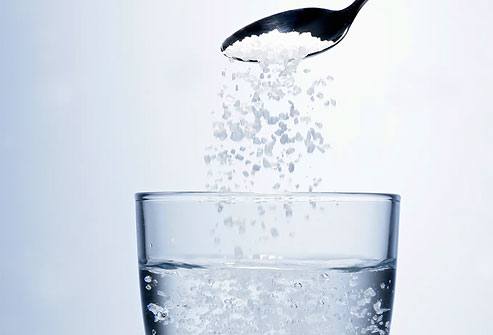

Which organelles are not present in an animal cell:
A. Cell membrane
B. Chloroplast
C. Cell wall
D. Mitochondria
A and B
B and C
A and D
B and D


Eukaryotic cells can include _______ (Select all that apply).
protists
plants
animals
fungi

Match each term with its correct definition.
Prokaryote
A single-celled organism that does not have a nucleus or membrane-bound organelles.
Eukaryote
Organism made of cells that have nucleus enclosed by membrane.
Cell
Basic building block of living things.
Organism
One individual living thing; anything that can carry out life processes independently.
Organelle
Tiny parts of a cell with a specific function.


Cells with a nucleus and membrane-bound organelles are called _____.

Match each of these organelles with its specific function (job).
Vacuole
Stores water, food and waste
Mitchondria
Converts cell food into cell energy (ATP)
Nucleolus
Location of MOST of cell DNA
Golgi Body
Packages and ships substances in and out of cell
Cell Wall
Provides rigid structure and maintains plant pressure
Match each of these organelles with its specific function (job).
Mitchondria
Converts cell food into cell energy (ATP)
Nucleus
Controls all cell activity
Golgi Vesicles
"Fedex Trucks". Shipper of the substances in and out of cell
Lysosome
Removes waste and toxins from cell
Plasma Membrane
Regulates which substances may come in and out of cell
Labeling the Cooling Curve.
Indicate the parts of this Cooling Curve.
Place your Label on each numbered part.
L -> S (Freezing)
G -> L (Condensation)
Solid
Liquid
Gas

Identifying the States of Matter.
Accurately select characteristics of each State of Matter.
Defintion: Definite, Definite
Definition: Indefinite, Definite
Definition: Indefinite, Indefinite
Particles: Packed Close
Movement: Vibrates
Intermolecular Force: Strongest

Temperature: Coolest
Particles: Loosely Touching
Movement: Slide Past One Another
Intermolecular Forces: Medium

Particles: Farthest apart
Movement: Zippy Bumper Cars
Intermolecular Forces: Weakest

Temperature: Warm
Temperature: Hottest
Labeling the Heating Curve.
Indicate the parts of this Heating Curve.
Place your Label on each numbered part.
L -> G (Boiling)
Solid
Liquid
Gas
S -> L (Melting)
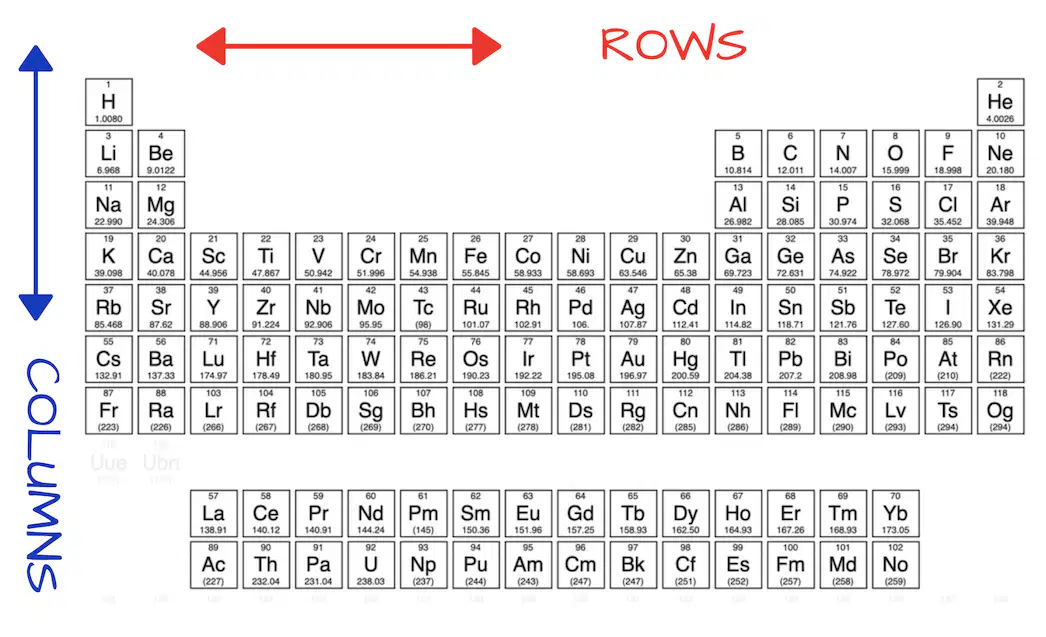
Identifying Properties of the Element Classes.
Correctly identify each of the characteristics of each element class.
Ductile
Malleable
Shiny
Great Electrical Conductors
M+
Includes Transitions
Includes Lanthanide and Actinide Series
Properties of Metals and non-Metals
ML
Semi-Conductors
8 Elements
B, Si, Ge, As, Sb, Te, Po, At
Staircase that separates the Periodic Table into 2-Halves
Most populated Class
Mostly on the LEFT of the PT
Brittle
Dull
Poor Electrical Conductors
NM-
Includes Noble Gases
Match the following.
Class of Element, Shiny, Ductile, Malleable, and Great Electrical Conductor.
Metal
Class of Element, Dull, Brittle and Poor Electrical Conductor.
Non-Metal
Class of Element, Properties in Between M+ and NM-, Semi-Conductors.
Metalloid
Small number in chemical formula, indicates the number of atoms present for the element it follows.
Subscript
Large number in FRONT of chemical formula, used as a multiplier for the ENTIRE compound.
Coefficient
Match each of these organelles with its specific function (job).
Vacuole
Stores water, food and waste
Mitchondria
Converts cell food into cell energy (ATP)
Nucleolus
Location of MOST of cell DNA
Golgi Body
Packages and ships substances in and out of cell
Cell Wall
Provides rigid structure and maintains plant pressure

Match each term with its correct definition.
Thylakoids
Flat sacs inside chloroplast
Cristae
Zig-zag folds of the mitochondria
Photosynthesis
Process of converting sunlight to plant food
Cytoplasm
Jelly of cell; Maintains pressure and allows organelles to move
ATP
Cellular energy molecule
Match each of these organelles with its specific function (job).
Mitchondria
Converts cell food into cell energy (ATP)
Nucleus
Controls all cell activity
Golgi Vesicles
"Fedex Trucks". Shipper of the substances in and out of cell
Lysosome
Removes waste and toxins from cell
Plasma Membrane
Regulates which substances may come in and out of cell

Which statement is part of the cell theory?
All cells react to stimulus
The cell is the basic unit of all organisms
The cell can be large or small
The cell is either prokaryotic or eukaryotic
Which statement is part of the cell theory?
All cells can reproduce
All organisms are either unicellular or multicellular
All organisms are made of 1 or more cells
All cells grow and develop
Which statement is part of the cell theory?
All cells come from existing cells
All cells are prokaryotic or eukaryotic
All cells can make a tissue
All cells grow and develop

Match each of these organelles with its relatable role.
Lysosome
Trashman
Nucleus
Mayor
Vacuole
Ziploc Bag
Cell/ Plasma Membrane
Doorman
Golgi Body
Fedex Shipper
Match each of these organelles with its relatable role.
Ribosomes
Small Protein Factory
Cytoplasm
Jelly
SER
Factory for Lipids
Cell/ Plasma Membrane
Doorman
Golgi Body
Fedex Shipper
Labeling Plant Cell.
Place a DOT on the organelle.
Ribosomes
Cell Wall
Cell/Plasma Membrane
Central Vacuole
Chloroplast
Labeling the Animal Cell.
Place a dot on the organelle.
RER
SER
Nucleolus
Nucleus
Cytoplasm
Golgi Body
Labeling the Animal Cell.
Place a dot on the organelle.
RER
SER
Nucleolus
Nucleus
Cytoplasm
Golgi Body
Labeling the Animal Cell.
Place a dot on the organelle.
Plasma Membrane
Lysosome
Mitochondria
RER
SER
Nucleolus
Labeling the Animal Cell.
Place a dot on the organelle.
Plasma Membrane
Lysosome
Mitochondria
RER
SER
Nucleolus
Labeling Plant Cell.
Place a DOT on the organelle.
Ribosomes
Cell Wall
Cell/Plasma Membrane
Central Vacuole
Chloroplast


Which kingdoms are prokaryotes?
Kingdom Eubacteria
Kingdom Archaebacteria
Kingdom Animalia, Kingdom Plantae
Both Eubacteria and Archaebacteria

The largest division used to classify living things
Class
Domain
Genus
Species

What are the kingdoms that are eukaryotic? (select all that apply)
animalia
Fungi
Protista
Plantae
Eubacteria

What kingdoms are prokaryotic?
animalia
fungi
eubacteria
archeabacteria

What is the order of the taxonomic levels from least specific to most specific?
Kingdom, Family, Species, Order, Class, Phylum, Genus
Kingdom, Phylum, Class, Order, Family, Genus, Species
Species, Order, Kingdom, Family, Genus, Phylum, Class
Species, Genus, Family, Order, Class, Phylum, Kingdom

Match each of these terms with its definition.
Domain
Highest Taxonomic Ranking; Most Biodiversity
Kingdom
Taxonomic Ranking that comprises Domain
Genus
Taxonomic Ranking above Species; First part of Binomial Nomenclature
Species
Smallest Taxonomic Ranking; Least Biodiversity
Scientific Name
Two-Part Name; Provides each organism with unique name

Which of these statements is true (Select all that apply)?
Scientific name has two parts.
Organisms in the same genus can mate and produce fertile offspring.
Scientific names are unique to each organism.
Scientific names are made of domain and kingdom.
Scientific names are made of genus and species.

Which of the following sets of protists would be the most closely related?
Protists in the same species
Protists in the same genus
Protists in the same family
Protists in the same class

Rank these hierarchy levels from, MOST to least organisms.
domain
phylum
family
gensus
species
Rank these hierarchy levels from, MOST to least organisms.
kingdom
class
order
family
species

Rank these hierarchy levels from, least to MOST organisms.
species
genus
family
class
phylum
Rank these hierarchy levels from, least to MOST organisms.
genus
family
class
kingdom
domain
Which of the following described the properties of particles in gas? (Select all that apply).
very far apart
move randomly at high speed in all direction
Vibrate about fixed position
high kinetic energy
Closely packed in disorderly,random manner
Which of the following described the properties of particles in liquid? (Select all that apply).
Closely packed in orderly manner
slide over each other
Vibrate about fixed position
Low kinetic energy
Closely packed in disorderly,random manner

