
 Worksheets
Natural Event, Light, Radioactivity and Electricity Quiz
Total questions: 207
Worksheet time: 3hrs 7mins

Which color would be the innercore?
yellow
orange
red
the earth on the outside

Which color would be the outercore?
Outside on the earth
red
orange
yellow

Which color would be the mantle?
Outside on the earth
red
orange
yellow

What color would be the earth's crust?
Outside on the earth.
red
orange
yellow
What part of the earth makes up less than 1% of the earth?
The crust
The mantel
The outer core
The inner core
Which part of the earth, makes up 67% of the earth?
The crust
The mantel
The outer core
The inner core
Which is the outermost, rigid layer of the earth, made of the crust and the rigid upper part of the mantle.
Lithosphere
Asthenosphere
Mesosphere
Outer core
Inner core
Which is the soft layer of the mantel on which the tectonic plates move?
Lithosphere
Asthenosphere
Mesosphere
Outer core
Inner Core
Which is the strong lower part of the mantel?
Lithosphere
Asthenosphere
Mesosphere
Outer Core
Inner core
The earth's mantel is made up of which two parts?
Lithosphere
Asthenosphere
Mesosphere
Outer core
Inner core
Which part of the earth's core is liquid?
Outer core
Inner core
Which part of the earth's core is solid and dense?
Outer core
Inner core
A tectonic plate is a block of......
Lithosphere
Asthenosphere
Mesosphere
Convergent boundary
Where two tectonic plates collide
Where two tectonic plates separate
Where two tectonic plates slide past each other
Divergent boundary
Where two tectonic plates collide
Where two tectonic plates separate
Where two tectonic plates slide past each other
Transform Boundary
Where two tectonic plates collide
Where two tectonic plates separate
Where two tectonic plates slide past each other
Subduction is when
a yellow submarine
old ocean crust gets pushed up by continental crust
old ocean crust gets pushed down by continental crust.
a yellow submarine

What type of boundary?
convergent
divergent
transform

What type of boundary is this?
convergent
divergent
transform

What type of boundary is this?
convergent
divergent
transform
The type of crust that is under the world's oceans.
CONTINENTAL
OCEANIC
This type of crust is described as denser and heavier
CONTINENTAL
OCEANIC
Thicker and older part of the Earth's crust
CONTINENTAL
OCEANIC
Two plates come together or collide at what boundary?
Convergent
Divergent
Transform
Which of the following is formed at Continent- Continent convergent boundaries?
Volcanic Mountains
Earthquakes
Non-volcanic Mountain Ranges
Both volcanoes and earthquakes
This is evidence that sea-floor spreading occurs. Choose 2 answers.
Younger rock was found close to the mid-ocean ridge.
Younger rock was found further away from the mid-ocean ridge.
Pillow lava is found on the bottom of the ocean floor.
Mid-ocean ridges are found at the bottom of the ocean floor.
Why did scientists not believe Alfred Wegener's hypothesis?
Wegener did not have enough evidence for continental drift.
Wegener did not collect enough fossils.
Wegener could not explain why there were the same fossils on different continents.
Wegener could not explain the force that could move the continents.
The idea that the continents were once joined together and since drifted apart is called
Pangaea
Continental Drift
Wegener's supercontinent
Sea-Floor spreading
Why does subduction occur?
Old crust is more dense and gravity helps pull the crust back into the mantle.
Old crust is less dense and it sinks back into the mantle.
Old crust is warm and melts back into the mantle.
Old crust has no where else to go but through trenches.
Check all the pieces of evidence that Wegener found to explain continental drift.
Plant fossils found on Antarctica.
The coastlines of Africa and South America line up.
Coal fields line up in Europe and North America.
Similar freshwater fossils found on different continents.


Out of the following, which has the highest frequency?
microwaves
infrared rays
radio waves
unltraviolet waves
How is light reflected?
It absorbs into the object letting off no light or color
It bounces back so that we can see color
It scatters the light so that we can't see color.
The answer is not here.
List the colors of the visible light spectrum from shortest to longest.
ROYGBIV
A rainbow is created from visible light
VIBGYOR
All light is seen the same with no difference.
What is the difference between transparent, translucent, and opaque?
transparent lets all light pass through and is clear, translucent lets some light pass and opaque lets no light through
translucent lets all light pass through and is clear, transparent lets no light through, and opaque lets some light through.
Opaque is clear and lets all light through, transparent lets some light through, and translucent lets no light through
It is none of the above
What is a mechanical wave?
How to travel through space when it is a vacuum
How to travel through a medium, like a sound wave does
Neither are correct
Both are correct
What is an example of a transparent object
Window, eye-glasses
wood, metal
stained glass, color balloons
the ground we walk on
What is an example of a translucent object?
window, eye-glasses
stained glass, fog, frosted glass
table, chair, desk
the earth we walk on
What is an example of an opaque object?
window, eye-glasses
stained glass, frosted glass, fog
table, chair, desk
the earth we walk on
How is light refracted?
When light goes straight through and creates a rainbow of color
When light cannot pass through an object
When light is bounced back from an object, it is how we see color
How do you tell the difference between the waves on the EM Spectrum?
Because they are different names
Because they are different colors
Because they have different wavelengths
You can not tell them apart
Why does a black car get hotter than a white car when they are both sitting outside for the same amount of time?
Heat energy is absorbed
Black absorbs all colors
White reflects all colors
All of the above
What type of radiation represents the color spectrum seen on Earth?
Visible Light
Gamma Rays
Electromagnetic Spectrum
Microwaves
When looking at the EM Spectrum what part of the spectrum allows us to see color?
Gamma Rays
Microwaves
Infrared Light
Visible Light
When red, blue, and green lights all shine together what color would you see?
Nothing because all light is absorbed.
White light
Purple because red and blue make purple.
Black or brown because all the colors mixed together
While you were waiting for the bus you notice lightening in the sky 20 seconds before there is thunder. What is the best explanation for why there is a time lapse between sound and light.
Sound travels faster and farther than light.
Light travels faster and farther than sound.
You had your earbuds in and missed the first sound.
It's an optical illusion meant to trick your senses.
You shine a white light onto a table and it looks green. What color will the surface appear if you shine a combination of blue and green light on the surface?
Green because it only reflects the color it is and absorbs all the rest.
Blue because blue is more powerful than green.
White light because the blue and green are absorbed.
Black or Brown because the blue and green mix.
What is a wavelength?
The distance a wave travels in a certain amount of time.
The number of times a wave repeats in a given amount of time.
The amount of energy a wave transmits due to the energy that was input.
The distance a wave travels before it starts to repeat.
What is frequency?
The distance a wave travels in a certain amount of time.
The distance a wave travels before it starts to repeat.
The number of times a wave repeats in a given amount of time.
None of the above are correct.
What is absorption?
The energy of a wave when it is transferred to the material it encounters.
The bending of waves due to a change in the speed of the wave.
The increase in the amplitude of a vibration that occurs thwn external vibrations match an object's natural frequency.
None of the above answers are correct.
What is the amplitude of a wave?
When the wave travels perpendicular to the direction of the source's motion.
When a wave travels in the same direction as the vibrations that produced it.
The maximum distance the medium vibrates from the rest position.
None of the above are correct.

The highest point on a wave (point 3)
trough
amplitude
crest
wavelength

The lowest part of the wave is? (point 4)
crest
trough
rarefaction
wavelength

The distance between 2 crests (point 1)
wavelength
amplitude
frequency
wave speed
The number of waves that pass in a given amount of time.
wavelength
wave speed
amplitude
frequency
When light hits an area and bounces back it is called:
echo
refraction
reflection
absorbing
When light goes from one material(medium) to another it becomes bent, what term means bent?
reflected
refracted
absorbed
turned
When light passes from air to water, what happens to the speed of the light?
speeds up
slows down
stays the same
What do we call a material that light can travel through?
air
water
medium
pathway

What color is an object that absorbs all the colors in the light spectrum?
A rainbow
White
Black
Invisible

A leaf is green. What does this tell you about the light that is being absorbed?
The light is a UV ray.
The light is not a part of the light spectrum.
All colors are reflected except green.
All colors are absorbed except green

When an object soaks in the light it _____________
absorbs
reflects
refracts

When you see the color black...
All colors are reflecting
All colors are absorbed
The color blacl is reflecting
the color black is absorbed

Why do some objects look white?
the color white reflects
the color black is absorbed
all colors are reflected
no colors are reflected
White light is made up of all of the colors of the rainbow
True
False
Light waves travel fastest through...
gases
liquids
solids
Light waves travel slowest through...
gases
liquids
solids
The distance between the crest and the center line (point 2)
wavelength
amplitude
frequency
wave speed

(look at the picture) What's the difference between a high frequency wave and a low frequency wave? (pick 2)
High frequency waves have shorter wavelengths
Low frequency waves have shorter wavelengths
High frequency waves have longer wavelengths
Low frequency waves have longer wavelengths

(look at the gif) Which wave has a higher frequency?
Blue Wave
Red Wave
(look at the gif) Which wave has a longer wavelength?
Blue Wave
Red Wave


What is "diffraction"?
The bending of light waves around obstacles
The reflection of light
The transmission of light
The absorption of light
What does "transmission" mean in the context of light?
The bending of light waves
The bouncing back of light
The process of light passing through a medium
The reflection of sound
What is the "electromagnetic spectrum"?
The range of different colors produced when light is dispersed
The entire range of electromagnetic waves
The bending of light waves
The reflection of light
Which property of light waves BEST completes the statement describing how color is seen by the human eye. Different colors are seen because each color of light that emerges from the prism has a different _______.
amplitude
wavelength
speed

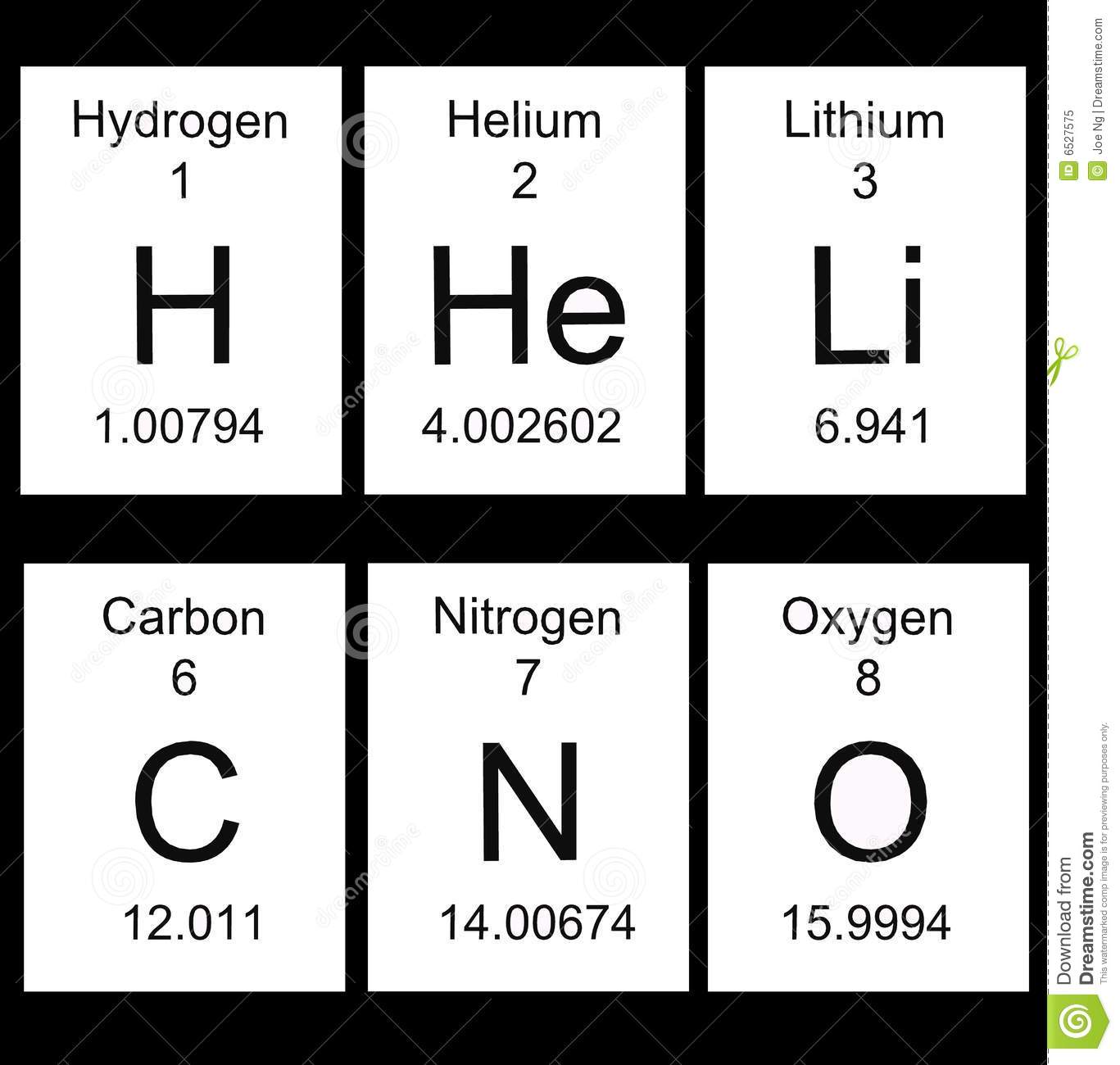
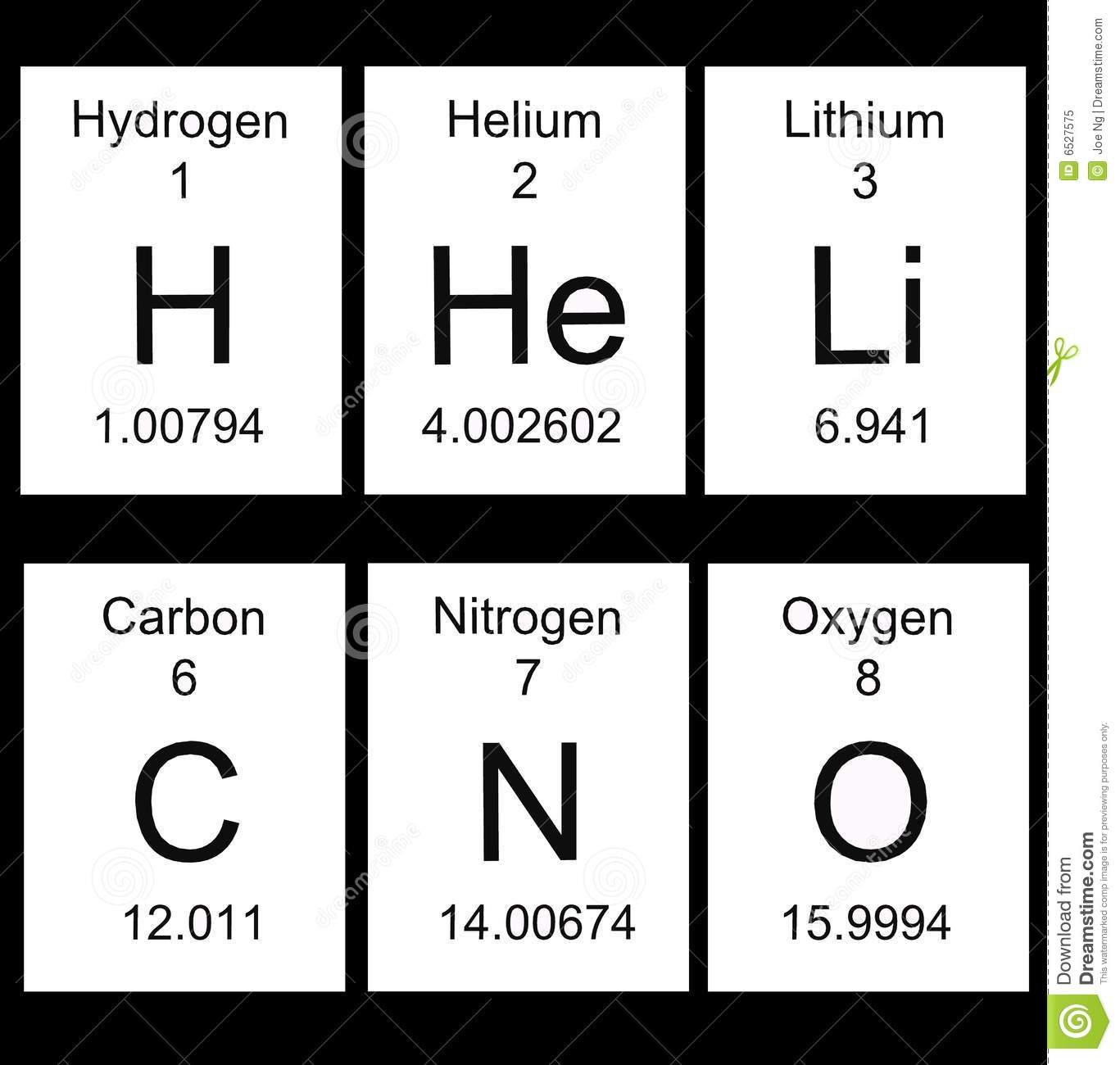
What does atomic number tell you?
How many electrons are in oxygen?
Which element has an atomic number of 1?
Oxygen
Hydrogen
Nitrogen
Carbon
What is the maximum number of electrons that can fit in the second shell of an atom?
2
8
18
32
What is the charge of a neutron?
Positive
Negative
Neutral
Variable
What is the atomic mass of Carbon?
6
12
14
16
Which of the following is a noble gas?
Oxygen
Chlorine
Argon
Carbon
What is group 1 of the periodic table called?
What is group 2 of the periodic table called?
Where are neutrons located in an atom?
What does the mass number of an element tell you?
What is an isotope?
What is radioactivity?
What are the 3 types of radiation?
What is alpha particles made of?
What are beta particles made of?
What is gamma radiation made of?

What does the 6 represent?
atomic mass
atomic number
element name
chemical symbol

What does 12.011 represent?
atomic mass
atomic number
element name
chemical symbol

What does the C represent?
atomic mass
atomic number
element name
chemical symbol

Beryllium has how many protons?
4
9.0122
2
13.0122
Protons have a _____________ charge.
positive
negative
neutral
neutrons have a _____________ charge.
positive
negative
neutral
electrons have a _____________ charge.
positive
negative
neutral
What sits in the nucleus of the atom?
electrons and protons
protons and neutrons
neutrons and electrons
just neutrons


The Atomic number is known as the _______
Number of electrons in an atom
Number of Protons in an atom
Number of neutrons in an atom
Number of Protons and electrons in an atom
What charge do protons have?
Positive
Negative
Neutral
What is Atomic Mass Number ?
Number of Protons
Number of Neutrons
Number of Protons and Neutrons
Number of Protons and Electrons
The number of electrons in an atom is equal to the...
Atomic number
Protons
Atomic Mass
Neutrons
The formula used to calculate the number of neutrons is:
Mass Number - Atomic Number
Protons + Electrons
Atomic Number - Mass Number
Protons x2
How many periods are on the periodic table?
5
6
7
8
Elements in the same group have : (2 correct answers)
Similar chemical properties
Similar names
Same number of outer (valence) electrons)
The same number of protons
The building blocks of all matter
Atoms
Energy
Electrons
Particles
Atoms comprise of...
Subatomic particles
Radiation
Ions
Isotopes
Which of these is NOT a subatomic particle?
Protons
Neutrons
Electrons
Ions
Which subatomic particle has a neutral charge?
Neutrons
Protons
Electrons
Alpha and Beta Radiation
Electrons are located inside the nucleus
True
False
This subatomic particle is responsible for how an atom behaves
Protons
Neutrons
Electrons
On the Periodic Table Groups:
Are verticle and tell us the number of valence electrons
Horizontal and tell us the number of valence electrons
Are verticle and tell us the number of electron shells the atom has
Are horizontal and tell us the number of electron shells an atom has
Atoms are organised on the Periodic Table. Periods are arranged...
Horizontally
Vertically
Each element has a Mass number. This tells us;
The number of protons
The number of electrons
The number of protons and neutrons
The combined number of subatomic particles
What is the atomic number of an atom that has 3 protons, 3 electrons and 3 neutrons?
3
6
9
Which of these is located in Group 18 of the Periodic Table?
Alkali earth metals
Alkaline earth metals
Halogens
Noble Gases
Which of these is a property of metals?
Brittle
Malleable
Dull
low melting point
An atom that loses an electron
Is a metal,
called a cation, and
has an overall positive charge
is a metal, called an anion and has and overall negative charge
Is a non-metal, called an anion and has and overall negative charnge
Is a non-metal, called an anion and has an overall positive charge
Sodium is located in Group 1 of the Periodic Table. How many valence electrons does it have?
1
2
10
11
An atom that has an unbalanced ratio of protons to neutrons is called:
A anion
A cation
An isotope
A radioactive isotope
The maximum number of electrons that can fit in the first electron shell is:
2
4
6
9
The behaviour of atoms is driven by the Octet Rule (8 electrons in the valence shell)
True
False
Not all isotopes are radioactive
True
False
the time on average that it takes for half of the atoms in a sample to decay.
radioactivity
radioactive isotope
ion
half-life
The most dangerous radiation emitted from a radioactive isotope is:
alpha radiation
beta radiation
gamma radiation
uranium
Which is an example of how we use electricity?
Battery
Solar panels
Light bulb
Wind turbine
Electricity is a form of energy involving the flow of atoms.
True
False
Electrical energy is generated by separating electric charges.
True
False
What are the two types of electricity?
Static and electrons
Current and voltage
Series and parallel
Static and current
What 3 things does a circuit need for current to flow?
energy source, energy user, wires
energy source, switch, wires
energy source, energy user, switch
energy user, switch, wires

In a circuit diagram, this symbol represents a
switch
multimeter
battery
globe

Which light globe(s) would never light up?
A
B,C,D
A,B,C,D
None
Voltage is the measure of the...
difference in electrical energy between 2 parts of a circuit
amount of electric charge that flows through a circuit
What is used to measure electric current?
Voltmeter
Ammeter
Wattmeter
pH meter

What type of circuit is this?
Series
Parallel
Simple
In a series circuit, how is the brightness of a light globe affected when another globe is connected?
It gets brighter
It stays the same
It gets dimmer
It goes out
Why are Christmas lights wired in parallel?
It is cheaper to make
You can make longer strands
It uses less electricity
If a light breaks, the others keep working

If the current in an electrical circuit is constant, what will happen to the voltage if the resistance is increased?
Voltage will increase
Voltage will decrease
Voltage will stay the same

If you increase the voltage across a resistor, what will happen to the current?
Current will increase
Current will decrease
Current will stay the same

If you increase the size of the resistor and keep the voltage the same, what will happen to the current?
Current will increase
Current will decrease
Current will stay the same
Which of the following charge pairs would repel each other? (Choose all that apply)
positive and negative
negative and negative
positive and positive
negative and positive
Determine how the following factor would affect the amount of resistance: longer wire
increase resistance
decrease resistance
would not affect resistance
Determine how the following factor would affect the amount of resistance: insulating material
increase resistance
decrease resistance
would not affect resistance
Determine how the following factor would affect the amount of resistance: thick wire
increase resistance
decrease resistance
would not affect resistance
What type of circuit is this?
Series
Parallel
Simple
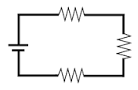
In a series circuit, how is the brightness of a light bulb affected when another bulb is connected?
It gets brighter
It stays the same
It gets dimmer
It goes out
Which of the following materials that is not a good electrical conductor?


Two unlike charges_________
Attract each other
Neutralize each other
Repel each other
Have no effect on each other

Which is the electrical symbol for a wire?


Which is the electrical symbol for one battery?

Why do electricians always wrap wires in plastic?
Plastic comes in many different colors
Plastic is a good electrical conductor
Plastic makes the wires easy to bend
Plastic is a good electrical insulator
Which of these materials is a good conductor of electricity?
Rubber
Metal
Newspaper
Glass
The student conducted an experiment with circuits. Why was the bulb bright when he closed the switch?
The switch produced an electric current
Closing the switch broke the circuit
Closing the switch completed the circuit
The switch did not make a difference
How can it be explained that someone's hair can stick to a balloon?
There is static electricity
There is too much dust in the air
A parallel circuit was too long
The person needs to wash his hair

If you add another bulb in parallel,_____
The bulbs get brighter
The bulbs get dimmer
The bulb brightness stays the same
All the bulbs will go out

If the top bulb goes out,
All the bulbs go out
The other bulbs get dimmer
There is no effect on the other bulbs
The other bulbs get brighter

If the middle bulb goes out, _______
The other bulb gets brighter
The other bulb goes out
The other bulb's brightness stays the same
The other bulb gets dimmer
Devices in a parallel circuit receive
equal current but different voltage
equal voltage but different current
equal voltage and equal current
different voltage and different current

