
 Worksheets
P4 Science Quiz 1
Total questions: 50
Worksheet time: 31mins
Which of the following is a matter?

WRONG

WRONG

WRONG

CORRECT
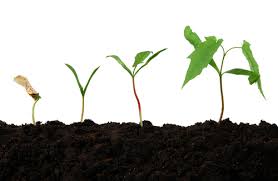
What is a baby plant called?
seedling
string
twig
acorn
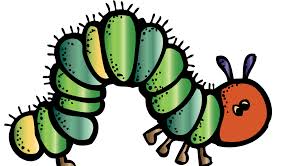
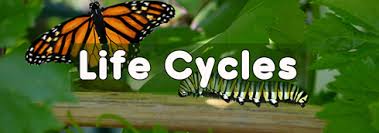

Which animal life cycle is shown in this picture?
cockroach
butterfly
mosquito
beetle

This picture shows the life cycle of a _____________.
beetle
cockroach
mosquito
grasshopper
(TP1) The state of matter in which a substance has a definite volume but no definite shape.
gas
liquid
solid
matter
An ice cube is placed in a pan. The pan is placed over an open flame. Which change will MOST likely happen over time? (TP4)
The ice changes to a gas then a liquid
The ice changes to a gas and then back to a solid
The ice changes to a liquid then to a gas.
The ice changes to a liquid and back to a solid.
Ali put 6 spoon of ice cream into a glass and weigh it. The mass of the ice cream is 200g. Ali allowed the ice cream to melt and change into a liquid. Then, he weighed and recorded the mass of the melted ice cream. Predict the mass of the melted ice cream. (TP5)
180g
190g
200g
210g


6. State of matter which can be compressed is ….
liquid
gas
solid
light
Heat is a form of _____________.
cycle
energy
diversity
________________ is to measure how hot or how cold something is.
tempreture
temparature
temperature
Unit of measurement for temperature.
millilitres
kilometres
kilograms
degree Celcius
_____________ heat is needed if we want to increase the temperature.
more
less
little
Things get colder = ____________ heat
loses
gains
Heat always travels from _______________________________.
a colder place to a hotter place until both places reach the same temperature.
a hotter place to a colder place until both places reach the same temperature.
Solid, liquid and gas ___________ when it gains heat.
contract
expand
Metals are ____________ conductor of heat.
best
good
better
Plastic is a _____________ conductor of heat.
poor
bad

How does heat flow?
object P to object Q
object Q to object P
heat does not flow between them

Which object losses heat?
object A losses heat
object B losses heat

Which object gains heat?
object P gains heat
object Q gains heat

reflects the sun's light

We can see things around us because of light reflecting off the things and into our eyes?
Which is NOT a source of light?
firefly
ball
sun
torch
The closer the object is to the light source, the bigger the size of shadow.
True
False
The further the object is to the light source, the bigger the size of the shadow.
True
False
Shadows are longest in the ___________ and _______
(a)

The diagram below shows the digestive system.
In which part of the digestive system is food completely digested?
A
B
C
D

The diagram shows part of a human body system.
Which of the following statement(s) about the parts are incorrect?
A: Water is removed from X.
B: Digestion is completed at Y.
C: Undigested food remains in Y.
D: Partially digested food enters Y from the stomach.
C only
A and D only
A, C and D only
A, B, C and D

The diagram shows a part of the human body system.
Which body system does it belong to?
respiratory
circulatory
digestive
muscular
Which one of the following shows the correct order when food moves through part of the digestive system?
gullet → stomach → large intestine → small intestine
gulletundefinedstomachundefinedsmall intestineundefinedlarge intestine
stomachundefinedsmall intestineundefinedgulletundefinedlarge intestine
stomachundefinedgulletundefinedsmall intestineundefinedlarge intestine

What is System B?
Digestive system
Respiratory system
Skeletal system
Muscular system
Circulatory system

Daisy carry out an experiment to find out if the roots of a plant absorb water or not. Which two of the set-ups should she choose?
A and C
A and D
B and D
C and D

Ali took four identical plants, A, B, C and D, and removed some parts from each plant as shown in the table.
Which plant will survive the longest?
A
B
C
D

During a thunderstorm, a tree can be uprooted.
When this happens, the plant will not be able to __________.
make food
supports the leaves and branches
absorb water and minerals
get sunlight
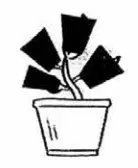
The leaves of a plant were covered completely by black paper. It was then placed under the sun and watered daily.
After two weeks, the plant died.
Which of the following correctly explained why the plant died?
The black paper prevented the leaves from getting sunlight to make food.
The black paper prevented the leaves from absorbing water.
The black paper prevented the leaves from absorbing mineral salts.
The black paper prevented the tiny openings under the leaves from taking in air.
Which is NOT a heat source?
the Sun
iron
oven
pot
Which of the following shows heat loss?
boiling water
eggs cooking on a pan
ice cream melting under the sun
hot bowl of soup becoming room temperature

Why are the telephone wires hung loosely?
So that when they contract during cold weather, they will not pull the poles together or break.
So that when they expand during hot weather, they will not pull the poles together or break.

Why are there gaps on the pavement?
The gaps allow the concrete to contract without cracking on a cold day.
The gaps allow the concrete to expand without cracking on a hot day.
Matter ___________ when it gains heat and ____________ when it loses heat.
contracts, expands
expands, contracts
The spoon placed in a cup of hot water becomes hot after sometime because ___________.
the spoon loses heat to the hot water
the spoon gains heat from the hot water
heat flows from the spoon to the water
heat flow from the surrounding to the spoon
Adhiya placed a bottle of cold milk into a cup of hot water. The cold milk becomes hotter after a while. Which one of the following explain this?
The cup loses heat to the hot water.
The bottle of cold milk gains heat from the cup.
The bottle of cold milk loses heat to the hot water.
The bottle of cold milk gains heat from the hot water.

Look at the diagram.
Shakeel needs help to separate two glasses, A (inside) and B (outside), which are stuck together. What is the best way to separate them?
Pour hot water into A and put B in a basin of hot water.
Pour hot water into A and put B in a basin of cold water.
Pour cold water into A and put B in a basin of cold water.
Pour cold water into A and put B in a basin of hot water.
Which of the following thermometer used to measure body temperature?
Wall thermometer
Datalogger and temperature sensor
Clinical thermometer

