
 Worksheets
IED Unit 2 Quizizz
Total questions: 52
Worksheet time: 3hrs 1mins
What type of tolerance allows equal variation, both larger and smaller, than the specified dimension?
Limit dimensions
Unilateral
Bilateral
General
What type of tolerance states both the upper limit and lower limit, without needing to calculate them?
Limit dimensions
Bilateral
Unilateral
General
What type of tolerance is shown here? 2.50 ±0.02
Limit dimensions
Bilateral
Unilateral
General
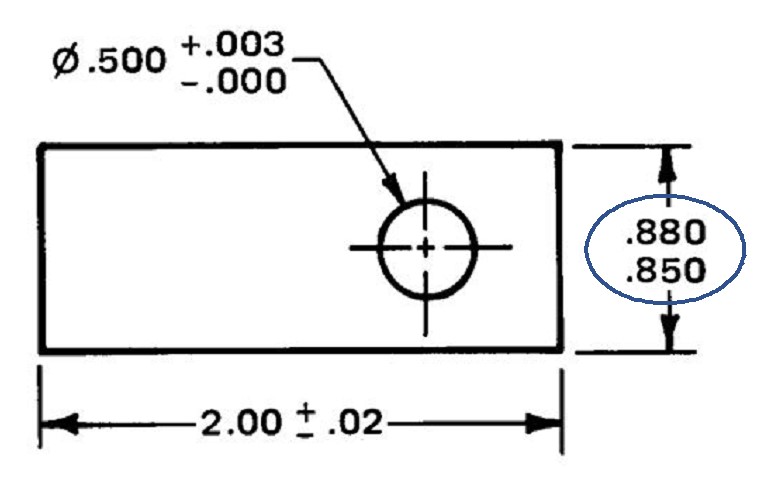
What type of tolerance is circled in this drawing?
Limit dimensions
Bilateral
Unilateral
General
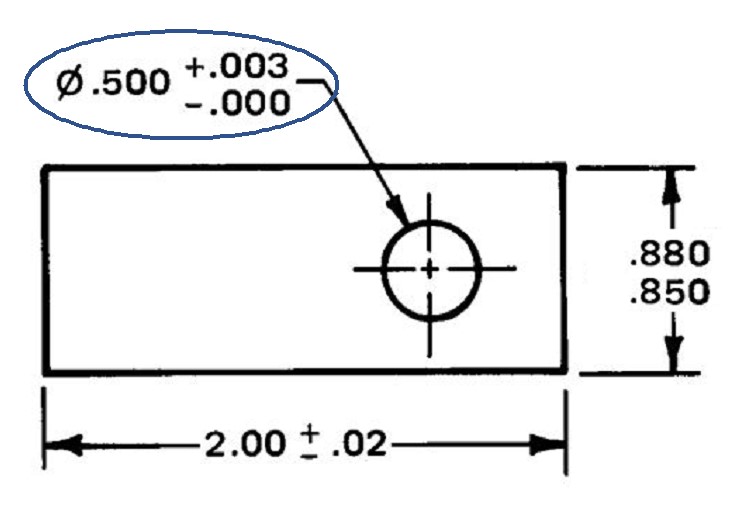
What type of tolerance is circled in this image?
Limit dimensions
Bilateral
Unilateral
General
What is upper limit for this tolerance? 0.250±0.01
0.250
0.240
0.260
0.02
When a hole is always smaller than the part being placed inside of it, what type of fit is this?
Clearance
Interference
Transition
Tension
The diameter of a hole is 0.50 ± 0.02. The pin that is inserted into the hole has diameter 0.53 ± 0.02. What is the allowance?
0.01
0.02
0.03
0.07

The shaft is smaller than the hole, this is called:
Transition Fit
Clearance Fit
Interference Fit
Loose Fit
Why might someone choose to use cyanoacrylate glue (super glue)?
it dries so quickly
its unbelievable strength
it dries to a nice color
it can be stained

What is this fixing?
nail
bolt
rivet
screw

What is this fixing?
nail
bolt
rivet
screw

What is this fixing?
nail
bolt
rivet
screw
What glue is usually used to adher wood to wood?
super glue
contact adhesive
PVA (white glue)
two part epoxy resin glue
FASTENERS ARE ?
DEVICES THAT HOLD PARTS TOGETHER
A CHEMICAL THAT PREVENTS BOLTS FROM LOOSENING
A UNIT FOR SEALING FLUIDS IN OR OUT OF AN ENGINE
Which type of adhesive must be heated to a liquid form before being applied to materials?
super glue
wood glue
epoxy
hot melt glue

Name this joint
Finger
Dado
Lap
Mortise and Tenon
Miter

Name this joint
Finger
Dado
Lap
Mortise and Tenon
Miter
Why is joinery important for projects and construction?
To give the project flair.
Hold project together and make it sturdier
To make the project harder to build

Component moves along a single axis.
Ball
Revolute
Cylindrical
Slider

Component rotates around Joint Origin.
Ball
Revolute
Cylindrical
Planar

Which type of joints shown in the picture?
Ball joint
Pin-slot joint
Cylindrical joint
Revolute joint
self-contained unit.


Revolute mate. Select all that apply
0 degrees of freedom
It has one degree of freedom (translation)
It has one degree of freedom (rotation)
It has both translational and rotational degrees of freedom

Slider mate. Unlike the cylindrical mate, it can't rotate. How many degrees of freedom?
0
1
2
3

Pin-slot mate. How many degrees of freedom?
0
1 (revolution only)
2 (revolution and translation)
2 (revolution around more than one axis)

What type of drawing/view best describes the image?
Multiview
Orthographic
Exploded
Assembly

If you wanted to design a room that would give a peaceful, relaxing mood, what color would you choose?


What type of balance is shown in the image?
Symmetric
Asymmetric
Radial
Gradated

A raincoat needs to be what kind of property?
Strength
Stretchiness
Absorbency
No absorbency

What kind of materials would you use to build a bridge?
Stretchy materials
Absorbent materials
Strong materials
none of the above
The casing around copper wires is made from which type of materials?
insulators
conductors
thick
thin
This test determines the amount of energy absorbed by a material during fracture
Tensile test
Harness test
Impact test
Which property of a material describes its ability to deform under stress before returning to its original shape?
Elasticity
Plasticity
Hardness
Flexibility
Which of the following is not a material property?
density
stiffness
volume
elasticity
What property measures whether a material is attracted or repelled by a magnet?
Electrical conductivity
Thermal conductivity
Magnetic properties
Reflectivity
What property defines a material's response to externally applied heat?
Electrical conductivity
Elasticity
Thermal conductivity
Reflectivity
How can thermal conductivity of a material be assessed?
By tapping or striking it
By scratching its surface
By assessing its change in temperature
By flexing it
Why is it important for engineers to understand a material's properties?
To make the product heavier
To increase the cost of manufacturing
Because performance is linked to a material's properties
To make the product more complex
Why is density used to identify a material?
Because density alone is sufficient to conclusively identify a material
Because density is the only property that can be easily measured
Because density is a unique property that remains constant regardless of the amount of material present
Because density is directly related to a material's color and appearance

