
 Worksheets
Musclar System Study Guide
Total questions: 59
Worksheet time: 2hrs 41mins
What does it mean for a muscle to be voluntary?
We have control of it (example, moving your arm or blinking your eyes)
We do not have control of it (example, digestion or the heart beating)
It is the most important muscle for respiration
It is connected to the heart
What does it mean for a muscle to be involuntary?
We have control of it (example, moving your arm or blinking your eyes)
We do not have control of it (example, digestion or the heart beating)
It is connected to bones
It generates heat
What is another (more common) word for respiration?
Breathing
Digestion
Circulation
Movement
Is the diaphragm a voluntary or involuntary muscle?
Voluntary
Involuntary
Cardiac
Smooth
What type of muscle is the diaphragm?
Skeletal
Cardiac
Smooth
Involuntary
What attaches muscles to bones?
Tendons
Ligaments
Cartilage
Nerves
What is the difference between the origin point and insertion point for a muscle?
The origin point is where the muscle is connected to the bone that does not move
The insertion point is where the muscle is connected to the bone that does not move
The origin point is where the muscle is connected to the heart
The insertion point is where the muscle is connected to the heart
What is the location of the Biceps Brachii?
Arm
Leg
Back
Neck
Where would you expect to find the Rectus Lateralis?
On the side (lateral area) of the body
In the center of the body
On the back of the body
On the front of the body
How many different parts/attachments does the Quadriceps Femoris have?
4
2
3
5
What is one bone that the Quadriceps Femoris is attached to?
Femur
Tibia
Humerus
Radius
What does the Carpialis Pronator do?
Rotates the wrist (carpals) to face downward
Extends the fingers
Flexes the elbow
Rotates the shoulder
Is the Infraspinator above or below the shoulder?
Below
Above
Beside
In front of
What information is shared in the name Vastus Posterior?
It is a long muscle (vastus) and it is in the back of the body (posterior)
It is a short muscle and it is in the front of the body
It is a wide muscle and it is on the side of the body
It is a small muscle and it is in the lower part of the body
What name would you give a muscle that is on the lateral side of the femur?
Femoris Lateralis
Biceps Brachii
Trapezius
Rectus Abdominis
What name would you give a long muscle that extends the fingers?
Extensor Digitorum
Flexor Carpi
Pectoralis Major
Latissimus Dorsi
What does it mean for a muscle to contract?
Lengthen
Shorten
Expand
Relax
What is a by-product of muscles producing energy without oxygen?
Lactic Acid
Carbon Dioxide
Water
Glucose
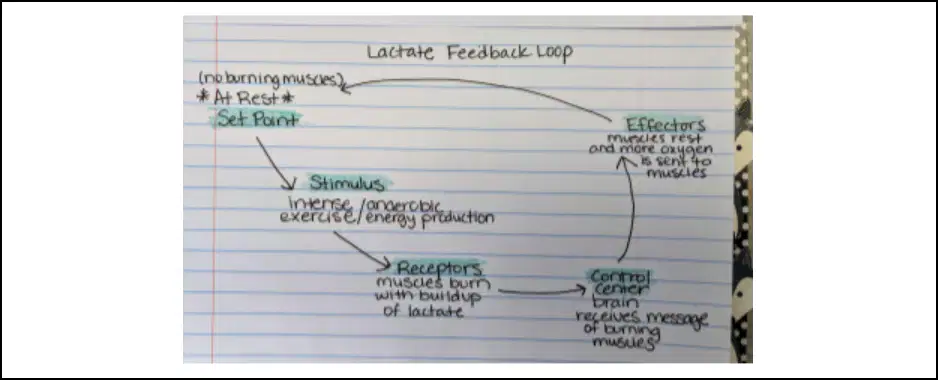
How does lactate work as a feedback loop for muscles?
It increases muscle mass
It signals the brain to stop exercise
It helps muscles rest and receive more oxygen
It causes muscle tears
How is the burn during a workout different from the soreness that comes the day after?
The burn is due to microtears
The burn is a buildup of lactate
The soreness is due to lactate
The soreness is immediate
Which of the following muscle types are voluntary?
Skeletal
Cardiac
Smooth muscle
An example of an involuntary muscle is?
Leg
Heart
Arm
Fingers
Which muscle type is responsible for the contraction of the heart?
Skeletal muscle
Smooth muscle
Cardiac muscle
Voluntary muscle
What is the function of tendons in the muscular system?
Connect muscles to bones
Connect bones to bones
Produce synovial fluid
Store minerals
The end of the muscle that attaches to the more movable bone is known as the:
Origin
Insertion
Belly
Tendon
What structure connects muscle to bone?
Tendon
Ligament
Cartilage
Aponeurosis
Point of origin refers to .......
the place where the muscles attach to the bone, but no movement occurs
the place where the muscles attach the and movement occurs
where a muscle attaches to another muscle
the membrane the covers and supports muscles

Name this movement
ulnar deviation
supination
pronation
radial deviation

Name this movement
supination
pronation
ulnar deviation
radial deviation

Name this movement
inversion
eversion
adduction
abduction

Name this movement
adduction
abduction
inversion
eversion

Name this movement
extension
flexion
adduction
abduction

Name this movement
adduction
abduction
flexion
extension
Which movement is a bending action?
Dorsiflexion
Extension
Plantarflexion
Flexion
Extension is....
a bending action
Making a full circle
a straightening action
Pointing your toes

This movement is?
Flexion
Extension

This movement is?
Abduction
Adduction

This movement is?
Abduction
Adduction

The Movement of A?
Lateral Rotation
Medial Rotation
The Movement of B is?
Lateral Rotation
Medial Rotation
What are the functions of the muscular system. Select all the apply.
Helps you see
Helps you move
Helps fight diseases
Creates heat
Muscles that you control are known as....
Involuntary
Fast Twitch
Voluntary
Slow Twitch
Muscles that you DO NOT control are known as ...
Involuntary
Fast Twitch
Voluntary
Slow Twitch
Of the 3 types of muscles, which muscles attach to bone.
Skeletal Muscle
Cardiac Muscle
Smooth Muscle
Of the 3 types of muscle, which is responsible for pumping your heart.
Skeletal Muscle
Cardiac Muscle
Smooth Muscle
Cardiac muscle is a _______________ muscle.
Voluntary
Involuntary
What are the 3 types of muscle tissue?
Thigh, Calf, & Shoulder
Traps, Forearm, & Abs
Hamstring, Biceps, & Triceps
Smooth Muscle, Cardiac Muscle, & Skeletal Muscle
Which movement is opposite to abduction?
flexion
rotation
circumduction
adduction
supination
Which type of muscle is found in the walls of hollow organs?
Skeletal Muscle
Cardiac Muscle
Smooth Muscle
What is the primary function of tendons?
Connect muscles to bones
Connect bones to bones
Provide cushioning between bones
Transmit nerve signals
Which muscle type is responsible for voluntary movements?
Skeletal Muscle
Cardiac Muscle
Smooth Muscle
Involuntary Muscle
Lactate Feedback Loop:
Set Point
No Burning Muscles - At Rest
Intense/anaerobic exercise
muscles burn with build up of lactate
brain receives message of burning muscles
muscles rest and more oxygen is sent to muscles
Lactate Feedback Loop:
Stimulus
No Burning Muscles - At Rest
Intense/anaerobic exercise
muscles burn with build up of lactate
brain receives message of burning muscles
muscles rest and more oxygen is sent to muscles
Lactate Feedback Loop:
Receptors
No Burning Muscles - At Rest
Intense/anaerobic exercise
muscles burn with build up of lactate
brain receives message of burning muscles
muscles rest and more oxygen is sent to muscles
Lactate Feedback Loop:
Control Center
No Burning Muscles - At Rest
Intense/anaerobic exercise
muscles burn with build up of lactate
brain receives message of burning muscles
muscles rest and more oxygen is sent to muscles
Lactate Feedback Loop:
Effectors
No Burning Muscles - At Rest
Intense/anaerobic exercise
muscles burn with build up of lactate
brain receives message of burning muscles
muscles rest and more oxygen is sent to muscles

