
 Worksheets
Galaxies and Cosmology Review
Total questions: 55
Worksheet time: 33mins
What type of galaxy is oval-shaped?
a spiral galaxy
an elliptical galaxy
an irregular galaxy
What type of galaxy has no special shape or form?
a spiral galaxy
an elliptical galaxy
an irregular galaxy
The Milky Way is a....
spiral galaxy
elliptical galaxy
irregular galaxy
star
Our solar system is in which galaxy?
The Clouds of Magellan
Andromeda
The Milky Way
Betelguese
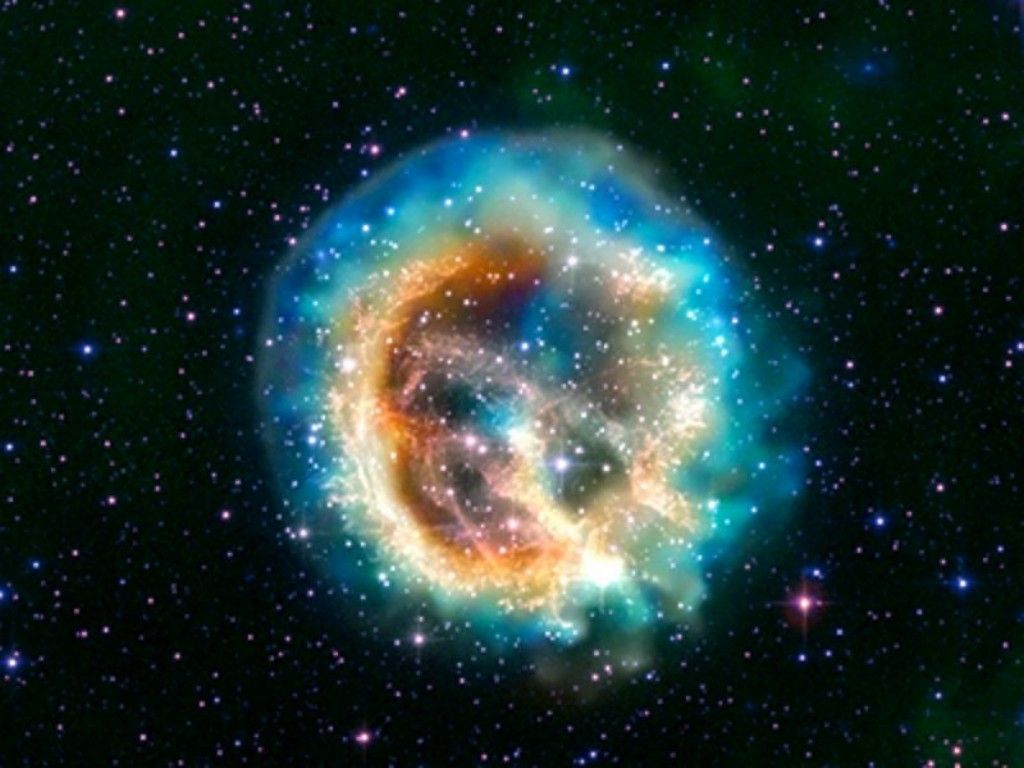


irregular galaxy
spiral galaxy
elliptical galaxy

irregular galaxy
spiral galaxy
elliptical galaxy

Astronomer Edwin Hubble discovered (in 1929) that all galaxies are
rushing toward each other.
getting larger by galactic mergers
rushing away from each other.
spiral in shape
Hubble's Law states that most galaxies are receding away from us at a speed that is proportional to their
size.
mass.
quasars.
distance
A galaxy that is moving toward the earth will have which property?
Its absorption lines will be very dim.
Its absorption lines will be blueshifted.
Its absorption lines will be redshifted.
Its absorption lines will be very wide.
You observe three distant galaxies and note their apparent velocities:
- BFG-01 40,000 km/s
- BFG-02 80,000 km/s
- BFG-03 20,000 km/s
Which of the following is true?
BFG-01 is farthest away from Earth.
BFG-02 is closest to Earth.
BFG-03 is closest to Earth.
Nothing can be learned from their apparent velocities.
Our universe is
expanding.
shrinking.
staying the same size.
We don't know what it's doing.
How is redshift related to distance?
The greater the redshift, the less the distance
The less the redshift, the greater the distance
The greater the redshift, the greater the distance
There is no relationship between redshift and distance

Spiral galaxies are best described as
irregular in shape with random star movement.
regular in shape with mostly orderly star movement.
having a huge round shape with mostly very old stars.
having a galactic bulge with a huge central black hole.

Spiral galaxies also contain massive lanes of gas & dust which leads to
supermassive black holes.
quasars.
large regions of new star formation.
aliens.

"Barred" spiral galaxies are called that because
they have very little material at the center.
they are really elliptical in shape.
they have a massive bar of material at the center.
of massive supernovae explosions near the center.

Elliptical galaxies can be described as having
no spiral arms and mostly very old stars.
a circular or elongated shape.
some spiral structure with lots of gas & dust.
an irregular shape with mostly old stars.

Compared to most elliptical galaxies, spiral galaxies are
very large by comparison.
very small by comparison.
about the same size.
are similar in size and shape to irregular galaxies.

The formation of giant elliptical galaxies may have been created by
collisions of supermassive black holes.
supernovae explosions and star mergers.
collisions and mergers of small irregular galaxies.
collisions and mergers of spiral galaxies.

Irregular galaxies are defined as having
very little star formation.
no real shape and are comparatively very small.
massive star formation.
supermasive black holes.

The two largest members of the Local Group include
M31 & the Milky Way.
Andromeda & the SMC.
the Milky Way & the LMC.
Andromeda & the Milky Way.
The theory that the universe is expanding is supported by the
blue shift of light from distant galaxies
red shift of light from distant galaxies
Which doomsday scenario for our Universe predicts a cold dark death, as a consequence of the second law of thermodynamics?
The big chill/The heat death
The big crunch.
The big bounce.
The big bang.
Which of the following ideas make up the Big Bang Theory?
The Universe is currently expanding.
The Universe was once hot and dense.
The Universe has a finite size.
The Universe is unbounded.
Penzias and Wilson are known for their accidental discovery of the cosmic microwave background and their infamous act of murdering...
pigeons.
dolphins.
snakes.
prairie dogs.
The mass-energy density of the Universe is...
70% dark energy; 29% matter/dark matter; <1% light.
70% dark energy; 29% light; <1% matter/dark matter.
100% dark energy
70% dark matter; 15% dark matter, 15% light.
The cosmological principle is the idea that the Universe...
is homogeneous.
is isotropic.
has the same physical laws throughout.
looks pretty much the same everywhere on large enough scales.
What does the Big Bang Theory tell us
About the popular television show.
the entire universe was once condensed in the form of primeval atom, or a dense mass.
how the universe has evolved over time
How does Cosmic Microwave Background Radiation support the Big Band Theory?
Microwaves are found everywhere in the universe.
The "left over" light from the Big Bang has been redshifted to the microwave spectrum
Microwaves are useful in our everyday lives
Both A and B
How does the abundance of hydrogen and helium support the Big Bang Theory.
Hydrogen and helium are elements on the Periodic Table
Hydrogen and helium are in the same ratio throughout the universe.
Hydrogen and helium have many current uses today
the cosmological redshift of distant galaxies
the abundance of elements predicted by nucleosynthesis.
The Big Bang Theory is the most widely accepted theory about the evolution of the universe over time.
true
false
The "afterglow" of the energy from the origin of the universe that we see today.
Cosmic microwave radiation
sunlight
Doppler effect
Cosmic explosions
The temperature of the universe:
is constant.
varies between 20 to 6,000 degrees Fahrenheit.
has increased to about 10,000 degrees Celsius.
has cooled to about 2.7 Kelvin.
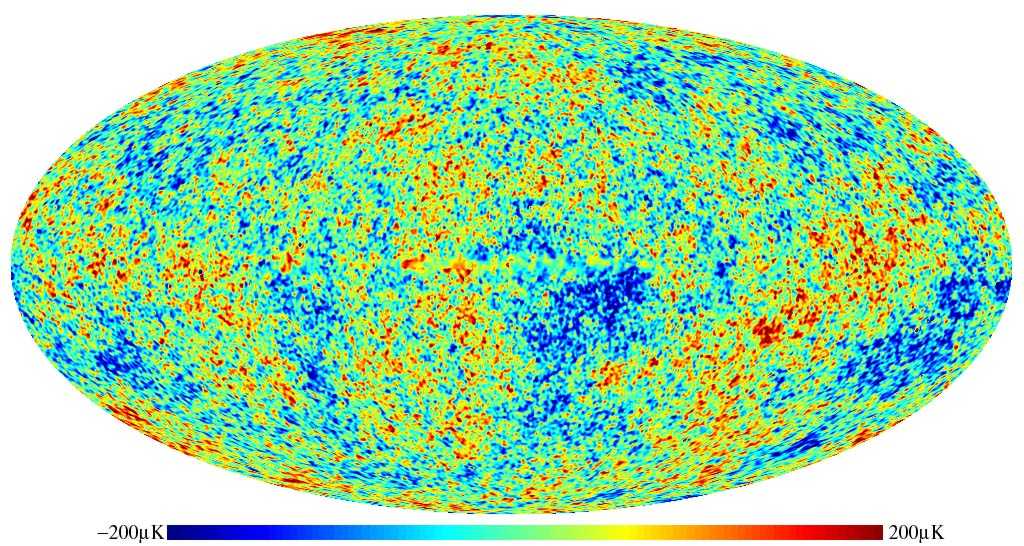
Which description is considered most accurate regarding what actually happened during the Big Bang?
Two galaxies collided causing an immense explosion as stars crashed into one another
All of what would become the universe was concentrated in a single small point, or singularity, which rapidly expanded into what is now stars, planets, galaxies, matter, and energy.
All matter emerged from a massive black hole at the center of the universe.
Parts of the sun were ripped off by massive internal explosions and were thrown into space where they cooled to become other things, like plants, comets, and other galaxies.

