
 Worksheets
Scientific Principles PPT 2 - Thermal Expansion & Corrosion
Total questions: 35
Worksheet time: 18mins
What is the coefficient of linear expansion?
A measure of how much a material contracts when cooled
A measure of how much a material expands when heated
A measure of the density of a material
A measure of the weight of a material
Why do plumbers need to consider the expansion of materials?
To ensure pipes are colorful
To prevent pipes from melting
To accommodate changes when hot water flows through pipes
To make pipes more flexible
What can cause plastic guttering to expand and creak?
Cold weather
Sunlight
Heavy rain
Strong winds
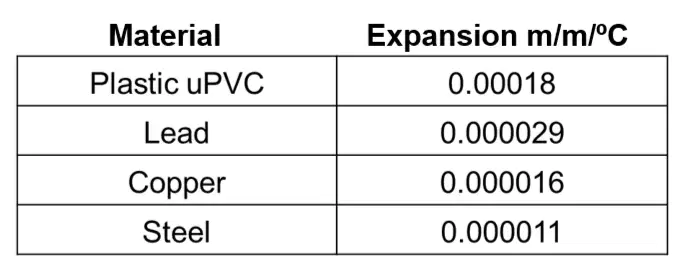
How much will a 6 metre length of lead expand if the temperature rises by 10°C?
0.00174m
0.00108m
0.00192m
0.00132m
What factors can influence the amount and speed of corrosion in materials?
Wet conditions, gases, dissimilar metals, acids, heat, UV
Dry conditions, pure metals, bases, cold, darkness
Only wet conditions and heat
Only UV and gases
What is the most common form of corrosion?
Galvanization
Rust (Oxidation)
Tarnishing
Patina
What elements are required for rust to form?
Iron, nitrogen, and hydrogen
Iron, water, and oxygen
Iron, carbon, and sulfur
Iron, helium, and neon
Why is an inhibitor added to the heating system water?
To enhance heat transfer
To prevent freezing
To provide chemical protection for steel surfaces
To increase water flow
What causes electrolytic corrosion?
High temperature
Presence of an electrolyte
Lack of oxygen
Excessive pressure
Which metals are mentioned as being part of a plumbing system that can experience electrolytic corrosion?
Gold and silver
Copper and LCS
Zinc and tin
Lead and mercury
What is the role of an electrolyte in electrolytic corrosion?
It acts as an insulator preventing current flow.
It acts as a conductive circuit allowing current to flow and corrosion to take place.
It prevents the formation of a circuit between the cathode and anode.
It slows down the corrosion process.
Which factor increases the rate of electrolytic corrosion?
Decreasing temperature
Increasing distance in the electromotive series
Using similar metals
Reducing the amount of electrolyte
According to the electromotive series, which metal is most anodic?
Copper
Tin
Magnesium
Iron
What is the purpose of installing a sacrificial anode in a hot water cylinder?
To heat the water
To protect steel components from corrosion
To increase water pressure
To filter impurities from water
What material is a sacrificial anode typically made of in a hot water cylinder?
Copper
Brass
Magnesium
Steel
Where can sacrificial anodes be installed in a central heating system?
In the radiator
In the boiler
In the thermostat
In the water pump
What type of corrosion can affect copper tubes if flux is not cleaned off after soldering?
Type 1 pitting corrosion
Surface corrosion
Galvanic corrosion
Uniform corrosion
What is blue water corrosion?
Corrosion that occurs in a new system left dormant with water.
Corrosion that occurs in old pipes due to rust.
Corrosion caused by algae in water systems.
Corrosion that happens in systems with high water pressure.
What is erosion in the context of plumbing?
The buildup of minerals in pipes
The wearing away of pipes and fittings due to the flow of water or gas
The expansion of pipes due to heat
The blockage of pipes by debris
What can increase the likelihood of erosion in plumbing systems?
Low water pressure
Smooth pipe surfaces
Turbulence over 3m/s flow rate
Cold water only
What is dezincification?
A form of corrosion in plumbing systems
A method of water purification
A type of metal strengthening process
A technique for painting metals
What happens to brass components when zinc is leached out?
They become stronger and more durable
They become weak and brittle
They change color to blue
They become magnetic
What is often found on modern brass components to indicate they are dezincification resistant?
DZR or DZ
ZN or ZC
BR or BS
CR or CZ
What is the purpose of chrome plating and galvanising?
To enhance the color of metals
To protect metals from corrosion and tarnishing
To increase the weight of metals
To make metals magnetic
What metal is used in the process of chrome plating?
Zinc
Copper
Chromium
Iron
What is commonly used in the galvanising process?
Molten copper
Molten zinc
Molten iron
Molten aluminum
What is a common application of chrome plating?
LCS pipes
Aluminum cans
Taps and copper pipe
Steel beams
How does galvanising help prevent corrosion?
By adding a layer of paint
By preventing oxygen from reaching the ferrous material
By increasing the temperature of the metal
By making the metal more flexible
What is the purpose of an inhibitor in central heating systems?
To increase water temperature
To protect iron from corrosion
To reduce noise in pipes
To enhance water flow
How does galvanised coating protect LCS pipes?
By insulating them from heat
By preventing physical damage
By protecting from environment and oxygen in water
By enhancing water flow
What maintenance is required for painted cast iron guttering to prevent corrosion?
Annual replacement
Regular maintenance
Monthly cleaning
No maintenance needed
For how long does Denso tape protect LCS pipes underground?
5 years
10 years
15 years
20 years
What effect does heat have on plastics?
Yellowing of plastic
Sunlight degrading
Thermal movement and distortion
Chemical resistance
Which factor causes sunlight degrading in plastics?
Oxygen
UV
Light
Chemicals
What is the effect of light on plastics?
Degrading
Thermal movement
Yellowing of plastic
Sunlight degrading

