
 Worksheets
Relative Dating Practice
Total questions: 50
Worksheet time: 1hrs 4mins
Scientific law that states in horizontal sedimentary rock, the oldest layers are at the bottom
intrusion
fault
index fossil
superposition

The diagram shows a cross section of rocks beside a highway.
Which rock type is the oldest?
rock type 1
rock type 2
rock type 3
rock type 4

In the diagram which rock lasyer is probably the oldest?
layer 1
layer 2
layer 5
layer 6

Which rock layer most likely contains fossils of the most recently evolved organisms
1
2
3
4

The diagram shows some of the layers of rocks found in the Grand Canyon. Scientists find these layers of rock useful for studying fossils
What type of rock is shown labeled in these layers?
extrusive
igneous
metamorphic
sedimentary
Which can most likely be concluded about the top layer of rock seen in an undisturbed cliff wall?
The top layer is older than layers located farther down the cliff.
The top layer is younger than layers located farther down the cliff.
The top layer contains more fossils than layers located farther down the cliff.
The top layer contains fewer fossils than layers located farther down the cliff.
The age of a rock compared to the ages of other rocks is the rock's
absolute age
geologic age
sedimentary age
relative age
A gap in the geologic record is known as a(n)_______________.
unconformity
intrusion
The preserved remains of an organism from long ago is called a ___________
stratum
clast
fossil
relative age
Fossil #1 is found 700ft under ground and fossil #2 is found 300ft under ground, which is newer?
Fossil #1
Fossil #2
Neither fossil is newer
Both Fossils are the same age

Rank these four layers from youngest to oldest:
ADEG
AEDG
GDAE
GEDA

fossils of widely distributed organisms that lived during a geologically short period
absolute age
extrusion
unconformity
index fossil

the geologic principle that states that in horizontal layers of sedimentary rock, each layer is older than the rock above it and younger than the rock below it
erosion
absolute age
law of superposition
relative age

A break in the Earth's crust along which rocks move
relative age
unconformity
fault
folding

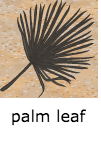
Look at the picture. Which fossil is most likely older?



Look at the picture. Which fossil is most likely younger?

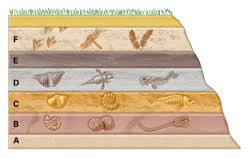
Which rock layer in the diagram seems to be the oldest?
F
E
B
A

Which is older, A or D?
A
D

To be considered an index fossil, it had to have lived for a relatively short period of time.
True
False
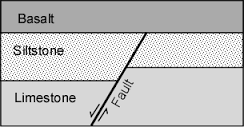
What are the relative ages of the features in order from oldest to youngest?
Limestone, Basalt, Fault, Siltstone
Siltstone, Fault, Basalt, Limestone
Limestone, Fault, Basalt, Siltstone
Limestone, Siltstone, Fault, Basalt

According to the law of superposition, which layer is the youngest?
A
B
C

Which of the following correctly lists the layers in order from oldest to youngest?
A, B, C, D, E
E, B, C, D, A
E, D, C, B, A
C, B, A, D, E

According to the law of superposition, the oldest fossils are found
At the top of the rock layers
Near the bottom of the rock layers
In the middle of the rock layers
Somewhat near the surface

What is the oldest layer in the outcrop?
B
C
D
E

What is the youngest layer in the outcrop?
A
B
C
D
A break in the geologic record that is made when rock layers are eroded over a long period of time
Law of Superposition
Law of Crosscutting
Relative Dating
Unconformity
States that younger rocks lie above older rocks if the layers have not been disturbed
Law of crosscutting
Law of superposition
Relative Dating
Unconformity
An ordered arrangement of rock layers that is based on the relative ages of the rocks
Superposition
Unconformity
Layered
Geologic Column

Relative age of a rock is the number of years that have passed since the rock formed?
true
false

How have the rocks been disturbed?
tilting
folding
faulting
igneous intrusion

How have the rocks been disturbed?
tilting
folding
faulting
igneous intrusion

How have the rocks been disturbed?
tilting
folding
faulting
igneous intrusion

How have the rocks been disturbed?
tilting
folding
faulting
igneous intrusion
According to the law of superposition, which layer is the youngest?
A
B
C

Analyze the seashell found in the white layer. Which statement is true of the rock layer that contains this fossil?
It could also contain a fossil from the bottom layer.
It is older than the layers below it.
It is younger than the layers above it.
It is older than the layers above it.

Which layer is OLDER? Intrusion M or Layer D?
Intrusion M
Layer D

Which layer is OLDER? Fault E or Intrusion D?
Fault E
Intrusion D

Which layer is OLDER? Layer E or Intrusion A?
Layer E
Intrusion A

Which layer is OLDER? Layer E or Fault H?
Layer E
Fault H

Which layer is OLDER? Layer M or Intrusion P?
Layer M
Intrusion P
States that younger rocks lie above older rocks if the layers have not been disturbed
Law of crosscutting
Law of superposition
Relative Dating
Unconformity
A break in the geologic record that is made when rock layers are eroded over a long period of time
Law of Superposition
Law of Crosscutting
Relative Dating
Unconformity
How does the law of crosscutting explain the age of a fault?
The fault is younger than the rocks above it.
The fault is younger than the rocks it cuts through.
The fault is older than the rocks above it.
The fault is older than the rocks it cuts through.
What are the relative ages of the features in order from oldest to youngest?
Limestone, Basalt, Fault, Siltstone
Siltstone, Fault, Basalt, Limestone
Limestone, Fault, Basalt, Siltstone
Limestone, Siltstone, Fault, Basalt

Which of the following is the oldest?
Layer L
Intrusion D
Intrusion H
Layer E
How does sedimentary rock usually form?
Vertically
Diagonally
Folding
Horizontally

The rock formation labeled "P" is a(n)...
fault
intrusion
inclusion
unconformity
According to the law of superposition, which layer is the youngest?
A
B
C
The age of a rock compared to the ages of other rocks is the rock's
absolute age
geologic age
sedimentary age
relative age

Which fossil would make a good index fossil?
A
B
C
D

