
 Worksheets
Somatosensory Test Yourself
Total questions: 11
Worksheet time: 13mins
A patient has loss of pain and temperature sensation on the right side below T6. Where is the lesion?
Right spinothalamic tract at T6
Left spinothalamic tract at T6
Right dorsal column at T6
Left dorsal column at T6
Proprioception, vibration loss in both legs, & difficulty walking with eyes closed. Which pathway is affected?
(a)
Which of the following mechanism allow sensory receptors to discriminate stimuli intensities?
Activate more receptors as stimulus increases
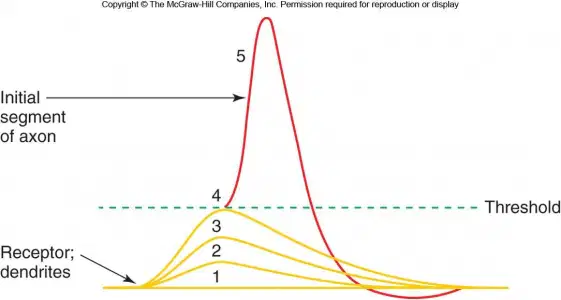
Increase frequency of action potential with stronger stimuli
Increase duration of each action potential as stimulus increases
Change threshold of sensory receptors with increased stimulus intensity
Which statement is true?
C fibers transmit signals rapidly and are myelinated.
Proprioception travels rapidly via A-alpha fibers from muscle and tendons.
A-delta fibers transmit signals slower than unmyelinated C fibers.
A-gamma fibers are fast, myelinated fibers that transmit sharp pain.
A drummer adapts to play skillfully with one hand after an injury. What concept explains this brain adaptation?
(a)
Each receptor type is sensitive to its adequate stimulus but can weakly respond to others.
True
False
A 65 year-old patient presented with Right leg loss of proprioception, vibration & fine touch. Neuro exam reveals intact pain & temperature (same side). What type of damage?
(a)
The ability to perceive and recognize objects by touch alone, without visual or auditory input. What is this?
(a)
Which of the following statements about the physiology of stereognosis are correct? (Select all that apply)
Stereognosis relies on mechanoreceptors in the skin.
The dorsal column-medial lemniscal pathway transmits pain signals.
The primary somatosensory cortex processes tactile information.
Proprioceptors provide information about the position of the hand.
Higher cortical areas interpret sensory input for object recognition.
Draw and label the ascending sensory tract involved in proprioception and fine touch, highlighting the major components from the periphery to the primary somatosensory cortex.

One word to describe the physiology of somatosensory.

