
 Worksheets
Fossil Review
Total questions: 24
Worksheet time: 2hrs 38mins
Organisms with hard parts like bones, shells, or teeth are more likely to become fossilized.
True
False
Organisms with soft parts like jellyfish, worms and most insects are less likely to become fossilized because their soft tissues decompose quickly.
True
False
NAME THAT FOSSIL:
This fossil forms when sediments bury an organism and the sediments change into rock. Then, the organism decays leaving a cavity (hollow area) in the shape of the organism.
mold fossil
cast fossil
preserved fossil
trace fossils
NAME THAT FOSSIL:
This fossil forms when minerals soak into the buried remains, replacing the remains, and changing them into rock.
carbonized film fossil
cast fossil
preserved fossil
petrified fossils
NAME THAT FOSSIL:
This fossil forms when a mold is filled with sand or mud that hardens into the shape of the organism.
mold fossil
cast fossil
preserved fossil
petrified fossils
NAME THAT FOSSIL:
This fossil forms when the mud or sand hardens to stone where evidence of an organism is left behind such as footprints, coprolites (feces), egg shells, gastroliths (stomach stones), regurgitaliths (vomit), nests, trails, burrows, etc...)
mold fossil
cast fossil
trace fossil
carbonized film fossil
NAME THAT FOSSIL:
This fossil forms when organisms are pressed between layers of soft mud or clay that hardens squeezing almost all the decaying organism away leaving the carbon imprint in the rock.
preserved fossil
petrified fossil
trace fossil
carbonized film fossil
NAME THAT FOSSIL:
This type of fossilization keeps the fossil remains partially or full intact through 1 of 3 materials: ice, tar, or resin that turns into amber.
preserved fossil
petrified fossil
trace fossil
carbonized film fossil
Fossils are typically found in which of the following? Select all that apply
igneous rock
metamorphic rock
sedimentary rock
preserved in ice, tar, or amber
Which of the following increase the organism's chance of becoming a fossil?
being buried slowly
being buried quickly
having soft body parts
having hard body parts
Fossils are typically found in which type of rock?
igneous rock
sedimentary rock
metamorphic rock
classic rock
Paleo means...
fresh, new
old, ancient
mediterranean
light, pale
Which of the following is a scientist who collects and classifies fossils?
biologist
epidemiologist
chemist
paleontologist

NAME THAT FOSSIL!
Click on the picture if you want to zoom in to see more detail.
cast fossils
mold fossils
trace fossils
preserved fossils
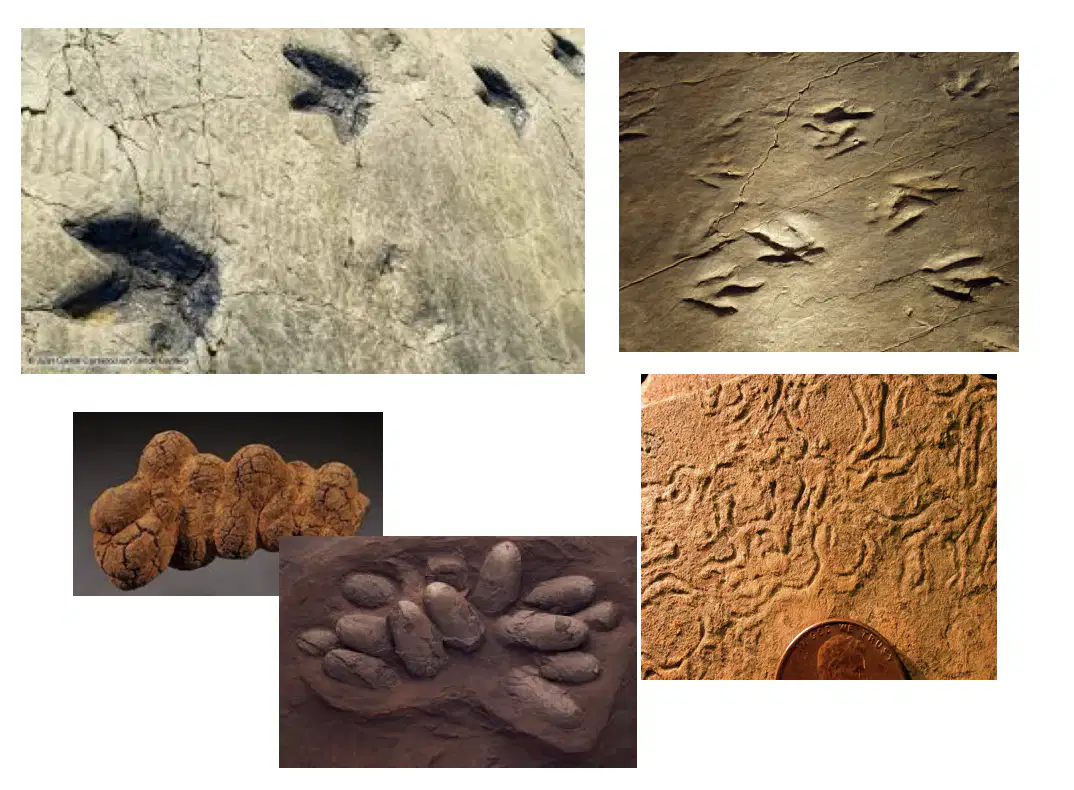
NAME THAT FOSSIL!
Click on the picture if you want to zoom in to see more detail.
carbonized film fossils
mold fossils
trace fossils
preserved fossils
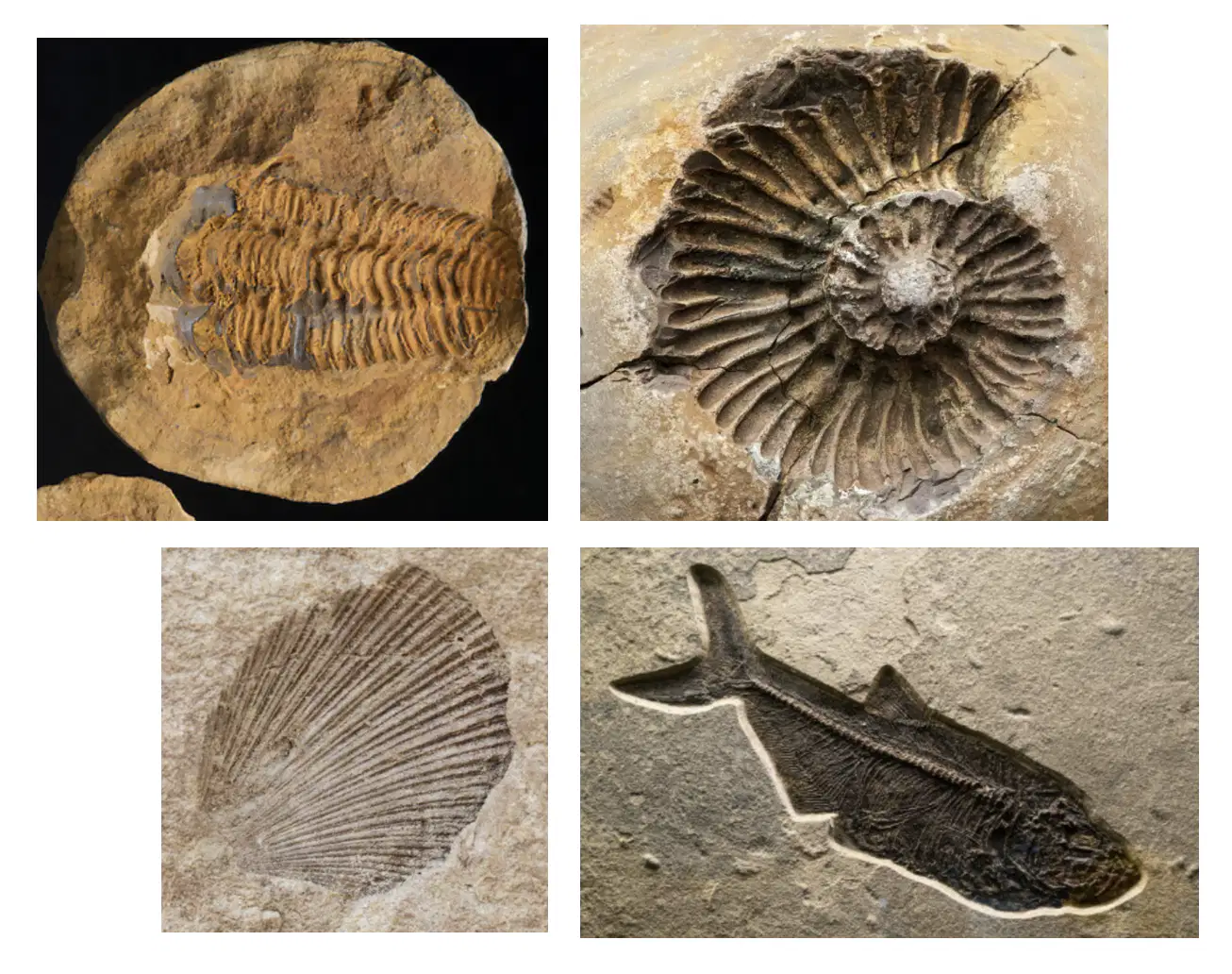
NAME THAT FOSSIL!
Click on the picture if you want to zoom in to see more detail.
cast fossils
mold fossils
petrified fossils
preserved fossils

NAME THAT FOSSIL!
Click on the picture if you want to zoom in to see more detail.
cast fossils
mold fossils
petrified fossils
preserved fossils

NAME THAT FOSSIL!
Click on the picture if you want to zoom in to see more detail.
cast fossils
carbonized film fossils
petrified fossils
preserved fossils

NAME THAT FOSSIL!
Click on the picture if you want to zoom in to see more detail.
cast fossils
carbonized film fossils
petrified fossils
preserved fossils
In order for an organism to become a fossil, it is important that the organism be buried quickly to protect the organism from which of the following? Click (choose) all that apply.
scavengers
decay
erosion
all of the above
A ______ is an imprint made by the outside of a dead plant or animal.
cast
mold
trace fossil
amber
What do you call the preserved remains or traces of living things?
organisms
artifacts
fossils
models
How are most organisms fossilized?
1) A living thing dies
2) The organism is buried slowly
3) The sediments slowly harden into rock preserving the shape of the organism
1) A living thing dies
2) The organism is buried quickly
3) The sediments slowly harden into rock preserving the shape of the organism
1) A living thing dies
2) The organism remains on the surface
3) Water washes over the organism preserving the shape of the organism
What is an alternative name for a petrified fossil?
preserved fossil
permineralized fossil
mold fossil
pure fossil

