Wayground logo

Free Printable Worksheets

Font size

S
M
L
XL
Worksheets

First Semester Extra Credit

Total questions: 35

Worksheet time: 2hrs 30mins

Name
Class
Date
1.
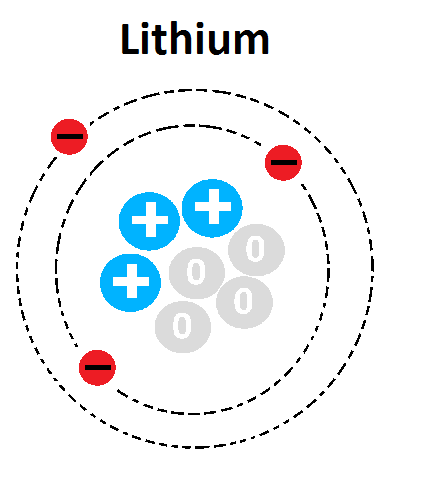
What element is represented in this Bohr Model? 
a)
Carbon
b)
Hydrogen
c)
Aluminum
d)
Lithium
2.
What is the mass number of this atom?
a)
1
b)
3
c)
4
d)
7
3.
How many electrons does Si contain? (click to see image)
a)
14
b)
28
c)
2
d)
None of these
4.

Which element would be in group 16?

a)

V

b)

W

c)

X

d)

Y

e)

Z

5.

This is a correct dot diagram for nitrogen (N)

a)

true

b)

false

6.

Subatomic particles with a negative charge

a)

Electrons

b)

Neutrons

c)

Protons

d)

Quarks

7.
An atom of the element with atomic number 6 always has _____.
a)
six protons in its nucleus
b)
an atomic mass of six
c)
more than six neutrons
d)
six electron clouds
8.

How many electrons does a Copper atom have?

a)

63

b)

29

c)

92

d)

34

9.
In order for an atom to be neutral what has to be true?
a)
The atom has more protons than neutrons
b)
The atom has more neutrons than protons
c)
The atom has the same number of protons and neutrons
d)
The atom has the same number of protons and electrons
10.
What is the atomic number of the atom pictured? 
a)
9
b)
10
c)
18
d)
19
11.

The reason that Noble Gases do not react is because

a)

They are able to bond to fill their outer shell

b)

Their inner electron shell is filled

c)

Their outer electron shell is filled

d)

None of the above, Noble Gases are highly reactive

12.

Which of the following would be best described as "Highly reactive"?

a)

Alkali metal

b)

Rare earth metals

c)

Noble gases

d)

Neon

13.

Which family/group of metals have two electrons in the outer most energy level?

a)

Lanthanides

b)

Chalcogens

c)

Halogens

d)

Alkaline earth metals

14.

Elements in the same ________ are more chemically similar.

a)

group

b)

club

c)

period

d)

table

15.

Which elements have the most similar chemical properties?

a)

K and Ca

b)

K and S

c)

K and Cl

d)

K and Na

16.
How would this element be classified?
a)
Metal
b)
Nonmetal
c)
Metalloid
d)
Metamorphic
17.
Which is an alkali metal?
a)
Magnesium
b)
Iron
c)
Sodium
d)
Europium
18.
Where are the nonmetals located on the periodic table?
a)
top left corner
b)
bottom left corner
c)
top right corner
d)
bottom left corner
19.
What is Fe2O3
(rust) made up of?
a)
1 flourine, 2 einsteinium,
3 oxygen
b)
2 fluorine, 3 oxygen
c)
2 iron, 3 oxygen
d)
2 iron, 3 osmium
20.
The number at the top of each square on the periodic table is the ...
a)
atomic number
b)
atomic mass
c)
Chemical Symbol
d)
Element Name
21.
The atoms along the staircase are called 
a)
metals
b)
nonmetals
c)
metalloids
d)
noble gases
22.
The smallest possible unit matter can be divided into while still maintaining its properties.
a)
Proton
b)
Atom
c)
Element
23.
Which other element has the same number of valence electrons as chlorine?
a)
Sodium
b)
Bromine
c)
Oxygen
24.
Alkaline Earth Metals...
a)
are semiconductors
b)
are the most reactive type of elements
c)
have two valence electrons
25.

Which two elements would have similar properties?

a)

Ar - Argon and Xe - Xenon

b)

Og - Oganesson and Lu - Lutetium

c)

He - Helium and Lu - Lutetium

d)

Ar - Argon and Se - Selenium

26.

PCl5 + ___ H2O → ___ HCl + H3PO4

a)

4, 5

b)

1, 6

c)

3, 8

d)

2,2

27.
Balance this equation.
_SnO2 +_H2-->_Sn +_H2O
a)
1,1,2,1
b)
1,2,1,1
c)
1,2,1,2
d)
1,2,2,1
28.

Which type of reaction is:

NaCl + AgNO3 → NaNO3 + AgCl

a)

Synthesis

b)

Decomposition

c)

Single Displacement

d)

Double Displacement

29.

Which type of reaction is:

NH3 + HCl → NH4Cl

a)

Synthesis

b)

Decomposition

c)

Single Displacement

d)

Double Displacement

30.

In which type of reactions does one compound break down to form two or more simpler substances?

a)

Synthesis

b)

Decomposition

c)

Single Displacement

d)

Double Displacement

31.

How many kilograms of calcium are there in 173 pounds of calcium? (1 lb = 454 g; 1 kg = 1000 g)

a)

1.10 kg

b)

78.5 kg

c)

110 kg

d)

78500 kg

32.

A child weighs 40.0 lb and is to receive 0.10 mg of an antibiotic for each kg of body weight. How many milligrams of the antibiotic shall the child receive? (1 kg = 2.2 lbs)

a)

18.2 mg

b)

182 mg

c)

0.182 mg

d)

1.82 mg

33.

Convert 500,000 millimeters/month to kilometers/year

a)

.6 kilometers/year

b)

.06 kilometers/year

c)

6 kilometers/year

d)

60 kilometers/year

34.
What is a pure substance that cannot be broken down into any other substance by physical or chemical means. Ex: Gold, Silver, Oxygen, & Nitrogen
a)
element
b)
compound
c)
mixture
d)
salad
35.
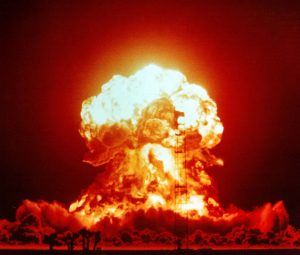
What type of reaction is shown in the photo?
a)
Exothermic
b)
Isothermic
c)
Endothermic
d)
None of the  above