
 Worksheets
24 - Cell Transport Bonus Review
Total questions: 45
Worksheet time: 27mins
Active transport and facilitated diffusion are similar in that
transport proteins are utilized
use of ATP
molecules move against (up) the concentration gradient
all of the above
Huge molecules like proteins that can’t enter the cell through either the phospholipids or transport proteins move into the cell by
exocytosis
the sodium-potassium pump
endocytosis
facilitated diffusion
Which statement describes how the calcium ion, Ca2+, enters a cell.
Carbohydrate groups on the membrane allow the ions to pass
The fatty acid tails of the phospholipids allow ions to cross
Protein channels in the plasma membrane allow ions to cross
Phosphate groups of the phospholipid bilayer allow ions to cross
What is a major difference between active and passive transport?
Active transport moves ions, while passive transport does not
Active transport requires energy, while passive transport does not
Active transport involves a concentration gradient, while passive transport does not
Active transport uses membrane proteins and passive transport does not
A concentration gradient is created during ______ transport.
active
passive
During _____ transport, no ATP is used, molecules move with the gradient until a gradient does not exist (equilibrium)
active
passive
The phospholipid bilayer of the plasma membrane is LEAST permeable to (a) ?
What is one way that facilitated diffusion differs from simple diffusion?
Facilitated diffusion requires energy input
Facilitated diffusion requires membrane proteins
Facilitated diffusion requires a concentration gradient
Facilitated diffusion requires small, nonpolar molecules
When particles move out of a cell through an ion channel, the cell
gains energy
loses energy
first gains then loses energy
does not use energy
Sodium ions move through a protein channel until there is a higher concentration in extracellular fluid than the cytoplasm. This is a type of ____ transport
passive
active
Most of the time, the environment that plant cells live in (homeostasis) is
hypertonic
isotonic
hypotonic
none of the above

What type of transport is the diagram below showing?
phagocytosis
pinocytosis
exocytosis

What type of transport is being shown in the diagram? Select all correct responses.
diffusion
passive
active
facilitated diffusion
What organelle makes the ATP for movement of some materials between cells during active transport?
mitochondria
chloroplast
nucleolus
lysosome
Which statement best describes the function of the proteins embedded in the plasma membrane of cells?
They provide instructions for the processes in the cell.
They selectively allow certain particles into and out of the cell.
They attract charges in the cell’s environment to give the cell a net charge.
They store the energy required by the rest of the membrane to perform its functions.

Identify the transport for the diagram with Bacteria.
endocytosis
exocytosis
diffusion
osmosis

Identify the transport for the diagram with O2 and CO2.
diffusion
osmosis
active transport
facilitated diffusion

Identify the transport for the diagram with vesicle.
endocytosis
exocytosis
diffusion
osmosis

B is pointing to
phospholipid bilayer
cholesterol
surface protein
transport/channel protein
hydrophilic head
C is pointing to
phospholipid bilayer
cholesterol
surface protein
transport/channel protein
hydrophilic head
What part of the phospholipid is circled in the diagram?
hydrophobic tails
hydrophilic tails
hydrophobic head
hydrophilic head
The yellow molecule within the phospholipid bilayer that aids in maintaining membrane fluidity is
cholesterol
glycolipid
glycoprotein
surface protein
Match the description with the correct part of the plasma membrane. Match the following:
used to passively transport either large or charged molecules
transport/channel proteins
allows small and nonpolar molecules to diffuse through
phospholipid bilayer
used to keep the membrane fluid
cholesterol
cell to cell recognition
glycoproteins

Would this cell have high or low turgor pressure?
low
high

This cell would be in a _______ solution with ___ turgor pressure.
hypotonic; low
hypertonic; high
hypotonic; high
hypertonic; low

This plant cell is in a _____ solution and is experiencing ____.
hypertonic; crenation
hypertonic; plasmolysis
hypotonic; plasmolysis
hypertonic; apoptosis
What is the role of the concentration gradients in passive and active transport processes?
Concentration gradients drive passive transport and are used as energy in active transport.
Concentration gradients are irrelevant in both passive and active transport.
Concentration gradients only affect passive transport, not active transport.
Concentration gradients only affect active transport, not passive transport.
What are two characteristics of molecules that move easily through the phospholipid bilayer?
Large and charged
Small and nonpolar
Large and polar
Small and charged
What are two characteristics of molecules that have to utilize membrane proteins to move into or out of the cell?
Small and nonpolar (no charge)
Large and polar (charged)
Hydrophobic and small
Ionic and small
Tap on all the pictures of ACTIVE transport.

In biology class, Evelyn explained that active transport of solutes across the cell membrane requires (a) because molecules are moved against the (b) , meaning from (c) concentration.
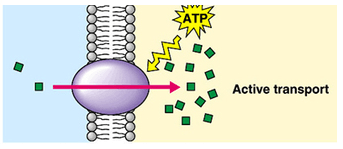
In her biology class, Lilly learned that ATP is used during (a) .
Passive Transport
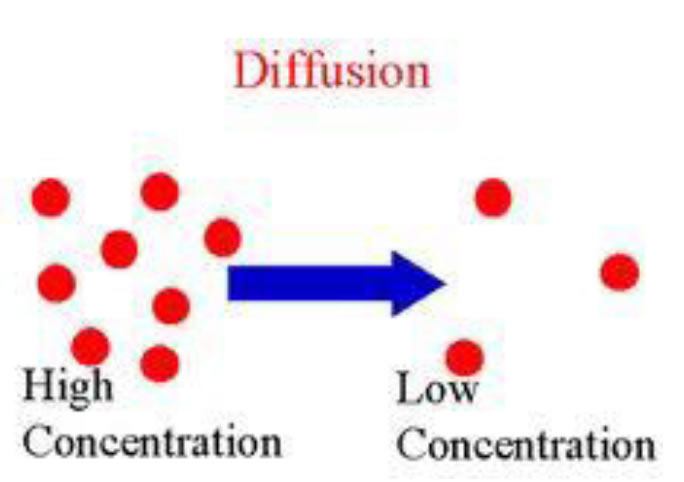


The cell shrunk in size, which means it was placed in a ____ solution.
Isotonic
Hypertonic
Hypotonic
What term describes a solution that has the same solute concentration inside of and outside of the cell?
Hypertonic
Hypotonic
Isotonic
A cell that is 90% water and 10% solute is placed in a solution that is 90% water and 10% solute. Which of the following is correct?
it is hypertonic because water is exiting the cell.
it is isotonic because the concentration is the same inside and outside the cell.
it is hypotonic because water is entering the cell.
it is hypertonic because water is entering the cell.
Cell "drinking" is referred to as which of the following?
phagocytosis
pinocytosis
exocytosis
passive transport
A cell that is 80% water and 20% solute is placed in a solution that is 60% water and 40% solute. Which of the following is correct?
It is isotonic because the concentration is the same inside and outside the cell.
It is hypertonic because water is exiting the cell.
It is hypotonic because water is entering the cell.
It is hypertonic because water is entering the cell.
Endosymbiotic Theory is the idea that ______ cells could have evolved from_____cells
prokaryotic, eukaryotic
eukaryotic, animal
prokaryotic, plant
eukaryotic, prokaryotic
How did one type of prokaryote get inside of another type of prokaryote
Acts as a ligand
One engulfed the other
Fused in as a vesicle
snuck in as a retrovirus
Early bacteria that could make its own energy evolved into
Mitochondria
Chloroplast
ATP
ADP
Early bacteria that could perform photosynthesis evolved into
Mitochondria
Chloroplast
ATP
ADP
Evidence for endosymbiosis includes
Mitochondria and chloroplast have their own Lysosomes
Mitochondria and chloroplast have their own vesicles
Mitochondria and chloroplast have their own RNA
Mitochondria and chloroplast have their own DNA

