
 Worksheets
PS(02/24/25): Components and Applications of Fluid Power Princip
Total questions: 32
Worksheet time: 16mins
What are the two main branches of fluid power?
Hydraulics and Thermodynamics
Hydraulics and Pneumatics
Pneumatics and Electrodynamics
Thermodynamics and Electrodynamics
What type of fluid does hydraulics use?
Compressible gases
Incompressible liquids
Solid particles
Plasma
What is the primary purpose of fluid power in engineering?
To generate electricity
To transmit force and energy
To cool down systems
To create sound waves
What do pneumatics typically employ?
Incompressible liquids
Compressible gases
Solid particles
Plasma
What is one method to generate pressure using fluid?
Use a pump to compress the fluid within a confined space.
Allow the fluid to flow freely in an open space.
Heat the fluid until it evaporates.
Mix the fluid with another liquid.
What is the function of a pump/compressor in a fluid power system?
Converts fluid power into mechanical energy
Stores fluid or compressed air
Converts mechanical energy into fluid power
Controls the direction and flow rate of fluid
What role does the pressure relief valve play in a fluid power system?
Increases system pressure
Releases excess pressure to ensure safety
Converts fluid pressure into mechanical force
Stores compressed air
Which component of a fluid power system controls the direction, pressure, and flow rate of the fluid?
Cylinder
Reservoir
Valve
Pump/Compressor
What is the primary function of a cylinder in a fluid power system?
Stores fluid or compressed air
Converts fluid or air pressure into mechanical force
Ensures system safety by releasing excess pressure
Controls the flow rate of the fluid
What are the four main components without which a pneumatic or hydraulic system will not work?
Valves, Pumps, Actuators, Reservoirs
Gears, Belts, Chains, Pulleys
Wires, Circuits, Switches, Batteries
Levers, Springs, Wheels, Axles
Which of the following is a main component without which a hydraulic system will not work?
Battery
Compressor
Light bulb
Switch
What is another term for the receiver in a hydraulic system?
Pump
Motor
Tank
Gear
Which component in a hydraulic system is responsible for controlling the flow of fluid?
Actuator
Valve
Compressor
Receiver
In a hydraulic system, which of the following can be considered an actuator?
Cylinder
Battery
Wire
Switch
What is the main difference between a hydraulic system and a pneumatic system?
Hydraulic systems use liquids, while pneumatic systems use gases.
Hydraulic systems use gases, while pneumatic systems use liquids.
Both systems use gases.
Both systems use liquids.
What is the main difference between hydraulic and pneumatic systems?
Hydraulics use compressed gas, while pneumatics use incompressible liquid.
Hydraulics use incompressible liquid, while pneumatics use compressed gas.
Both use incompressible liquid to transmit power.
Both use compressed gas for power transmission.
What is the primary function of a compressor in a pneumatic system?
Convert mechanical energy to hydraulic energy
Convert mechanical energy to pneumatic energy
Convert hydraulic energy to mechanical energy
Convert electrical energy to mechanical energy
Which types of compressors are mentioned in the document?
Reciprocating, rotary screw, and centrifugal
Axial, centrifugal, and reciprocating
Rotary vane, axial, and centrifugal
Rotary screw, axial, and reciprocating
What do cylinders or actuators convert in a pneumatic system?
Pneumatic energy to electrical energy
Hydraulic energy to linear mechanical force and motion
Electrical energy to hydraulic energy
Mechanical energy to pneumatic energy
What is the role of valves in hydraulic systems?
Increase temperature
Control flow direction, pressure, and flow rate
Convert energy types
Store hydraulic fluid
What is the primary function of a filter in a hydraulic system?
Maintains constant air pressure
Adds oil mist to air
Removes contaminants from compressed air
Increases air temperature
Which component of a hydraulic system maintains constant air pressure for consistent operation?
Filter
Regulator
Lubricator
Compressor
What does a lubricator do in a hydraulic system?
Removes contaminants from compressed air
Maintains constant air pressure
Adds oil mist to air for moving part lubrication
Cools down the system
Which of the following is a part different from the four main parts found in a pneumatic or hydraulic system?
Cylinder
Pump
Filter
Valve
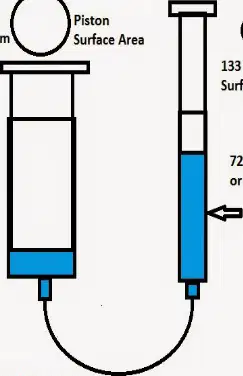
What is the primary function of a pneumatic piston?
To rotate objects
To compress air
To move linearly and generate force
To cool down systems
Which of these is a real-world application of pneumatic piston systems?
Solar panels
Air brakes on vehicles
Wind turbines
Hydraulic lifts
Which of the following is an example of a piston pneumatic system?
Hydraulic lift in a garage
Air brake system in buses and trucks
Electric braking system in trains
Manual handbrake in cars
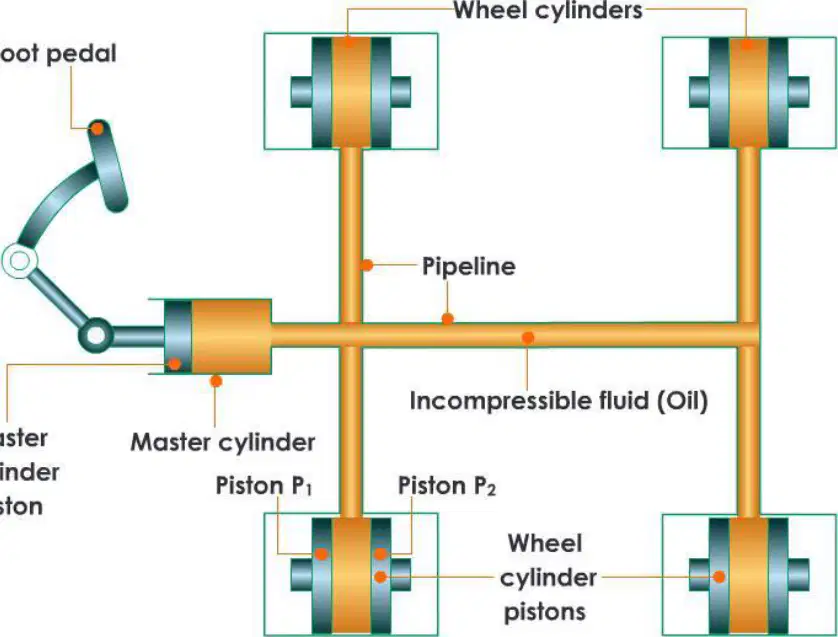
What is the role of the master cylinder in a car's hydraulic brake system?
It stores brake fluid.
It converts pedal force into hydraulic pressure.
It cools the brake system.
It controls the speed of the car.
What type of fluid is used in a car's hydraulic brake system?
Compressible gas
Incompressible fluid (Oil)
Water
Air
What happens when you press the brake pedal in a hydraulic brake system?
The car accelerates.
The master cylinder releases air.
The master cylinder piston pushes incompressible fluid to the wheel cylinders.
The car's engine stops.
What should you explain when your car does not stop after pressing the brake?
The color of the car
The speed of the car
What happens to the car
The type of fuel used
What is a possible reason your car does not stop when you press the brake?
The engine is overheating.
The tires are flat.
There is a loss of braking fluid pressure.
The battery is dead.

