
NEW
Font size
 Worksheets
Unit 5: The Universe
Total questions: 52
Worksheet time: 32mins
How bright a star appears from Earth
Apparent Magnitude
Absolute magnitude
How bright stars actually are
apparent magnitude
absolute magnitude




Our sun is currently in what star stage?
Protostar
Nebula
Main Sequence
Red Giant
Felix examined several photos of stars. To compare their temperatures, he looked at the colors of the stars. He organized the photos in order from coolest to hottest. Which of these answers shows the correct order?
red, yellow, white, blue
white, blue, yellow, red
yellow, white, blue, red
blue, yellow, white, red

The Sun is the biggest star in the sky.
What will be the next stage in our star the sun's life cycle?
supernova
white dwarf
blackhole
red giant

Our solar system is located in which galaxy?
Andromeda
Milky Way
Proxima X
Triangulum
What are 90% of stars classified as on the H-R diagram?
Supergiants
White Dwarfs
Main Sequence
Giants
On the H-R diagram, it compares a star's brightness to its
Temperature
Composition
Age

In the diagram given, what happens as we move to the left?
Stars get larger
Stars get colder
Stars get hotter
Stars get sillier

True or False: Red Giants are considered hotter than White Dwarfs.
True
False


Which spectral class does our star, the sun, belong to?
M
K
G
B

What determines the color of a star?
Its size
Its temperature
Its composition
They are all the same color
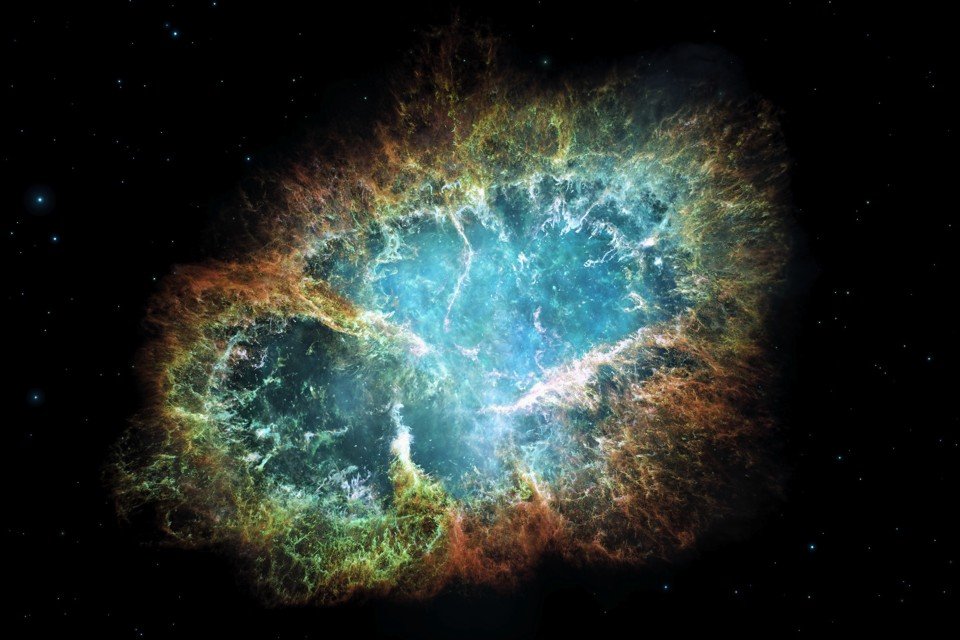
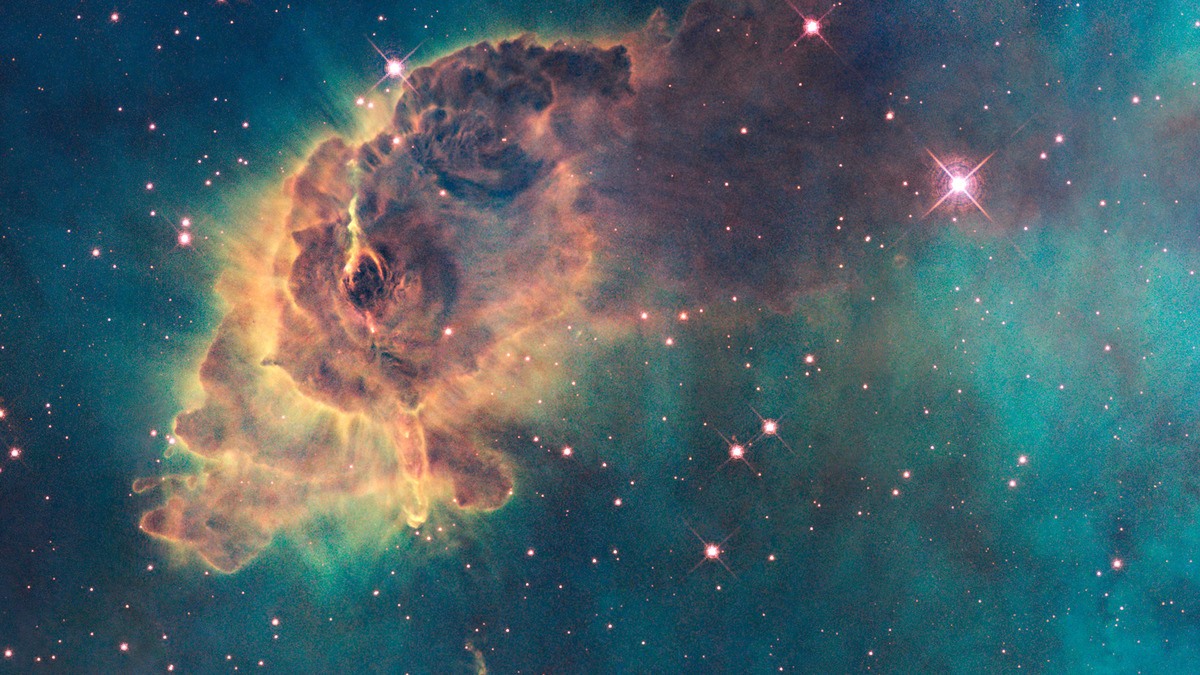
A cloud of gas and dust
nebula
protostar
supernova
white dwarf
a collection of dust and
gas that forms stars or
results from dying stars
nebula
supernova
the collapse of a massive
star's core resulting in an
explosion
nebula
supernova
A supergiant begins its life cycle in the nebula as a high-mass star before becoming a supergiant. It then
explodes in a supernova due to its increase in mass and loss of pressure.
True
False

The color of a star indicated its
speed
volume
distance
temperature
What feature is used to classify galaxies?
size
shape
color
brightness
Scientist believe that the universe is expanding because of a phenomena known as
black holes
red shift
blue shift
radioactivity
What is the force that holds a galaxy together?
heat
dark energy
light
gravity
Which galaxy do we live in?
Andromeda
Milky Way
Small Magellanic Cloud
Virgo
Characteristics used to classify stars include:
distance, size, and color.
size, distance, and brightness.
color, brightness, and distance.
size, brightness, and temperature.

What two elements mostly make up stars?
Hydrogen and Oxygen
Hydrogen and Helium
Helium and Oxygen
Hydrogen and Nitrogen

What is an interstellar cloud of dust and gases where stars can form?
universe
solar system
galaxy
nebula
Which of the following statements best describes a galaxy?
A system of planets with an elliptical orbit
A giant nuclear reactor held together by gravity
A cloud that produces stars
A system of gas, dust and billions of stars held together by gravity

The path that the earth revolves in is due to-
the gravitational attraction between the earth and the moon
the gravitational attraction between the sun and the moon
the gravitational attraction between the sun and the earth
the rotation of the earth

What type of electromagnetic radiation has the highest frequency?
Radio Waves
Gamma Rays
Infra Red
Microwaves

What spectral class do the hottest stars belong in?
B
F
M
O

Name the stars located in area A.
main sequence
super giants
white dwarfs
giants

