
Font size
 Worksheets
Q2 SCIENCE 9 REVIEW
Total questions: 70
Worksheet time: 1hrs 13mins
Which of the following is true about ionic bonds?
It is formed when there is a sharing of electrons between two metal atoms.
It is formed when there is a sharing of electrons between two non-metal atoms.
It is formed when there is a transfer of electrons from a metal atom to a non-metal atom.
It is formed when there is a transfer of electrons from a non-metal atom to a metal atom.
Which of the following is true about a covalent bond?
It is formed when there is a sharing of electrons between two metal atoms.
It is formed when there is a sharing of electrons between two non-metal atoms.
It is formed when there is a transfer of electrons from a metal atom to a non-metal atom.
It is formed when there is a transfer of electrons from a non-metal atom to a metal atom.
An unknown substance is known to be formed out of two non-metals. We can infer that the unknown substance contains:
Covalent Bonds
Ionic Bonds
Metallic Bonds
Sigma Bonds
A monoatomic anion, or negative ion, is formed when:
A metal atom gains electrons.
A metal atom gives off electrons.
A non-metal atom gains electrons.
A non-metal atom gives off electrons.
Ethene is the simplest alkene in occurence, featuring an sp2-hybridized carbon atom. Which of the following is true about ethene?
It has a tetrahedral arrangement of bonds.
It has three carbon atoms.
It has a double bond between two carbon atoms.
It is a saturated hydrocarbon.
The number of particles in one mole of a substance is equal to Avogadro's number. Which of the following is the correct value of Avogadro's number?
6.022 x 10²²
6.022 x 10²³
6.022 x 1024
6.022 x 1025
A chemical bond is:
Made up of electrons
An attractive force that holds atoms together
It has two types, covalent and ionic.
All of the above
Ionic bonding involves:
The transfer of protons
The transfer of electrons
The transfer of neutrons
None of the Above
An ionic bond contains ___________.
Two metals
Two non-metals
A metal and non-metal
None of the Above
Protons have a charge of:
-1
-2
+1
+2
Electrons have a charge of:
-1
-2
+1
+2
What is a charge atom called?
Ion
Bond
Ide
Tyler
An anion is ___________ charged ion.
Positively
Negatively
Neutral
All of the above
A cation is ___________ charged ion.
Positively
Negatively
Neutral
All of the Above
The chemical formula for glucose C6H12O6 how many hydrogen atoms are there in glucose?
1
5
6
12
What is the general structure of carboxylic acid?
R-O-R
R-COO-H
R-CO-OH
R-S-R
Which of the following elements composes a hydrocarbon?
carbon
nitrogen
hydrogen
oxygen
The mole is used for counting very small particles such as atoms.
True
False
Which of the following is an alkyne?
pentyne
octane
heptene
cyclohexane
Which of the following are carbon-based compounds?
organic compounds
inorganic compounds
Which functional group does methanoic acid have?
hydroxyl
carboxyl
halogen
amine
Low melting point and boiling point is a property of ________?
organic compounds
inorganic compounds
Write your answers in CAPITAL LETTERS.
These are groups responsible for the chemical and physical properties of compounds.
(a)
Which of the following is a covalent compound?
A. H2O
B. SO2
C.O2
D. All of the above
Which of the following type of substances has the properties of being hard and brittle?
A. Metallic
B. Molecular
C. Ionic
D. Covalent
Which of the following type of substances has the properties of being hard and brittle?
A. Metallic
B. Molecular
C. Ionic
D. Covalent
Which of the following does NOT belong to the group?
A. SO3
B. CO2
C. NaCl
D. Cu
Which of the following is not conductors of electricity?
Ionic
Covalent
Cations
Anions
Covalent bond occurs when a metal and non-metal shares with a respective number of electrons to obtain stability.
True
False
Covalent bond have high melting and boing point.
True
False
what is the chemical symbol of gold?
Ag
Au
Ca
Mg
Which of the following characteristics are typically associated with metals?
Brittle and non- conductive
low melting point and low density
Malleable and ductile
Insoluble in water and gas at room temeperature
what is the chemical formula for salt?
NaCO3
Nacl
NaOH
NA2O
what is chemical fomula of glucose?
C6H12O6
C12H22011
NaCl
NaHCO3
Who presented an atomic model with electrons in fixed orbits around the nucleus?
Erwin Schrodinger
J.J. Thomson
Neils Bohr
Werner Heienberg
What is the bond formed between Ca (metal) and O (Non- metal)?
Ionic bond
Covalent bond
Polar covalet bond
Non- polar covalent bond
Which group of elements exhibits properties that are intermediate between metals and nonmetals?
Metals
Non metals
Metalloids
Halogens

What is the other name of the Plum -Pudding model?
Cookie Model
Cereal -Milk Model
Choco Butternut model
Raisin -Bun Model

Who created the Plum -Pudding model?
John Dalton
Joseph John Thomson
Ernest Rutherford
Niels Bohr

What is letter "a"?
electrons
protons
neutrons
nucleus

What is letter "b"?
electrons
protons
neutrons
nucleus

What is letter "c"?
electrons
protons
neutrons
nucleus

He believed that atoms were uniform, solid, hard, incompressible, and indestructible and that they moved in infinite numbers through empty space until stopped..
Aristotle
Leucippus
Socrates
Democritus

Who created the Planetary Model (Note: This is the Atomic Model that we use nowadays)
John Dalton
Joseph John Thomson
Niels Bohr
James Chadwick

Who discovered letter "b"?
Ernest Rutherford
Niels Bohr
Pierre Curie
James Chadwick
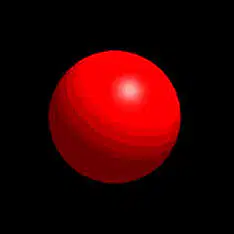
Who proposed this model?
John Dalton
J. J. Thomson
Ernest Rutherford
James Chadwick
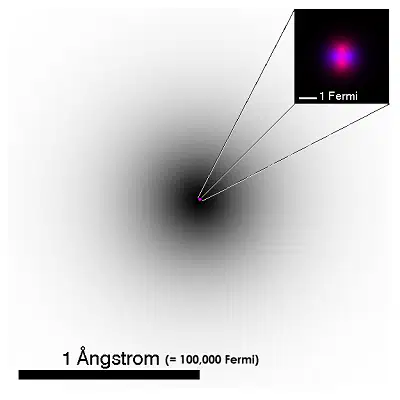
What is the other name for Quantum Mechanical Model?
Electron Cloud Model
Electron Shade Model
Electron Dust Model
None of the Above

Another name for "orbital" is _____.
ellipse
cage
shell
level

This model added on to previous models by showing electrons existed at certain "energy levels". It is often called the Planetary Model.
The "Bohr Model" of the atom
The "Plum - Pudding Model" of the atom
The "Rutherford Model" of the atom
The "Quantum Mechanical Model" of the atom

This model was developed after J.J. Thompson discovered electrons, a particle smaller than an atom. Is shows electrons floating freely in a positive space.
The "Plum Pudding Model" of the atom
Democritus's model of the atom
The "Rutherford Model" of the atom
The "Quantum Mechanical Model" of the atom

Who discovered the nucleus?
Democritus
Leuccipus
Ernest Rutherford
James Chadwick
Who discovered neutron?
Democritus
Leuccipus
Ernest Rutherford
James Chadwick
What two subatomic particles make up the nucleus of an atom?
protons and electrons
protons and neutrons
electrons and neutrons
None of the above
What subatomic particle orbits around the nucleus?
electrons
protons
neutrons
nucleus
What charge does an electron have?
negative
positive
neutral
infinite
What charge does an neutron have?
negative
positive
neutral
infinite
Atoms are arranged in different combinations to make different compounds.
Dalton's Model (John Dalton)
Plum Pudding Model (JJ Thompson)
Nuclear Model (Ernest Rutherford)
Bohr's Model (Niels Bohr)
Quantum Mechanical Model (Erwin Schrodinger)
Electrons that are spinning around the central nucleus in circular orbits.
Dalton's Model (John Dalton)
Plum Pudding Model (JJ Thompson)
Nuclear Model (Ernest Rutherford)
Bohr's Model (Niels Bohr)
Quantum Mechanical Model (Erwin Schrodinger)

What is the meaning of the greek word "atomos"?
Invencible
Invisible
Indivisible
Independent

Who established that "electrons move around the nucleus at fixed distances called orbitals"?
Dalton
Thomson
Rutherford
Bohr
Who discovered the subatomic particle "electron"?
Dalton
Thomson
Rutherford
Bohr

Dalton's model of the atom is represented by which letter?
A
B
C
D
E

Who is credited with developing model D?
Thomson
Dalton
Bohr
Rutherford
Chadwick is credited with discovering which part of the atom?
nucleus
protons
electrons
neutrons
1. It refers to a specific number of particles?
atom
mole
ion
isotope
3. The mass in grams of one mole of a substance is called ______________.
atomic mass
formula mass
molecular mass
molar mass
4.Selenium has a 34 protons and 45 neutrons. What is its atomic mass?
68 amu
79 amu
68 g/mol
79 g/mol
9. What unit should be used for molar mass?
amu
grams
g/mol
atoms
10. What is the molar mass of water (H2O)?
Hydrogen = 1.01
Oxygen = 16.00
18.02 amu
33.01 amu
18.02 g/mol
33.01 g/mol

