
NEW
Font size
 Worksheets
The motion of particles - Lesson Review
Total questions: 25
Worksheet time: 13mins
Ice made from water is a solid because:
Ice is a solid because its molecules are arranged in a fixed structure.
Ice is a solid due to high pressure.
Ice is a solid because it is cold.
Ice is a solid because it is frozen quickly.
Evaporation is the change in state of a
gas to a liquid
liquid to a gas
solid to a liquid
gas to a solid
Which one of the following is not a property of gases?
They have a definite mass
They have no definite shape
They have a definite volume
They can move freely
A solid is considered to have a:
definite shape and volume
no definite shape and volume
variable shape and fixed volume
definite shape but no volume
Which of these is true of liquid matter?
Liquid matter expands to fill any space.
Liquid matter cannot flow or change shape.
Liquid matter has a definite volume and takes the shape of its container.
Liquid matter has a definite shape and volume.
Which form of matter does not take the shape of its container?
Solid
liquid
gas
Why can a macroscopic amount of liquid change shape in a container?
A macroscopic amount of liquid can change shape because its molecules can move , allowing it to conform to the shape of its container.
Liquids change shape due to the presence of air in the container.
A macroscopic amount of liquid is solid and cannot change shape.
Liquids cannot change shape and always maintain a fixed form.
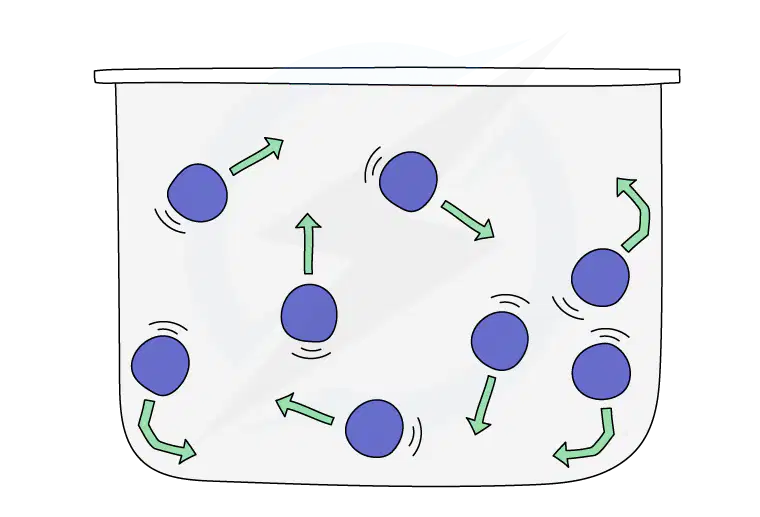
Which state of matter is shown?
Solid
Gas
Liquid
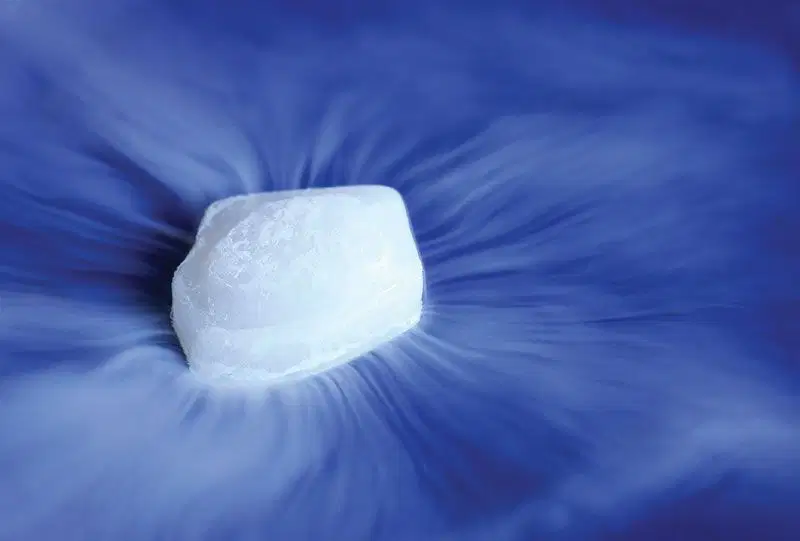
Changing from solid to gas without going through the liquid stage is called
Deposition
Freezing
Melting
Sublimation
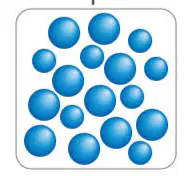
Which state of matter is shown?
Solid
Gas
Liquid
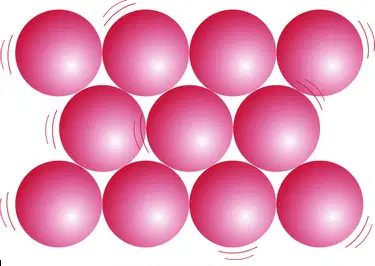
Which state of matter is shown?
Solid
Gas
Liquid
What happens when my glass of water is sitting in the sun and disappears into a gas?
evaporation
burning
melting
freezing
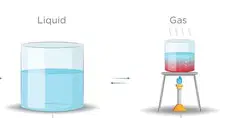
What is the process by which gas turns into liquid?
Freezing
Condenstaion
Sublimation
Deposition
What happens to the molecules in a solid when heated?
The molecules in a solid expand and turn into a gas immediately upon heating.
The molecules in a solid lose all their energy and become denser when heated.
The molecules in a solid become completely still when heated.
The molecules in a solid vibrate more vigorously and may eventually break free from their fixed positions when heated.
Which one of the following is a state of matter?
Liquid
Creature
Particle
Air
At higher temperatures
particles in an object have less energy
particles in an object move faster
a gas contracts
Which state of matter has a definite volume but no definite shape?
Liquid
Plasma
Gas
Solid
What is the main characteristic of gases?
Gases have no fixed shape or volume and expand to fill their container.
Gases have a definite shape and volume.
Gases are incompressible and do not expand.
Gases can only exist in solid form.
In which state are the distances between the particles greatest?
Liquid
Gas
Solid
Both solid and liquid
How do particles in a liquid behave compared to those in a solid?
Particles in a liquid are fixed in place like in a solid.
Particles in a solid can flow freely like in a liquid.
Particles in a liquid can move freely past each other, while in a solid, they are fixed in place.
Particles in a liquid vibrate but do not move past each other.
What happens to the arrangement of particles when a solid melts?
The particles expand and create a gas-like state.
The particles lose all movement and become stationary.
The particles become denser and form a solid structure.
The particles become more mobile and transition from a fixed arrangement to a more fluid state.
Which state of matter has the most energy?
Solid
Liquid
Gas
Plasma
A state of matter is the physical form matter takes on as determined by the
arrangement and motion of its atoms or molecules.
number of atoms or molecules in a particular substance.
shape of the container holding the atoms or molecules.
volume of the container surrounding the atoms or molecules.
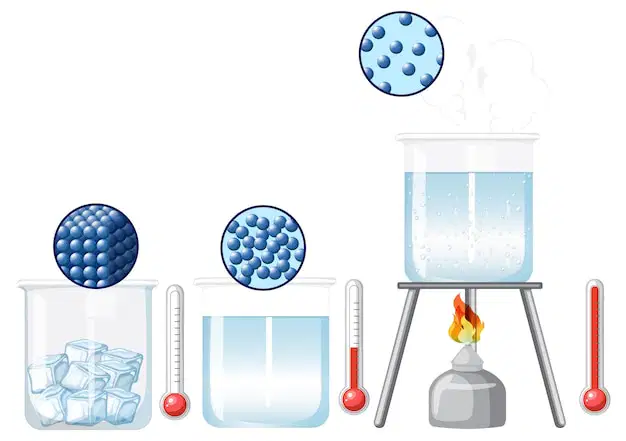
What is the correct order of the states of matter?
Solid, Liquid, Gas
Gas, Liquid, Solid
Liquid, Gas, Solid
Solid, Gas, Liquid
What is the process by which gas turns into solid without going through the liquid state?
Sublimation
Condensation
Evaporation
Deposition

