
 Worksheets
Jacksonian Democracy
Total questions: 24
Worksheet time: 12mins
Name
Class
Date
1.
The rise in manufacturing beginning in the early 1800s eventually resulted in which of the following by 1848?
a)
(A) The emergence of a larger middle class in the North
b)
(B) A decline in economic inequality in urban areas
c)
(C) An increased demand for agricultural workers in the Midwest
d)
(D) The improvement of working conditions in factories
2.
An important consequence of the “tariff of abominations” (1828) is that it led to the
a)
(A) taxation of consumer items
b)
(B) reelection of Andrew Jackson
c)
(C) enunciation of the doctrine of nullification
d)
(D) alliance of Southern planters and Western farmers
3.
Andrew Jackson supported all of the following EXCEPT
a)
(A) Indian removal
b)
(B) the right of nullification
c)
(C) the removal of federal deposits from the Bank of the United States
d)
(D) annexation of new territory
4.
The most important factor in Andrew Jackson’s successful bid for the presidency in 1828 was his
a)
(A) choice of John C. Calhoun as his running mate
b)
(B) reputation as a hero of the War of 1812
c)
(C) commitment to broad-based social reform
d)
(D) reputation as an intellectual thinker and writer
5.
Which of the following was NOT a result of the growth of a national market economy between 1815 and 1860 ?
a)
(B) The application of machinery to the mass production of goods
b)
(C) A greater disparity of wealth between rich and poor Americans
c)
(D) The beginnings of an organized labor movement
d)
(E) A greater number of men working at home
6.
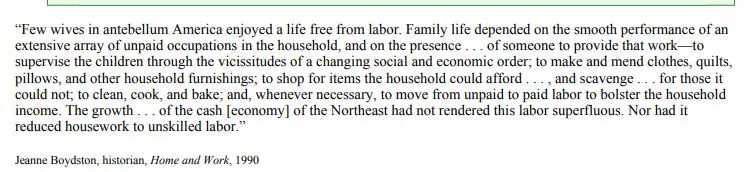
Which of the following most directly contributed to the situation described in the excerpt?
a)
(A) The abolitionist movement
b)
(B) Increased immigration
c)
(C) The market revolution
d)
(D) The emergence of mass political parties
7.
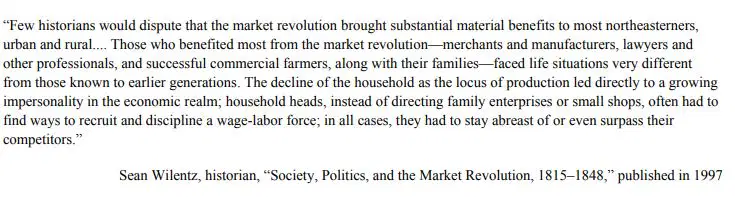
Which of the following historical developments contributed most directly to the market revolution?
a)
(A) The emergence of new forms of transportation
b)
(B) The increased number of women in the paid workforce
c)
(C) The emergence of southern opposition to tariffs
d)
(D) The decline of slavery in the Northeast
8.
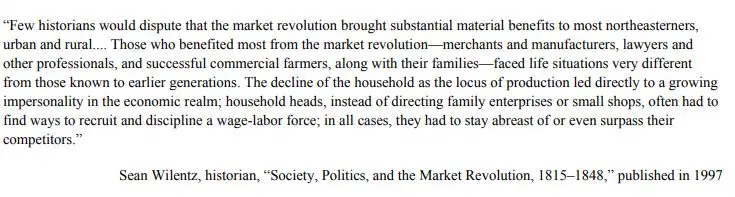
Which of the following cultural and social shifts resulted most directly from the trends described in the excerpt?
a)
(A) A sharp decline in regional differences
b)
(B) The emergence of new ideas about the proper roles of husbands and wives
c)
(C) A decline in the income gap between those in the wealthiest class and those in the working class
d)
(D) An increase in the importance placed on extended family relationships
9.
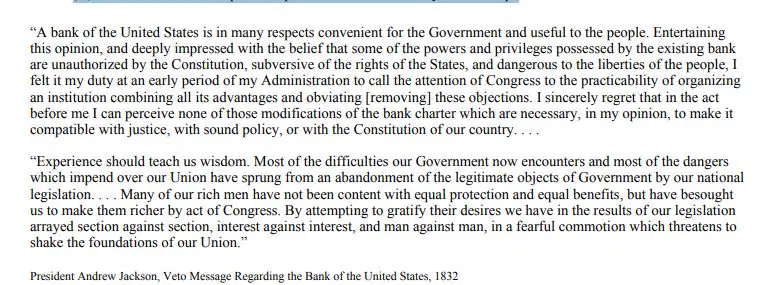
People who shared the views expressed in the excerpt most likely opposed which of the following?
a)
(A) The expansion of suffrage rights to most White men
b)
(B) The maintenance of low tariffs that allowed the export of goods to Europe
c)
(C) The expansion of United States territory through war
d)
(D) The use of federal government funding for internal improvements
10.
Which of the following factors best explains the increase in White male suffrage in the early nineteenth century?
a)
(A) Reaction to widespread political protest
b)
(B) Resistance to increased federal taxation
c)
(C) Amendments to the United States Constitution
d)
(D) Changes to property ownership requirements
11.
Which of the following best explains a change in migration in United States society during the early 1800s?
a)
(A) The claims to land by American Indian groups prevented the migration of White settlers westward.
b)
(B) The system of indentured servitude allowed Europeans living in poverty to immigrate to North America.
c)
(C) The increased importance of Southern cotton coincided with substantial immigration from abroad to the region
d)
(D) The rise in manufacturing in the North coincided with an increase of immigration from abroad to these urban areas
12.
Jacksonian Democracy was distinguished by the belief that
a)
(A) an aristocracy posed no danger to the Republic
b)
(B) the National Republicans alone knew what was right for the people
c)
(C) political participation by the common man should be increased
d)
(D) political rights should be granted to women
13.
Which of the following explains how the growth of a market-based economy in the United States in the early 1800smost directly influenced changes in gender roles?
a)
(A) As both men and women took paid employment, social and political inequality between the sexes declined signficantly
b)
(B) As an economy based on commercial transactions encouraged society to become more secular, many young women gave up traditional families
c)
(C) As home and the workplace became separated, women were increasingly expected to be responsible for household and child care while men took jobs outside the home
d)
(D) As working for wages became more common, many people ceased to view the family as a refuge from the struggle for subsistance
14.
The method of mass production that developed during the nineteenth century was a process that
a)
(A) relied on the use of power-driven machinery
b)
(B) utilized wireless communications to improve efficiency
c)
(C) gave workers greater autonomy, less supervision, and the chance to be creative
d)
(D) relied on guilds to train artisans
15.
. The nullification crisis of 1832 arose over the issue of
a)
(A) Andrew Jackson’s use of the veto
b)
(B) protective tariffs
c)
(C) the Second Bank of the United States
d)
(D) Jackson’s American Indian removal policy
e)
(E) the Missouri Compromise
16.
Which of the following best explains the expansion of participatory democracy in the early nineteenth century?
a)
(A) The abolition of slavery in most northern states
b)
(B) The growth of manufacturing along rivers and canals
c)
(C) The extension of suffrage rights to most adult White men
d)
(D) The influence of the early women’s rights movement
17.
Which of the following transportation developments opened the West to settlement and trade between 1790 and1830?
a)
(A) Turnpikes and canals
b)
(B) Railroads and steamships
c)
(C) Turnpikes and railroads
d)
(D) Clipper ships and turnpikes
18.
The opening of the Erie Canal in 1825 was important because it
a)
(A) established the role of the federal government in internal improvements
b)
(B) strengthened the ties between the eastern manufacturing and western agricultural regions
c)
(C) made the invention of the steamboat economically viable
d)
(D) spurred innovation in the railroad industry
19.
Most young women who worked in the Lowell, Massachusetts, textile mills during the 1830s experienced all of thefollowing EXCEPT
a)
(A) freedom from parental authority
b)
(B) long hours and periodic pay cuts
c)
(C) continued employment after marriage
d)
(D) demands upon their wages by their families
20.
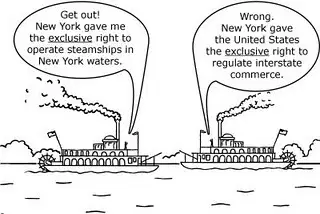
steamboat case that gave broad interpretation to "interstate commerce"
a)
Gibbons v. Ogden
b)
Fletcher v. Peck
c)
Dartmouth College v. Woodward
d)
Cherokee Nation v. Georgia
21.
Native American tribe in NW Georgia; were forcefully removed during the Trail of Tears
a)
Seminole
b)
Creek
c)
Cherokee
d)
Choctaw
22.
Chief Justice of the U.S. Supreme Court ruled in favor of Cherokee in Worcester vs. Georgia
a)
John Ross
b)
Andrew Jackson
c)
John Marshall
d)
John Cena
23.
The Supreme Court ruled that ___ was not able to take the Cherokee land because the Cherokee were a sovereign nation.
a)
Alabama
b)
Georgia
c)
Virginia
d)
Arkansas
24.
Andrew Jackson decided to not enforce the Supreme Court decision. and used the Indian ___ Act of 1830 to force Native Americans west.
a)
Removal
b)
Equity
c)
Ejection
d)
Lands
100 %

