
 Worksheets
Fundamentals of the Manufacturing Process
Total questions: 44
Worksheet time: 22mins
Who is quoted as saying, "The rumors of the demise of the U.S. manufacturing industry are greatly exaggerated"?
Steve Jobs
Bill Gates
Elon Musk
Jeff Bezos
What is the primary function of an injection molding machine?
To create metal parts
To mold plastic into specific shapes
To assemble electronic components
To print documents
What is the manufacturing process primarily concerned with?
Designing new products
Converting inputs into outputs
Marketing finished goods
Distributing raw materials
What can be considered as inputs in the manufacturing process?
Finished goods
Raw materials, semi-finished goods, or components
Marketing strategies
Customer feedback
What can the output of the manufacturing process be?
Only raw materials
Only semi-finished goods
Finished or semi-finished goods
Only components
Which of the following processes might be involved in manufacturing?
Painting and decorating
Molding, machining, joining, and forming
Selling and advertising
Packaging and shipping
When did the factory system begin in Britain?
Early 17th century
Late 18th century
Mid 19th century
Early 20th century
What powered the machinery in the early factory system?
Solar energy
Wind power
Water, steam, and later electricity
Nuclear energy
What was a key advantage of the early factory system?
It reduced the need for technological advances
It allowed for small-scale production
It took advantage of technological advances for large-scale production
It eliminated the use of machinery
Who described the assembly line method of manufacture in "The Wealth of Nations"?
Henry Ford
Adam Smith
Thomas Edison
Karl Marx
What concept did Adam Smith introduce in "The Wealth of Nations"?
Mechanization
Automation
Division of labor
Mass production
What is an example of a task in the division of labor?
Assembling a car
Cutting the wire for a pin
Building a house
Designing a product
What did mechanization and later automation help create in manufacturing?
Unique products
Highly repeatable manufacturing
Expensive processes
Manual labor
What change in manufacturing during the Industrial Revolution?
Manufacturing was done by a single artisan.
Manufacturing was broken down into separate parts.
Manufacturing was done entirely by machines.
Manufacturing was only for luxury goods.
Which book by Adam Smith is mentioned in the text?
The Theory of Moral Sentiments
The Wealth of Nations
The Invisible Hand
The Division of Labor
Which of the following industries is part of the Primary Sector?
Car manufacturers
Legal Services
Forestry
Accounting
What is the main activity of the Secondary Sector?
Extract
Manufacture, Construct, Refine
Service, Distribute
Farming
Which sector includes industries like Customer Service and Accounting?
Primary Sector
Secondary Sector
Tertiary Sector
Extractive Sector
Which sector is related to the production and retrieval of raw materials such as coal, iron, and wood?
Secondary Sector
Tertiary Sector
Primary Sector
Quaternary Sector
What activities are included in the Primary Sector?
Banking and finance
Mining, fishing, and agriculture
Software development
Retail and sales
Which of the following is NOT a product of the Primary Sector?
Wool
Meat
Software
Crops
What is the primary function of secondary industries?
Transform raw materials into finished goods
Extract raw materials from the earth
Provide services to consumers
Distribute goods to retailers
Why has the secondary sector developed significantly?
Due to the demand for more goods and services
Because of the need for more raw materials
To increase agricultural production
To enhance digital services
In developed countries like the U.S.A., what percentage of the workforce is involved in the secondary sector?
20%
50%
10%
30%
What are workers in the secondary sector commonly known as?
Blue-collar workers
White-collar workers
Green-collar workers
Red-collar workers
Which of the following is an example of a secondary industry product?
Cars
Raw wool
Crude oil
Fresh vegetables
What is the Tertiary Sector primarily involved in?
Manufacturing goods
Extracting raw materials
Providing direct services
Producing agricultural products
Which of the following services is NOT typically part of the Tertiary Sector?
Retail
Transportation
Mining
Hotels
Approximately what percentage of workers are related to the Tertiary Sector?
50%
60%
70%
80%
Which of the following is a shaping process in manufacturing?
Adhesive
Casting
Polishing
Electro plating
Which process is used in the joining category of manufacturing?
Rolling
Sintering
Gas metal arc welding
Printing
What is an example of a finishing process in manufacturing?
Forging
Riveting
Enamelling
Drawing
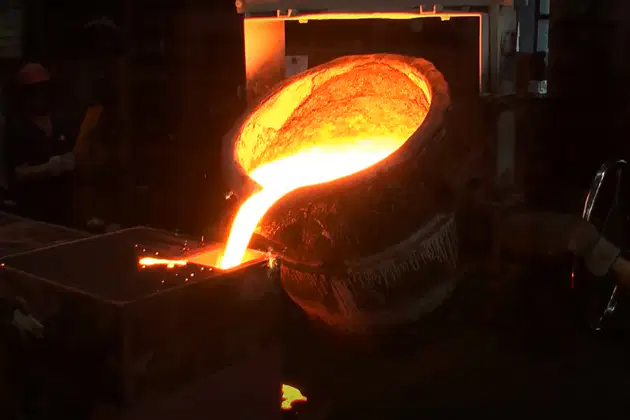
What is the first step in the manufacturing process shown in the picture?
Assembly of electronic components
Melting and casting of metals
Injection molding of plastics
Painting and finishing

Which material is shown as being used in the injection molding process in the diagram?
Metal ingots
Electronic components
Plastic pellets
Wooden blocks
Which of the following is a type of processing operation in manufacturing?
Casting and molding
Assembly
Packaging
Inspection
What is an example of an assembly operation in manufacturing?
Machining
Joining
Shearing
Disassembly
What is the process called where plastic is heated until it melts, then poured into a mold to form a shape?
Casting
Carving
Welding
Soldering
In the casting process, what happens after the plastic has cooled?
The mold is removed, giving the finished shape.
The plastic is reheated.
The mold is filled with water.
The plastic is painted.
What is necessary for producing metal parts during the manufacturing process?
Manual labor
Machines
Hand tools
Natural resources
What is the process of joining in manufacturing?
Separating two materials
Painting surfaces
Binding two materials together
Cooling metals
Which of the following is NOT a method used in the joining process?
Welding
Soldering
Painting
Brazing
What is one advantage of the joining process in manufacturing?
It makes materials lighter
It allows easy separation of parts
It enables the piecing of two parts together permanently
It changes the color of materials
What is the manufacturing process of cutting a piece of material into two separate pieces called?
Forming
Shearing
Molding
Casting
In manufacturing, what does the forming process involve?
Melting material into liquid form
Bending a piece of material into a specific shape
Cutting material into small pieces
Painting material with a protective coating

