
 Worksheets
WR7 Unit 2 Redo
Total questions: 24
Worksheet time: 12mins
Code-Switching can best be defined as...
A) Any form of communication (speaking or writing) that shares ideas and information with others
B) Changing your vocabulary, tone, behavior, AND the information you choose to share, depending on where you are and who you are talking to
C) Verbally praising or congratulating someone for their efforts, accomplishments, skills, and/or character because you TRULY admire them.
D) A problem between two or more people; typically happens because of a disagreement or differing needs/desires.
Sort the answer choices: Check: Examples of Formal Register Leave Blank: Examples of Informal Register
"I would like to schedule a meeting to discuss this further."
"I appreciate your feedback and will take it into consideration."
"I am writing to express my interest in the position."
"This is Ms. Priesley's office, how many I assist you today?"
"I'm just gonna chill after work today, I'm beat."
Discourse can best be defined as...
A) Changing your vocabulary, tone, behavior, AND the information you choose to share, depending on where you are and who you are talking to
B) Any form of communication (speaking or writing) that shares ideas and information with others
C) A problem between two or more people; typically happens because of a disagreement or differing needs/desires.
D) A professional email or text message to a coworker, boss, client, customer, or someone else at work
Intended audience can best be defined as...
A) Verbally praising or congratulating someone for their efforts, accomplishments, skills, and/or character because you TRULY admire them.
B) Any form of communication (speaking or writing) that shares ideas and information with others
C) The person or people you want to reach/communicate with
D) Changing your vocabulary, tone, behavior, AND the information you choose to share, depending on where you are and who you are talking to
Check: Topics inappropriate for work. Leave Blank: Topics appropriate for work.
Sharing detailed personal medical conditions and psychological trauma.
Engaging in heated discussions about political beliefs or parties.
Talking about personal dating experiences or romantic issues.
Sharing rumors or negative stories about coworkers.
Sharing stories from recent trips or travel plans.
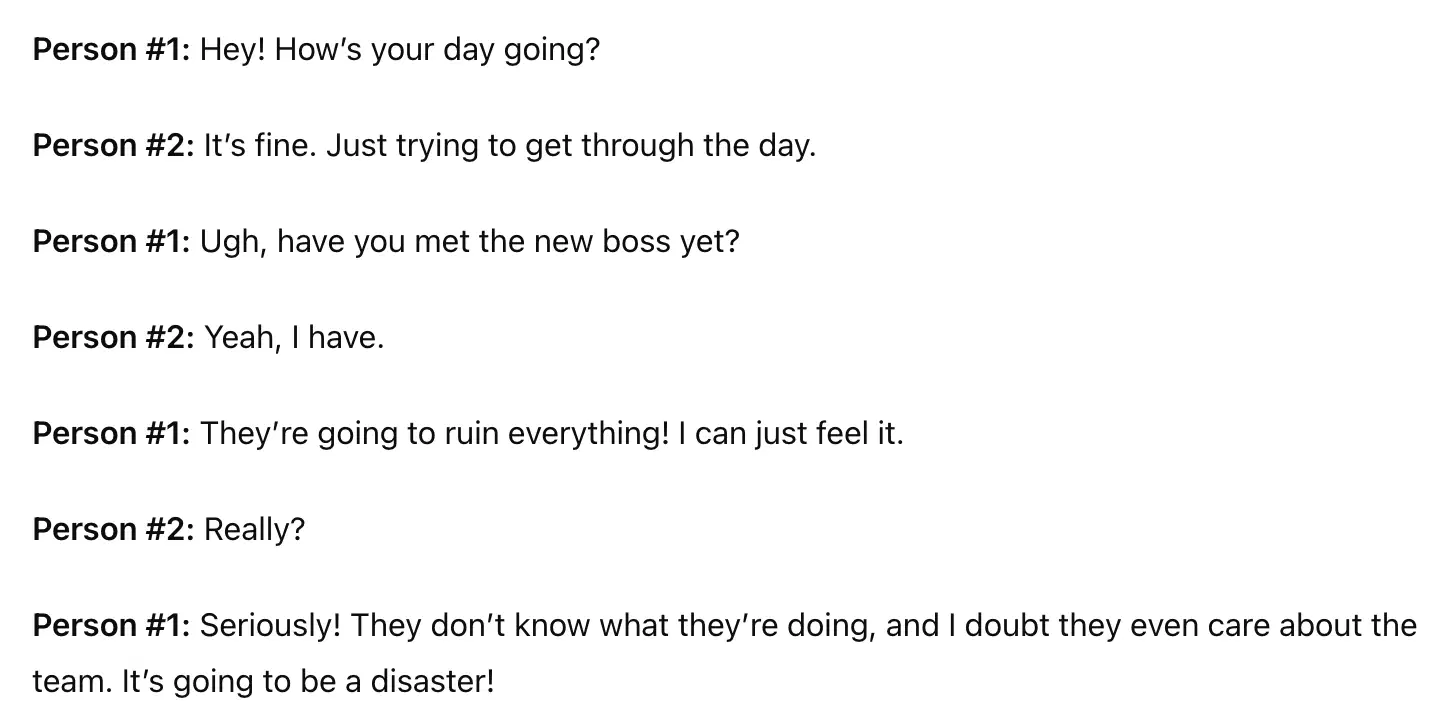
What is the best strategy Person #2 could use to redirect this unprofessional discourse?
A) Change the subject in order to distract Person #1 from the current topic.
B) Keep it light and positive to counteract Person #1's negativity.
C) Politely express discomfort to communicate to Person #1 that you don't approve of this subject.
D) Politely end the conversation because Person #1 is clearly not respecting boundaries.
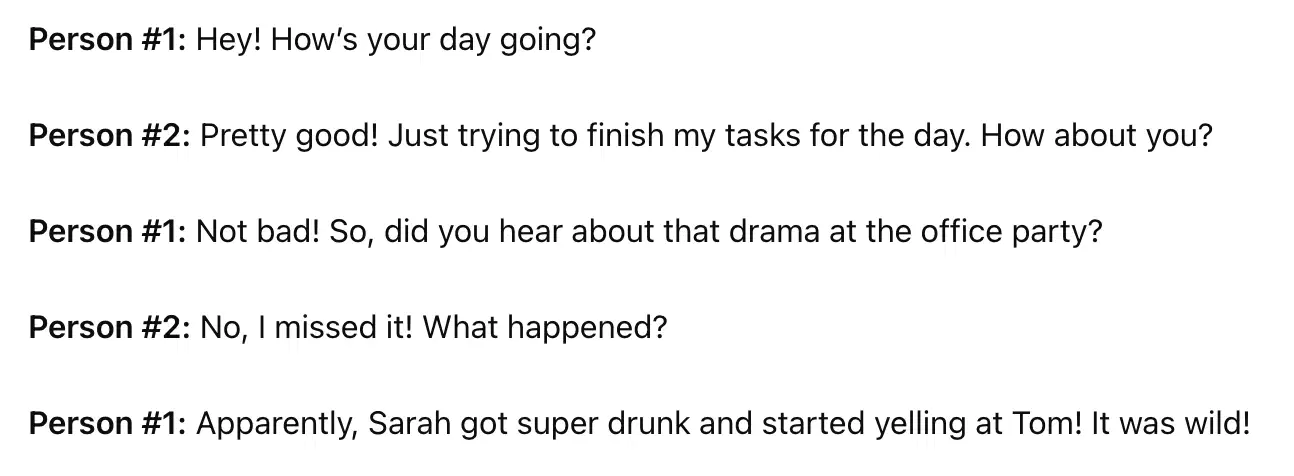
What is the best strategy Person #2 could use to redirect this unprofessional discourse?
A) Change the subject in order to distract Person #1 from the current topic.
B) Keep it light and positive to counteract Person #1's negativity.
C) Politely express discomfort to communicate to Person #1 that you don't approve of this subject.
D) Politely end the conversation because Person #1 is clearly not respecting boundaries.

What is the best strategy Person #2 could use to redirect this unprofessional discourse?
A) Change the subject in order to distract Person #1 from the current topic.
B) Keep it light and positive to counteract Person #1's negativity.
C) Politely express discomfort to communicate to Person #1 that you don't approve of this subject.
D) Politely end the conversation because Person #1 is clearly not respecting boundaries.
Professional Correspondence can best be defined as...
A) Verbally praising or congratulating someone for their efforts, accomplishments, skills, and/or character because you TRULY admire them.
B) A professional email or text message to a coworker, boss, client, customer, or someone else at work
C) Changing your vocabulary, tone, behavior, AND the information you choose to share, depending on where you are and who you are talking to
D) Any form of communication (speaking or writing) that shares ideas and information with others

Which part(s) of a professional email is/are missing?
Subject Line
Salutation
Signature
Sender
Recipient
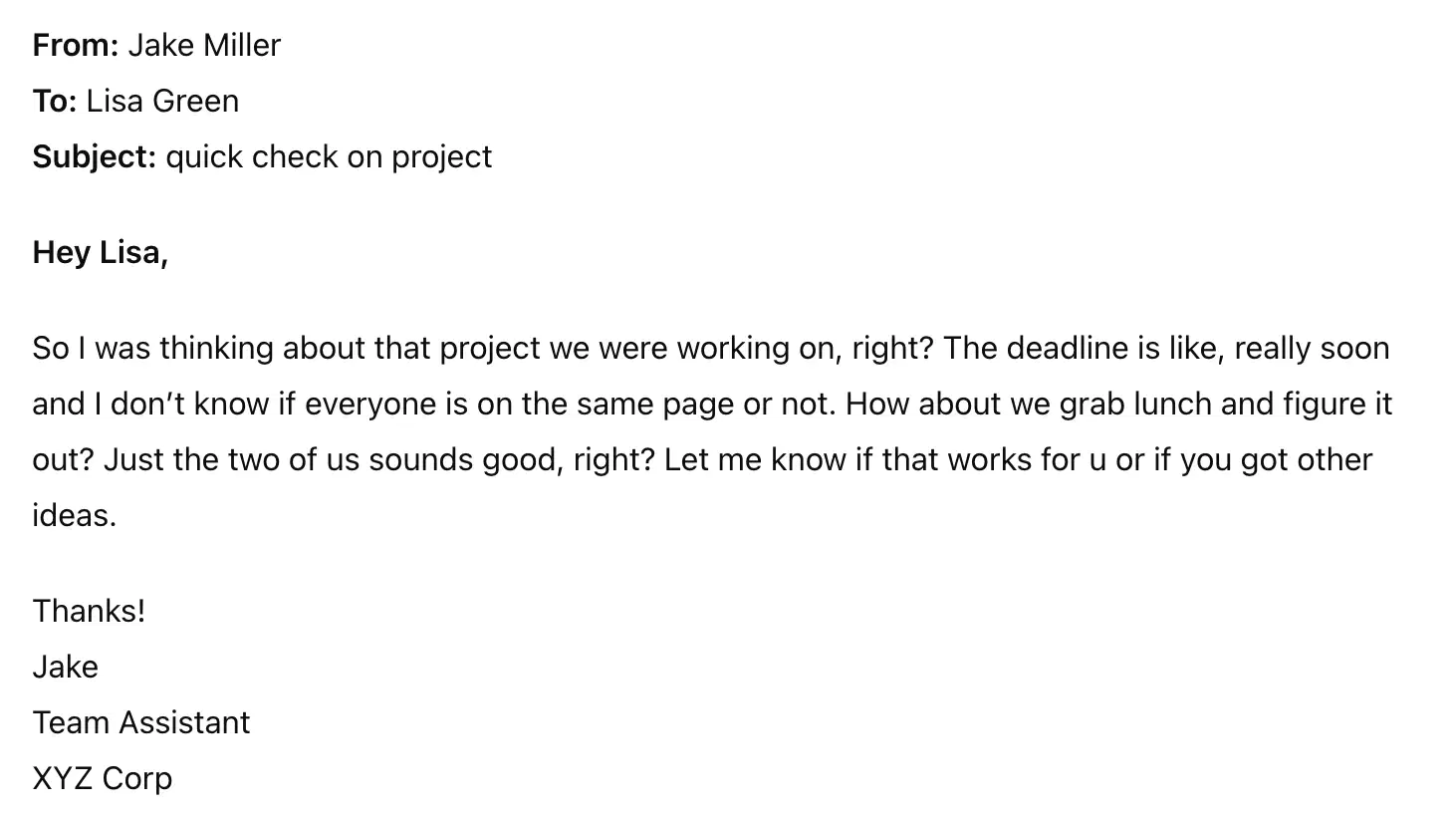
Which rule(s) for professional correspondence does this sample break? (Check all that apply.)
Rule 2: Keep your message clear & to the point
Rule 3: Write in formal register, with complete sentences
Rule 4: Watch your tone & be aware of your intended audience
Rule 6: Check for spelling & grammar before sending
Rule 1: Complete all parts of the e-mail
An authentic compliment can best be defined as...
A) Any form of communication (speaking or writing) that shares ideas and information with others
B) The person or people you want to reach/communicate with; you code-switch to communicate appropriately with him/her/them
C) A problem between two or more people; typically happens because of a disagreement or differing needs/desires.
D) Verbally praising or congratulating someone for their efforts, accomplishments, skills, and/or character because you TRULY admire them.
Sort the answer choices: Check: Authentic Compliment Examples Leave Blank: Superficial Compliment Examples
"I really admire your dedication. You put so much effort into everything you do, and it shows."
"You have a fantastic ability to solve problems quickly and effectively. It’s impressive how you handle challenges."
"Your positive attitude is contagious. You always lift everyone’s spirits, and it makes a huge impact on the team."
"Your hair looks amazing today. The way the color shines in the light really brings out your features, and the style suits you perfectly."
"That outfit is so eye-catching. The colors and patterns work together beautifully, and it really highlights your sense of fashion."

Check which steps are missing from the apology.
A) Express genuine regret & commit to improving.
B) Acknowledge how your actions affected others.
C) Offer a solution.
D) Own your specific mistake.

Which steps are missing from the apology response?
A) Confirm/expand how their actions affected you.
B) Actively listen & acknowledge the apology.
C) Extend forgiveness & offer support.
D) Show understanding/compassion.

According to this quote, the best way to help someone is...
A) To provide them with everything they need without teaching them.
B) To teach them important skills so they can be independent.
C) To give them temporary solutions for their problems.
D) To take care of their needs without expecting anything in return.
Check: Reasons to help others at work Leave Blank: Reasons not to help others at work
Increases your positive self-esteem.
Strengthens relationships and helps everyone work better together.
Makes it easier to finish tasks quickly.
Improves your professional reputation so you are considered for rewards like promotions.
Others may rely on you instead of learning to help themselves.
Which approach will completely resolve a conflict at work?
A) Aggressive Approach
B) Accommodating Approach
C) Compromising Approach
D) Collaborative Approach
E) Avoiding Approach

Identify the direct stakeholders in the conflict scenario.
Cecilia
Max
Mr. Ramirez
Large group of customers waiting for big table
Leah

What is the true cause of the conflict between Cecilia and Max?
A) Cecilia and Max are fighting over who should take a large table of customers because they both want to make more money.
B) Cecilia is frustrated because her table keeps sending food back, and Max is tired after working a long shift with rude customers.
D) Cecilia and Max disagree over who should have to serve a large table during an already stressful shift.
C) Cecilia and Max are both new servers and don’t know how to handle busy nights at the restaurant.

What should the stakeholders do next to resolve the conflict?
A) Actively listen and effectively communicate
B) Recognize and regulate emotions
C) Problem-solve to find a solution

What step of the conflict resolution process is shown in this excerpt?
A) Problem-solve to find a solution
B) Actively listen and effectively communicate
C) Recognize and regulate emotions
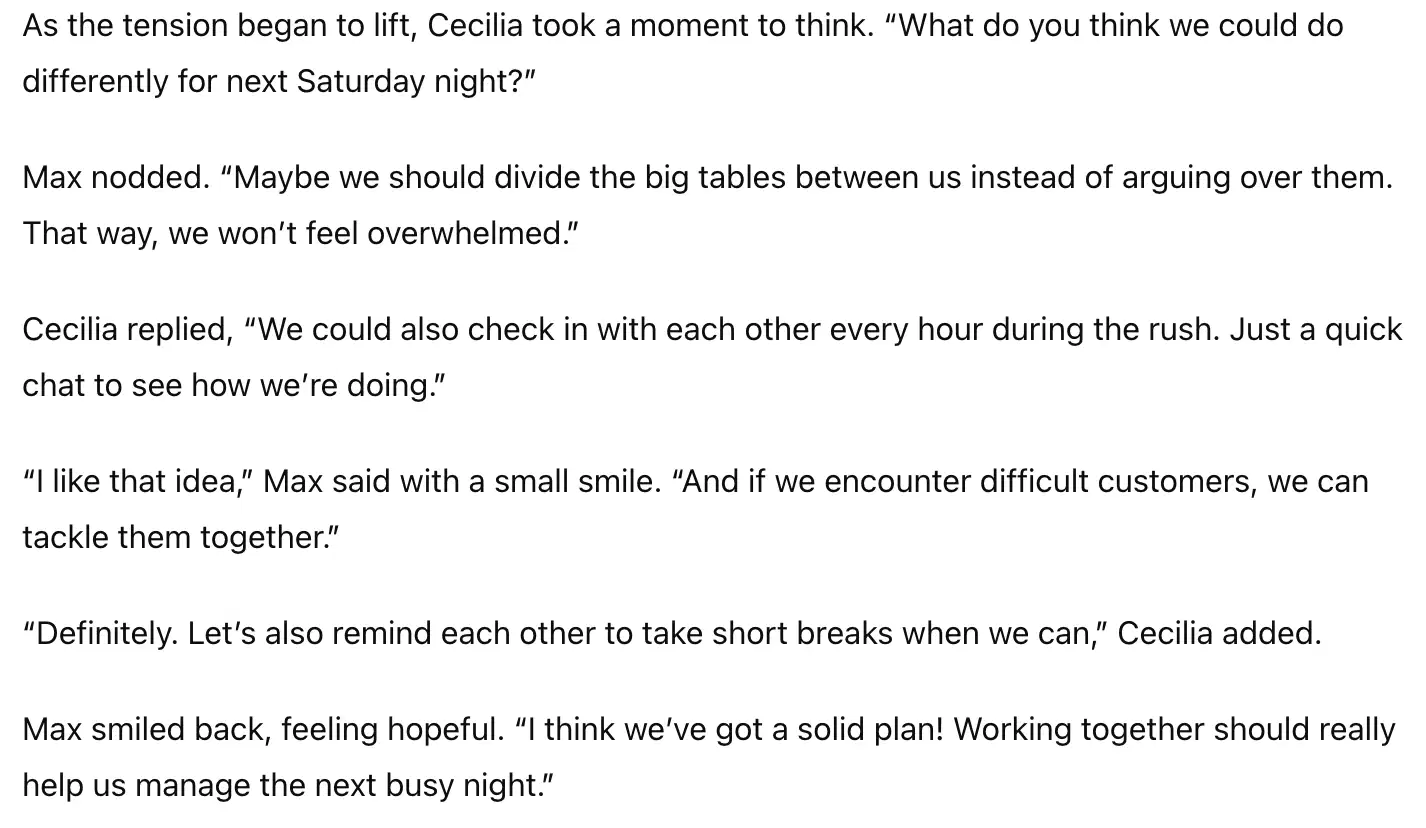
What step of the conflict resolution process is shown in this excerpt?
A) Recognize and regulate emotions
B) Problem-solve to find a solution
C) Actively listen and effectively communicate

