
NEW
Font size
 Worksheets
Final Review Wayground #1 - Units 1 - 3
Total questions: 50
Worksheet time: 25mins

Look at the diagram to answer the question that follows. If a northern coastline such as the Norway coast is located near a warm ocean current than...?
the climate will be colder than normal for that latitude.
the climate will be warmer than normal for that latitude.
spring is longer than normal for that latitude.
spring is shorter than normal for that latitude.
Because water can hold a large amount of heat, which effect do oceans have on nearby land areas?
They prevent rapid extreme temperature changes.
They form high-pressure areas that cause magma currents.
They provide the energy that triggers volcanic events.
They lower the freezing point of fresh water.
Which statement about the relationship between the ocean and atmosphere is MOST accurate? Mark only one oval.
Ocean currents do not affect the atmosphere.
The atmosphere stores more heat than the ocean.
The ocean can hold heat more efficiently than the air.
Ocean currents can move faster than air or wind currents.
What effect does a higher albedo typically have on temperature? Mark only one oval.
It decreases temperature by reflecting more solar radiation.
It increases temperature by absorbing more solar radiation.
It stabilizes temperature by regulating heat absorption and reflection.
It has no significant impact on temperature variations.
Which property of water is directly attributable to its molecular structure and polarity? Mark only one oval.
High specific heat capacity
Strong cohesion
Low viscosity
Low density
Residents in a seaside town experience onshore breezes from the ocean during hot sunny days and offshore breezes from the land during cool nights. How does the ocean affect this pattern? Mark only one oval.
Warm air sinks over the ocean and moves onto land.
Cold air rises over the land and moves over the ocean.
The land heats and cools faster than the ocean heats and cools.
The ocean heats and cools faster than the land heats and cools.
Visible light reaches Earth’s surface while infrared light is trapped as heat. Which characteristic of Earth’s atmosphere causes this to happen? Mark only one oval.
the ozone hole
the inversion layer
the greenhouse effect
the atmospheric continuum
When compared to current average conditions, which term would BEST describe conditions in Earth’s lower atmosphere if greenhouse gases were absent? Mark only one oval.
Denser
Cooler
Wetter
Cloudier

If an air mass develops over Region 1, which properties will it most likely have? Air masses have the same properties as the surface over which they develop.
hot and dry
cold and dry
hot and moist
cool and moist
Weather stations built in urban areas can be influenced by the human-made structures that surround these stations. Some of these weather stations used to determine mean temperatures in the United States have had the validity of the data questioned. Which human-produced effect could these urban weather stations be measuring?
Heat island
Rain shadow
Land breeze
Cold front
The greenhouse gas carbon dioxide helps to_________. Mark only one oval.
Deflect harmful radiation from space.
Increase precipitation in arid areas.
Form clouds in the atmosphere.
Maintain warmth near Earth’s surface.
Which could increase the amount of greenhouse gases in the atmosphere? Mark only one oval.
planting trees in areas that have been deforested
reducing the use of gasoline-powered vehicles
burning coal to produce electricity
creating wind farms in desert areas
Which greenhouse gas is a byproduct of livestock digestion and rice cultivation, and is known for its high global warming potential despite being less abundant than carbon dioxide?
Methane (CH4)
Nitrous Oxide (N2O)
Carbon Dioxide (CO2)
Water Vapor (H2O)
Use the following scenario to answer the corresponding questions. Scenario: You are an urban planner tasked with reducing the urban heat island effect in a rapidly growing city. One strategy involves increasing the albedo of urban surfaces to reflect more sunlight and reduce heat absorption. You must choose materials for new buildings, roads, and green spaces to achieve this goal. Which combination of materials and strategies should you prioritize to effectively increase albedo and reduce the urban heat island effect?
Dark asphalt roads, glass buildings, and synthetic turf fields
White roofing materials, light-colored pavements, and green roofs with vegetation
Metal roofing, blacktop playgrounds, and concrete parking lots
Red brick walls, dark shingles, and artificial grass
Your city is also interested in educating the public about how their choices can influence the urban heat island effect. Which of the following public awareness campaigns would be most effective in supporting your albedo and heat reduction efforts? Mark only one oval.
Encouraging residents to use more electrical appliances
Promoting the use of white or light-colored roofs and reflective materials for home renovations
Advising residents to increase the use of dark-colored curtains and blinds
Suggesting the planting of non-native, heat-tolerant grass lawns
What happens when the ocean absorbs heat from the sun? Mark only one oval.
The ocean remains at a constant temperature
The ocean releases all the heat immediately
The heat has no impact on the atmosphere
The ocean stores a significant amount of energy
Why is understanding ocean-atmosphere heat exchange essential for predicting and mitigating climate change impacts? Mark only one oval.
It has no relevance to climate change
It helps in improving climate models and preparing for extreme weather events
There is no relationship between ocean-atmosphere heat exchange and climate change
It only affects marine life
Which combination of abiotic factors would most likely support a dense forest biome?
High precipitation, moderate temperatures, and rich soil nutrients
Low precipitation, high temperatures, and sandy soil.
High altitude, low temperatures, and rocky soil
Constant direct sunlight, low precipitation, and saline soil
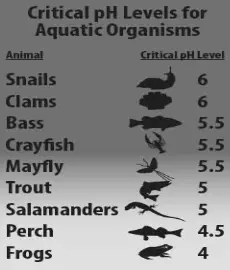
If the pH changes to a level 5, what will most likely happen in this ecosystem?
The crayfish population will increase.
The mayfly population will increase.
The snail population will decrease.
The salamanders will decrease.
In a coastal marine ecosystem, various processes contribute to the carbon cycle. Which of the following best describes the natural carbon cycling in a coastal marine ecosystem?
The decomposition of dead marine animals adds carbon to the geosphere, and volcanic eruptions remove carbon from the atmosphere.
Combustion of fossil fuels adds carbon to the atmosphere, and the formation of coral reefs removes carbon from the hydrosphere.
Respiration by marine organisms adds carbon to the atmosphere, and photosynthesis by phytoplankton removes carbon from the atmosphere.
Decomposition of plastic waste in the ocean adds carbon to the hydrosphere, and absorption of carbon dioxide by ocean water removes carbon from the geosphere.
Shell-forming organisms such as corals and mollusks trap CO₂ by forming their shells. A marine ecosystem study has observed a decline in corals and mollusks due to ocean acidification. When ocean acidification increases, what could be a potential long-term effect of their decline on carbon dioxide?
Increased carbon dioxide levels in the atmosphere decreases the shell-forming organisms.
Increased carbon dioxide levels in the atmosphere increases the shell-forming organisms.
Decreased carbon dioxide levels in the lithosphere turns fossil fuels into shells.
Decreased carbon dioxide in the atmosphere increases photosynthetic plankton.
A student made a claim about a coastal ecosystem. Claim: A coastal ecosystem is contaminated with a small, but consistent, amount of toxic chemicals due to runoff from nearby agricultural activities. The food chain in this ecosystem includes plankton, small fish that feed on plankton, larger fish that feed on small fish, and eagles that feed on the larger fish. Based on the student’s claim, which organism will most likely have the highest concentration of toxic chemicals in the food chain?
Plankton, because they are the first to absorb the toxic chemicals from the contaminated water.
Small fish, because they consume large quantities of plankton that have absorbed the toxic chemicals.
Which statement best explains bioaccumulation?
Bioaccumulation occurs when a pollutant moves from a lower trophic level to a higher one, increasing in concentration along the food chain.
Bioaccumulation refers to the gradual increase of pollutants within an individual organism over time.
Bioaccumulation is the process by which pollutants decrease in concentration as they move up the food chain due to metabolic breakdown by organisms.
Bioaccumulation describes the rapid removal of pollutants from an ecosystem through natural processes such as decomposition.
How does biodiversity impact the environment?
Biodiversity increases the chance organisms will go extinct due to a natural disaster.
Biodiversity decreases the stability of an ecosystem.
Biodiversity decreases the ecological resources in an environment.
Biodiversity increases the amount of genetic material in the environment and helps stabilize ecosystems.
Forest fires might seem harmful, but they actually help forests grow back healthier. After a fire, the land starts to heal. First, quick-growing plants, called pioneer species, pop up. These plants are tough and can grow in the tough conditions left after a fire. They help get the forest ready for other plants to come back. As time goes on, more plants and animals return, making the forest full of life again. This process shows how forests can recover and even become better places for plants and animals to live.
According to the paragraph, which of the following best summarizes the process of succession after a forest fire?
Forest fires destroy all life in an area, and the ecosystem cannot recover without human intervention.
After a forest fire, the area remains barren and lifeless, as the conditions are too harsh for any new growth.
Pioneer species quickly grow in the conditions left after a fire, preparing the land for other plants and animals to return, gradually restoring the forest's biodiversity and health.
Forest fires permanently change the ecosystem to a state where only fire-resistant species can survive, reducing biodiversity.
Which of the following characteristics distinguishes jovian planets (gas giants) from terrestrial planets?
They have solid surfaces
They are smaller in size
They have thicker atmospheres composed primarily of hydrogen and helium
They are located closer to the Sun
Which of the following groups correctly classifies the planets in the solar system according to their size and location? Mark only one oval.
A. Terrestrial planets: Mercury, Venus, Earth, Mars; Jovian planets: Jupiter, Saturn, Uranus, Neptune
B. Terrestrial planets: Jupiter, Saturn, Uranus, Neptune; Jovian planets: Mercury, Venus, Earth, Mars
C. Terrestrial planets: Jupiter, Saturn, Uranus, Neptune; Jovian planets: Mercury, Venus, Earth, Mars
D. Terrestrial planets: Mercury, Venus, Earth, Mars; Jovian planets: Uranus, Neptune, Jupiter, Saturn
What is an effect of lower levels of solar radiation striking Earth?
Increased incidences of skin cancer
Decreased rates of photosynthesis
Increased phytoplankton activity
Decreased carbon dioxide levels
Which of the following accurately describes how incoming solar radiation interacts with the lithosphere, atmosphere, hydrosphere and biosphere? Mark only one oval.
Solar radiation is absorbed primarily by the lithosphere, which converts it into geothermal energy, while the atmosphere filters UV rays and the hydrosphere reflects light.
Solar radiation interacts similarly with all spheres, causing uniform absorption and reflection patterns across the lithosphere, atmosphere, hydrosphere, and biosphere.
Solar radiation is absorbed differently by each sphere: the lithosphere absorbs heat, the atmosphere absorbs UV rays, the hydrosphere reflects light, and the biosphere converts energy into chemical bonds through photosynthesis.
Solar radiation affects only the atmosphere, leading to temperature changes, while the lithosphere, hydrosphere, and biosphere remain unaffected.
Which factor primarily determines the amount of direct sunlight received at different latitudes on Earth?
A. Earth's revolution around the Sun
B. Earth's tilt on its axis
C. Earth's rotation on its axis
D. Earth's distance from the Sun
Determine the role of gravity in the formation of the Solar System.
It caused matter to clump together, forming the Sun, planets and moons
It created matter for the Sun, planets and moons
It caused matter to move apart, producing orbits
It destroyed matter, clearing space for the Solar System
What occurs after the gravitational collapse of a molecular cloud in the nebular theory?
Formation of a protostellar disk due to conservation of angular momentum.
Formation of gas giants through rapid accretion of hydrogen and helium.
Formation of rocky planets through collision and sticking of planetesimals.
Fusion reactions in the central protostar leading to the formation of a main sequence star.
Which process occurs in the later stages of the nebular theory?
Formation of the Sun (protostar) at the center of the disk.
Collision and aggregation of planetesimals.
Fusion of hydrogen atoms in the Sun's core.
Differentiation of elements into layers within planets.
What affects the reflection of light on the moon?
Tides are only caused by the moon
Spring tides only occur during the Spring time
Parts of the moon reflect light depending on the position of the Earth in relation to the sun and moon
We see 10 phases of the moon every month
Why is incoming solar radiation crucial for photosynthesis in plants?
It provides the necessary heat for plant growth
It supplies the energy needed to convert carbon dioxide and water into glucose and oxygen
It protects plants from harmful ultraviolet rays
It attracts pollinators to the plants
Option 5
What role does gravity primarily play in the formation of astronomical objects such as stars and planets? Mark only one oval.
It causes nuclear fusion reactions.
It prevents collisions between objects.
It causes the collapse of gas and dust clouds.
It produces electromagnetic radiation.
Which natural phenomenon occurs as a result of Earth rotating on its axis? Mark only one oval.
Movement of tectonic plates
Deep ocean currents
Seasonal changes
Day and night
How does the tilt of Earth’s axis affect the season? Mark only one oval.
By changing the amount of direct solar energy reaching the surface of Earth
By influencing the rate of chemical reactions occurring in the atmosphere
By deflecting the harmful rays of radiation emitted by the sun
By changing the speed of the rotation of Earth
Which statement describes the motion of Earth around the sun? Mark only one oval.
A. The speed of Earth is constant regardless of its distance from the sun.
B. Speed increases the closer Earth is to the sun and decreases the farther it is from the sun
C. The speed of Earth is constant because the distance remains the same between earth and the sun.
D. Speed increases the farther Earth is from the sun and decreases the closer it is to the sun.
Which of the following best explains why spring tides occur during both the new moon and full moon phases? Mark only one oval.
A. The Earth's rotation slows down during these phases, causing more extreme tides.
B. The gravitational forces of the moon and sun align to either combine their effects or directly oppose each other, leading to higher high tides and lower low tides
C. The moon is closest to Earth during these phases, enhancing its gravitational pull on the oceans.
D. The sun's gravitational force is negated during these phases, allowing the moon's gravity to have a greater effect on the tides.
How does the barycenter, the center of mass between the Earth and the Moon, influence the motions of Earth? Mark only one oval.
It causes Earth to have a perfectly circular orbit around the Sun.
It results in the Earth and Moon orbiting a common point in space, slightly inside Earth's surface, leading to slight wobbling motions.
It only affects the tides on Earth, with no impact on its orbital motion.
It shifts the center of gravity of Earth, making its rotation faster.
Which describes the difference between nuclear fission and nuclear fusion? Mark only one oval.
Nuclear fission is the process that produces the radiant energy of stars, and nuclear fusion splits a heavier nucleus into smaller nuclei.
Nuclear fission splits a heavier nucleus into smaller nuclei, and nuclear fusion is the process that produces the radiant energy of stars.
Nuclear fission produces the energy in the core of Earth, and nuclear fusion produces energy in nuclear power plants.
Nuclear fission produces energy in nuclear power plants, and nuclear fusion produces the energy in the core of Earth.
Which of the following statements correctly describes the relationship between the wavelength of light and its energy on the electromagnetic spectrum? Mark only one oval.
As the wavelength of light increases, its energy decreases.
As the wavelength of light increases, its energy increases.
The wavelength of light has no effect on its energy.
As the wavelength of light decreases, its energy remains constant.
Which of the following correctly orders the types of electromagnetic waves from lowest to highest energy? Mark only one oval.
Radio waves, Visible light, Infrared, Ultraviolet, Microwaves, Gamma rays, X-rays
Microwaves, Infrared, Radio waves, Ultraviolet, Visible light, X-rays, Gamma rays
Microwaves, Radio waves, Infrared, Visible light, Ultraviolet, X-rays, Gamma rays
Gamma rays, X-rays, Ultraviolet, Visible light, Infrared, Radio waves, Microwaves
Which of the following correctly matches the layer of the Sun with the primary process that occurs there? Mark only one oval.
Core - Nuclear fusion, Photosphere - Convection, Corona - Heat radiation
Core - Heat radiation, Photosphere - Nuclear fusion, Corona - Convection
Core - Nuclear fusion, Photosphere - Heat radiation, Corona - Solar wind generation
Core - Convection, Photosphere - Heat radiation, Corona - Nuclear fusion
Which best describes the interaction between Earth's magnetic field and the ozone layer? Mark only one oval.
Earth's magnetic field is generated by the ozone layer's absorption of ultraviolet radiation.
The ozone layer is responsible for deflecting charged particles from the Sun, while Earth's magnetic field absorbs harmful ultraviolet radiation.
Earth's magnetic field shields the ozone layer from cosmic rays, allowing it to regenerate ozone molecules.
The ozone layer absorbs harmful ultraviolet radiation, while Earth's magnetic field deflects charged particles from the Sun.
How does the energy released from nuclear fusion in the Sun's core support life on Earth's surface? Mark only one oval.
The fusion process directly provides chemical energy for cellular respiration in organisms.
Fusion-generated solar wind interacts with Earth's magnetosphere to create the ozone layer.
Solar radiation from fusion powers the water cycle, essential for global agriculture.
Why is the greenhouse effect essential for life on Earth? Mark only one oval.
It prevents harmful UV radiation from reaching the Earth's surface.
It increases the oxygen content in the atmosphere.
It regulates global temperatures, preventing extreme heat and cold.
It speeds up the process of photosynthesis in plants.
How does heat from the sun get to Earth? Mark only one oval.
by radiation, using electromagnetic waves to transfer the heat
by convection, using liquids and gases to transfer the heat
by conduction, using solids to transfer the heat
by absorption, using primary waves to transfer the heat
What is the first step in the formation of the solar system according to the Nebular Hypothesis?
Formation of the Sun
Formation of planetesimals
Collapse of a nebula
Formation of terrestrial planets

