
 Worksheets
Energy- Physics
Total questions: 58
Worksheet time: 4hrs 43mins
A 10.0 kg box is accelerated from 2.0 m/s to 4.0 m/s. What is the amount of change in Kinetic energy or work needed to accelerate the box?
50 J
60 J
20 J
45 J
45 J of work were done on the object that moved 5 meters. How much force was applied to the object?
8 N
225 N
9 N
0 N
What are the units for Work?
Newtons
Kilograms
Joules
Moles
What is the unit for Energy?
Newtons
Kilograms
Joules
Moles
What is the equation for Kinetic Energy (KE)?
KE = 2mv2
KE = 2mv
KE = mv2
Work can also be shown as
W = ΔKEHow do you find ΔKE ?
KEi − KEf
KEf − KEi
KE + KPOP = BbyMtl
42?
The energy of motion is...?
Mechanical
Potential
Kinetic
Infinite
A force exerted over a distance to make an object MOVE is the definition of _________.
power
work
momentum
Watt
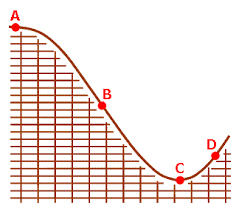
At which point on the roller coaster is the kinetic energy at its maximum?
A
B
C
D
If you had a force (F) of 20N pushing a ball 2 meter (m), what would be the Work (W) being done?
10 Joules
40 Joules
22 Joules
18 Joules
How much work is done when a force of 25 N is applied to move a box 5 meters across a frictionless surface?
5 J
25 J
125 J
0 J
A crane lifts a 500 kg load to a height of 10 meters. How much work is done by the crane? (Assume g = 9.8 m/s²)
49,000 J
5,000 J
9,800 J
50,000 J
Work can be defined as a _____ acting over some amount of _____ to cause a change in _____.
force, distance, energy
force, time, energy
force, time, distance
force, distance, time

George carries a box 6 meters to the right. Find the work done by the man on the 15 kg box.
900 Joules
0 Joules
90 Joules
Which of the following is an example of work?
Holding a bowling ball above your head
A waiter holds a tray of food above his head while traveling 6 meters across a crowded room
A teacher applies a force to a wall to hold up a poster
A puppy pushes a tennis ball 10 meters with his nose
How much work can you do dragging an object in 35 s, if you are exert 393 W of power?
13755 J
11.22857143
0.089 J

When force is used to move an object across a distance, this is called... 
effort
power
energy
work
Bill and Ted both push a crate of mass m crate across a floor with friction at constant speed. Bill pushes the crate d meters in 100 seconds. Ted takes 200 seconds to push the crate the same distance. Which of the following is true?
More power is developed when Ted pushes the crate.
More power is developed when Bill pushes the crate.
An equal, non-zero amount of power is developed in both cases.
Power is not developed in either case since the crate travels at constant velocity in both cases
energy can not be created or destroyed, the total amount of energy in the universe remains constant
Kinetic energy is the kind that can be transferred to other objects during collisions. Check all examples of kinetic energy.
A bowling ball sitting on a rack
A volleyball player spiking a volleyball
A baseball bat swinging at a ball
A bowling ball rolling down the alley
A quarterback BEFORE he throws a ball
What is the potential energy of a rock that has a mass of 10 kg and is sitting on top of a hill 300 m high?
3,000 J
29,400 J
10,000 J
rock has 0 J of potential energy
If a ball is rolling up a hill ... (Check ALL that are true)
it will gain GPE
it will lose KE
it will lose GPE
it will gain KE
Which of the following would increase the amount of potential energy on an object? THINK GPE=mgh
increasing its mass
increasing its distance above the surface
taking it to a planet with a larger "g"
all of these
The SI Unit for power is the ____________, for work is the ___________, for potential energy is the _________, and for kinetic energy is the _________.
watt, joule, kilowatt, joule
watt, joule, volt, joule
joule, watt, joule, joule
watt, joule, joule, joule

Compared to a slow-moving object, a faster-moving object has ___________
more kinetic energy
less kinetic energy
the same amount of kinetic energy
zero kinetic energy
How much power is expended if you lift a 200 N crate 2 meters in 5 seconds?
40 W
80 W
120 W
200 W
The unit of energy is
watt
Joule
Newton
Meter
You walk up the stairs two times. One time slowly, and the other running. Both jobs require the same amount of _______ but different amounts of _________.
Power, Work
Work, Power
Energy, Velocity
Energy, Joules
Calculate the work in lifting a 25 kg sack of potatoes 4 meters. (You need to solve for the weight (the force) of the potatoes first)
100 Joules
980 Joules
10,000 Joules
6.25 Joules
The unit of power is the
second
newton
watt
joule

At which position(s) does the pendulum have maximum gravitational potential energy
Position 1 and 5
Position 1 and 3
Position 5
Position 1
What is the definition of energy?
Energy is the ability to create matter.
Energy is the ability to cause change.
Energy is a type of force.
Energy is the same as power.

Which of the following is an example of gravitational potential energy?
A moving bicycle
A stretched rubber band
A book on a high shelf
A charged battery
Which picture is NOT an example of Chemical PE?
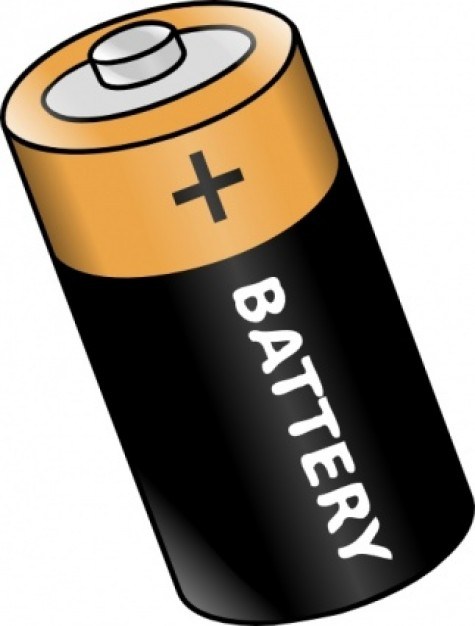


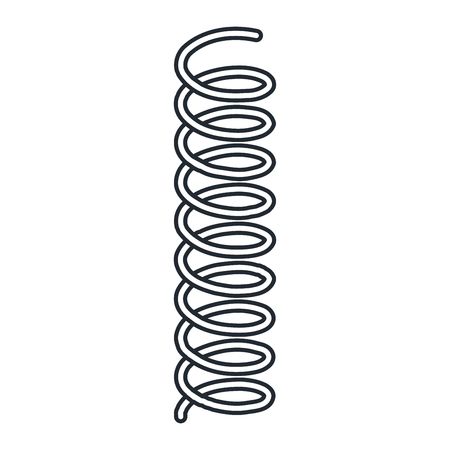
A skateboarder starts at the top of a ramp and rolls down to the bottom. How do the kinetic energy (KE), potential energy (PE), and total mechanical energy (TME) change?
KE increases, PE decreases, TME remains constant
KE decreases, PE increases, TME increases
KE increases, PE increases, TME decreases
KE decreases, PE decreases, TME remains constant
A soccer ball is kicked into the air and reaches its highest point before coming back down. Which statement best describes the energy changes on its way up?
KE increases, PE decreases, TME remains constant
KE decreases, PE increases, TME increases
KE increases, PE increases, TME decreases
KE decreases, PE increases, TME remains constant
If the motor is more powerful, what is the effect on the time it takes to complete a task?
The longer the time it takes to complete the task.
The shorter the time it takes to complete the task.
The greater the amount of work that can be done.
The less energy is required to complete the task.
Which of the following actions will increase the amount of work done on an object?
Pushing the object with the same force over the larger distance.
Pushing the object with a smaller force over the same distance.
Pushing the object the same distance but in less time.
Pushing the object with the same force over a shorter distance.
A machine uses 5000 J of energy, but only 1250 J is converted into useful work. What is the efficiency of the machine?
25%
40%
62,5%
80%
Which of the following will increase KE
moving to a different planet with different gravity
increases the height of the object
increasing the temperature of the object
increasing the mass of the object
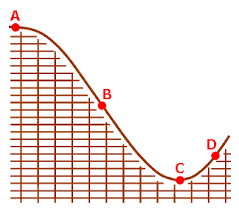
At which point(s) on the roller coaster is the kinetic energy approximately equal to the GPE?

A cheetah can run briefly with a speed of 31.0 m/s. Suppose a cheetah with a mass of 47.0 kg runs at this speed. What is the cheetah’s kinetic energy?
1457 Joules
22,584 Joules
15 Joules
45,167Joules
How much power is required to raise a 30 kg crate a vertical distance of 6 m in a time of 4 seconds?
120 W
52.5 W
441 W
385 W
525 W
_____________ is the rate of doing work.
Conservation of energy
Joules
Energy
Power
Work can also be shown as
W = ΔKEHow do you find ΔKE ?
KEi − KEf
KEf − KEi
KE + KPOP = BbyMtl
42?

Using the equation and diagram given above, determine the final velocity of this cart.
343 m/s
26.19m/s
9.8 m/s
171.5 m/s
A toaster uses 485J of energy. 217J are useful energy. What is the efficiency of the toaster?
2.24%
56.86%
44.74%
39%

Select the bowling ball that has LESS kinetic energy
A diver has 3400J of gravitational potential energy after stepping up onto a diving platform that is 6 meters above the water. What is the divers mass in kilograms?
85.39kg
64.25m
57.82kg
None of the answers are correct

