
 Worksheets
IGCSE PE Exam revision
Total questions: 100
Worksheet time: 56mins
Name the two main muscle groups that enable movement at the knee when running.
Deltoids and pectorals
Quadriceps and hamstrings
Biceps and triceps
Glutes and calves
Name the two main muscle groups that enable movement at the knee when running.
Deltoids and pectorals
Quadriceps and hamstrings
Biceps and triceps
Glutes and calves
Name the main muscle fiber type used by a sprinter.
Fast twitch
Type 1
Slow twitch
Type 2
Describe the main characteristics of the main muscle fiber used by a sprinter and the main muscle fiber used by a long distance runner.
Fast twitch fibers generate high levels of force, slow twitch fibers fatigue quickly
Fast twitch fibers use anaerobic energy supply, slow twitch fibers require oxygen
Fast twitch fibers use aerobic energy supply, slow twitch fibers have high levels of endurance
Fast twitch fibers fatigue quickly, slow twitch fibers use anaerobic energy supply
State two functions of the skeleton.
Protection and red blood cell production
Assisting with movement and shape
Blood cell production and movement
Support and muscle attachment
Name the type of movement taking place at the knee joint of the kicking leg between diagram a and diagram b.
Adduction
Abduction
Extension
Flexion
Name the type of movement taking place at the knee joint of the kicking leg between diagram a and diagram b.
Adduction
Abduction
Extension
Flexion
Name a different type of movement that occurs at the elbow joint.
Flexion
Extension
Adduction
Abduction
Explain the difference in stability between the elbow joint and the shoulder joint.
Shoulder is more stable due to ligament arrangement, Elbow is less stable due to more planes of movement
Elbow is more stable due to ligament arrangement, Shoulder is less stable due to more planes of movement
Shoulder is more stable due to more planes of movement, Elbow is less stable due to ligament arrangement
Elbow is more stable due to more planes of movement, Shoulder is less stable due to ligament arrangement
State two bones in the arm.
Femur and tibia
Patella and scapula
Radius and ulna
Humerus and fibula
Name the main muscle fiber type used by the athlete when jumping.
Fast twitch
Slow twitch
Type 1
Type 2
Describe how flexion occurs at the knee joint, naming the agonist and antagonist.
Triceps is the agonist and biceps is the antagonist, Triceps contracts and biceps relaxes
Quadriceps is the agonist and hamstrings is the antagonist, Quadriceps contracts and hamstrings relaxes
Hamstrings is the agonist and quadriceps is the antagonist, Hamstrings contracts and quadriceps relaxes
Biceps is the agonist and triceps is the antagonist, Biceps contracts and triceps relaxes
Fruits, breads and starchy vegetables are all examples of...
fats
carbohydrates
proteins
Aerobic respiration...
requires oxygen
does not require oxygen
Anaerobic respiration...
requires oxygen
does not require oxygen
Where is excess glucose stored?
skeletal muscles and liver
skeletal muscles and kidneys
liver and cardiac muscles
Excess glucose converts to...
lactic acid
glycogen
phospholipids
glycerol
Which performers may use carbohydrate loading?
long-distance runners
rowers
cyclists
swimmers
sprinters
Tiny blood vessels that surround the alveoli are called
alveoli
capillaries
bronchi
bronchioles
Bones that surround and protect your lungs and heart.
ribs
diaphragm
pleura
larynx
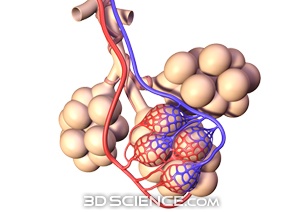
The drawing in of breath; inhalation.
Inspiration
Expiration
Breathing out; exhalation of breath.
Inspiration
Expiration
Gaseous exchange happens because of...
Osmosis
Respiration
Diffusion
Semi-permeable membranes
Diffusion is...
Movement of gas from an area of high concentration to high
Movement of gas from an area of high concentration to low
Movement of gas from an area of low concentration to high
Movement of gas from an area of low concentration to low
Air arriving in the alveoli has a...
Higher concentration of carbon dioxide (CO2) and a lower concentration of oxygen (O2)
Higher concentration of oxygen (O2) and a lower concentration of carbon dioxide (CO2)
What is gaseous exchange?
The movement of Oxygen and Carbon Dioxide between the bronchi and pulmonary artery
The movement of Oxygen and Carbon Dioxide between the alveoli and bloodstream
The movement of Oxygen and Carbon Dioxide between the heart and lungs
The movement of Oxygen and Carbon Dioxide between the nasal cavity and heart
What is the main function of the muscular system?
Regulate body temperature
Enable movement
Support the nervous system
Digest food
Why is proper nutrition important for athletes?
Athletes do not need to worry about hydration as it does not affect their performance
Proper nutrition is not important for athletes as they can perform well without it
Nutrients in food have no impact on an athlete's recovery time
Proper nutrition is important for athletes because it provides the necessary energy, nutrients, and hydration to fuel their performance, support recovery, and enhance overall health.

What muscles is highlighted?
Deltoid
Trapezius
Tricep
Pectoralis
The correct word equation for aerobic respiration is
carbon dioxide + water (+ energy) → glucose + oxygen
water + oxygen → carbon dioxide + glucose (+ energy)
glucose + oxygen → carbon dioxide + water (+ energy)
glucose + water → carbon dioxide + water (+ energy)


What type of contraction is happening here??
isostabilize
isokinetic
isotonic
isometric


quadriceps

Which one of the following is a key characteristic of Fast Twitch X muscle fibers?
They are Red in color, meaning they contain a lot of mitochondria
They contract rapidly with great force but fatigue fast
They are recruited for long duration activities
They contain high numbers of Mitochondria
Define the term agonist.
The muscle which relaxes and lengthens
The contracting muscle which shortens
The biceps
The quadriceps
The balanced energy equation is best described as what?
The mass in kg of food eaten plus the mass of liquid drank
The energy consumed is equal to the energy expended, measured in calories.
The energy expended is greater than consumed, measured in calories.
The energy consumed is greater than the energy expended, measured in calories.
Which answer would best describe weight gain?
The mass of food eaten minus the mass of liquid drank is equal to zero.
The energy consumed is equal to the energy expended, measured in calories.
The energy expended is greater than consumed, measured in calories.
The energy consumed is greater than the energy expended, measured in calories.
What would be the result of calories eaten being less than energy expended?
Increase in weight gained.
Weight remains the same
Decrease in weight gained.
Fluctuating weight.
Maintaining a healthy requires......what?
Requires a balance of energy in and energy out.
Requires you to eat protein and fats
Requires you to eat carbohydrates and protein
Requires you to eat only vegetables
Consuming more calories does what?
Makes the body store fat.
Makes the body use stored fat
Makes the body reject food
Makes the body reject fat
Eating too little calories on a regular basis will result in.... what?
A good diet
A loss of weight
Weight gain
A balanced diet
What are the 5 main nutients our bodies require?
Proteins
Water
Fats
Minerals
Vitamins
Carbohydrates
Proteins
Fats
Minerals
Vitamins
Fats
Protein
Minerals
Carbohydrates
Water
Minerals
Vitamins
Carbohydrates
Water
Fats
What type of joint allows for the greatest range of motion?
Pivot joint
Ball and socket joint
Fixed joint
Hinge joint
What is physical fitness?
The ability to do everyday tasks without getting tired.
The way your body adapts to the stress of exercise.
Any physical activities that improves your ability to complete tasks.
All of the above.
Which nutrient is described here - 'transports nutrients to cells and assists with removing waste products from the body.'
Carbohydrates
Fats
Proteins
Water
Which nutrient is described here - 'provides the body's main source of energy needed for physical activity, brain function and operation of organs.
Carbohydrates
Fats
Protein
Water
Which nutrient is described here - 'main function is to help body cells grow and repair cells and muscle tissue. Accounts for about 15% of energy intake.'
Carbohydrates
Fats
Protein
Water
The following foods are considered 'good sources' of which nutrient - Avocado, eggs, vegetable oil, nuts
Carbohydrates
Fats
Protein
Water
A (a) diet contains all the nutrients in the right proportions to stay healthy.
Which of the following factors may impact on the energy demands of the individual? Check all that apply.
Where they live
Gender
What foods they enjoy
Age
Lifestyle
Which individual would likely have the highest energy demands?
Active teenage male
Inactive 40 year old female
Active 10 year old boy
Active teenage female
A boxer who needs to drop a couple of kilos before weigh in is an example of what type of energy relationship?
Calories eaten < Calories burned
Calories eaten > Calories burned
Calories eaten = Calories burned
A Footballer who wants to maintain strength but not put on weight is an example of what type of energy relationship.
Calories eaten < Calories burned
Calories eaten > Calories burned
Calories eaten = Calories burned
A forward in rugby who wants to put on more muscle mass and weight is an example of what type of energy relationship?
Calories eaten < Calories burned
Calories eaten > Calories burned
Calories eaten = Calories burned
Excess glucose broken down from carbohydrates that is not used is stored as glycogen. Where in the body is the glycogen stored?
Liver
Muscles
Blood
Stomach
Which of these athletes would benefit most from a 'high protein diet'?
Marathon runner
Tennis player
Gymnast
Weight lifter
The following describes what type of diet commonly used by endurance athletes. "Eating excess carbohydrate foods one week before an event to increase glycogen stores in the muscles."
Fat loading
Glycogen loading
Carbohydrate loading
Carbohydrate fasting

Which athlete would benefit from Carbohydrate loading? (Select 2 answers)
Sprinter
Weight lifter
Long distance cyclist
Marathon runner
The following describes what type of diet commonly used by endurance athletes. "Eating excess carbohydrate foods one week before an event to increase glycogen stores in the muscles."
Fat loading
Glycogen loading
Carbohydrate loading
Carbohydrate fasting
A type of lifestyle with no or irregular physical activity.
This includes sitting, reading, watching television, playing video games and computer use for much of the day with little or no vigorous physical exercise.
Active lifestyle
Sedentary lifestyle
Balanced diet
Healthy lifestyle
A state of complete physical, mental and social wellbeing and not merely the absence of disease or infirmity...
Health
Fitness
Performance
Exercise
Increased self esteem/ confidence...
Physical effect of exercise
Emotional effect of exercise
Social effect of exercise
Improved opportunity for friendships...
Physical effect of exercise
Emotional effect of exercise
Social effect of exercise
Belong to a team/ group...
Physical effect of exercise
Emotional effect of exercise
Social effect of exercise
Decreases stress...
Physical effect of exercise
Emotional effect of exercise
Social effect of exercise
Reduced resting blood pressure...
Physical effect of exercise
Emotional effect of exercise
Social effect of exercise
Reduced risk of Coronary Heart Disease (CHD)...
Physical effect of exercise
Emotional effect of exercise
Social effect of exercise
Reduced risk of obesity...
Physical effect of exercise
Emotional effect of exercise
Social effect of exercise
Increased fitness...
Physical effect of exercise
Emotional effect of exercise
Social effect of exercise
Improved body image...
Physical effect of exercise
Emotional effect of exercise
Social effect of exercise
Making friendships...
Physical effect of exercise
Emotional effect of exercise
Social effect of exercise
Reduced risk of osteoporosis...
Physical effect of exercise
Emotional effect of exercise
Social effect of exercise
Fitness is ....
the ability to cope with the demands of the environment
the ability to complete a fitness test
being healthy mentally, socially and physically
being free from injury or disease
Feeling motivated is a.................... of exercise
physical benefit
mental benefit
social benefit
confidence to mix with people is a.................... of exercise
physical benefit
mental benefit
social benefit
being able to cope with stress is a.................... of exercise
physical benefit
mental benefit
social benefit
feeling valued within society is a.................... of exercise
physical benefit
mental benefit
social benefit
which definition matches performance
a form of physical activity that improves health
the ability to meet or cope with the demands of the environment
how well you complete a task
finishing a race or winning a game
Exercise and fitness improve physical, mental and social aspects of health
True
False
Physical, mental & social factors influence our ability to exercise
True
False
It is possible to still be fit despite ill health
True
False
Ill health can cause a decrease in fitness
True
False
What is the function of cartilage?
Acts as a lubricant that reduces friction in the joint; allows for smoother movement and reduces wear and tear.
Surrounds and protects the joint, holding the bones together.
Strong, elastic fibres that hold bones together and keeps them in place
Strong but flexible material found at the end of the bones that acts as a cushion and reduces friction
Produces synovial fluid which lubricates the joint.
What is the function of synovial fluid?
Acts as a lubricant that reduces friction in the joint; allows for smoother movement and reduces wear and tear.
Surrounds and protects the joint, holding the bones together.
Strong, elastic fibres that hold bones together and keeps them in place
Strong but flexible material found at the end of the bones that acts as a cushion and reduces friction
Produces synovial fluid which lubricates the joint.
What is the function of the synovial membrane?
Acts as a lubricant that reduces friction in the joint; allows for smoother movement and reduces wear and tear.
Surrounds and protects the joint, holding the bones together.
Strong, elastic fibres that hold bones together and keeps them in place
Strong but flexible material found at the end of the bones that acts as a cushion and reduces friction
Produces synovial fluid which lubricates the joint.
What is the function of the ligaments?
Acts as a lubricant that reduces friction in the joint; allows for smoother movement and reduces wear and tear.
Surrounds and protects the joint, holding the bones together.
Strong, elastic fibres that hold bones together and keeps them in place. Acts as a stabiliser.
Strong but flexible material found at the end of the bones that acts as a cushion and reduces friction
Produces synovial fluid which lubricates the joint.
What is the function of the joint capsule?
Acts as a lubricant that reduces friction in the joint; allows for smoother movement and reduces wear and tear.
Surrounds and protects the joint, holding the bones together; made up of out fibrous membrane and an inner synovial membrane.
Strong, elastic fibres that hold bones together and keeps them in place
Strong but flexible material found at the end of the bones that acts as a cushion and reduces friction
Produces synovial fluid which lubricates the joint.

