
 Worksheets
untitled
Total questions: 62
Worksheet time: 1hrs 24mins
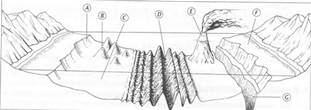
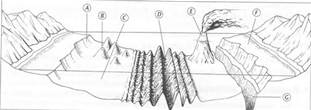
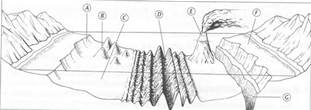
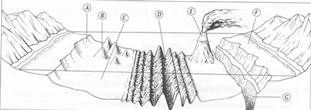
What are volcanic islands?
Gently sloping, shallow area
Mountains that reach the ocean surface
A geyser on the ocean floor
Underwater inactive volcanic mountains
What is a seamount?
Continuous underwater mountain range
A geyser on the ocean floor
At the edge of the shelf, the ocean floor drops down an incline
Underwater, inactive volcanic mountains
What is a trench?
Gently sloping, shallow area
A deep, steep-sided canyon at a subduction zone
A smooth and flat area on the ocean floor
At the edge of the shelf, the ocean floor drops down an incline
What is the Mid-Ocean Ridge?
Continuous underwater mountain range
A geyser on the ocean floor
Mountains that reach the ocean surface
Underwater, inactive volcanoes
What is an abyssal plain?
A smooth, flat area on the ocean
Mountains that reach the ocean surface
Gently sloping, shallow area
At the edge of the shelf, the ocean floor drops down an incline
What is a continental shelf?
Gently sloping, shallow area
Underwater, inactive volcanic mountains
A smooth, flat area on the ocean floor
A geyser on the ocean floor
What is a continental slope?
A gently sloping, shallow area
A continuous underwater mountain range
At the edge of the shelf, the ocean floor drops down an incline
Underwater, inactive volcanic mountains
The amount of matter in a given space or volume
Atmospheric Movement
Climate
Density
Convection
Heat transfer caused by the rising of hotter, less dense fluids and the falling of cooler, denser fluid
Atmospheric Movement
Climate
Density
Convection
Saltiness or dissolved salt content of a body of water
Salinity
Rotation
Temperature
Climate


Surface Ocean currents are primarily caused by
temperature and salinity
wind
convection
continental drift
Deep Ocean currents are primarily caused by
temperature and salinity
wind
gravity
precipitation
What effects density of ocean water?
salinity and temperature
temperature and speed of a wave
salinity and size of a wave
size and speed of a wave
What would cause the surface of the ocean to have a higher salinity?
the flowing of a river into the ocean
low rates of evaporation and high rates of
precipitation
the melting of sea ice
high rates of evaporation and low rates of
precipitation
Which is NOT a factor of wave size?
Length of time the wind blows
Temperature of the wind
Distance the wind blows
Speed of the wind
What is the main cause of Ocean Waves?
Sunlight
Density differences
Wind
Canon Balls

What is wavelength in this image?
5 cm
10cm
15 cm
0 cm
What is a crest?
a disturbance that transfers energy from one place to another.
The highest point or peak of a wave
The lowest point, or valley, of a wave
A wave that travels in the same direction as the disturbance
What is a trough?
The lowest point, or valley, of a wave
A wave that travels in the same direction as the disturbance
The highest point or peak of a wave
Wave in which particles of the medium vibrate at right angles to the direction that the wave travels
Waves transfer _________.
Energy
Matter
Candy
Boats

The distance between two consecutive crests.
Wavelength
Medium
Frequency
LIne of Origin

On this wave diagram, what is A?
amplitude
crest
trough
wavelength
On this wave diagram, what is B?
amplitude
crest
trough
wavelength
On this wave diagram, what is C?
amplitude
crest
trough
wavelength
On this wave diagram, what is D?
amplitude
crest
trough
wavelength
How do deep ocean currents form?
The form as warm, dense water sinks and flows beneath cold ocean water.
They form as cold, dense water sinks and flows beneath warm ocean water.
They form as warm, dense water sinks and flows with other warm ocean water.
The wind blows causing the deep ocean currents.
Surface currents always move water in which directions?
clockwise
counter-clockwise
vertically
horizontally
Ocean currents have an effect on which two things
climate and weather
land and sea
temperature and density
equator and poles
Explain the difference between high tide and low tide.
High tide is when the water level is at its highest, and low tide is when it's at its lowest.
High tide occurs due to the gravitational pull of the moon, and low tide occurs when this pull is weakest.
How do gravitational forces from the moon and sun contribute to tides?
Tides occur due to the magnetic pull of the moon and sun, not gravitational forces.
Tides are caused by the rotation of the Earth, not gravitational forces.
Gravitational forces from the moon and sun create earthquakes, affecting tides.
Gravitational forces from the moon and sun create bulges in the Earth's oceans, resulting in tides.
Why do tides occur twice a day?
Tides occur due to changes in atmospheric pressure
Tides are a result of underwater volcanic activity
Tides are caused by the rotation of the Earth
Gravitational pull of the moon and sun on Earth's oceans
What effect does the moon have on the Earth's oceans?
It causes the oceans to freeze and thaw.
It has no significant effect.
It influences the ocean's tides.
It changes the chemical composition of seawater.
What role do ocean currents play in climate regulation?
They have no impact on climate
They transport heat from the equator to the poles
They increase the temperature of the ocean
They decrease global temperatures by absorbing heat
The rise and fall of Earth's waters on its coastlines are called
currents
tides
waves
gravity
A large stream of water that moves through the ocean is called a
longshore drift
current
tide
wave
Tides are caused by the interaction and influence of
the Earth
the Sun
the Moon
gravity
wind
Spring tides and neap tides occur in patterns caused by the
phases of the moon
seasons (fall, winter, etc.)
surface currents
deep sea currents
Which type of tides have a larger tidal range due to the Earth, Moon, and Sun forming a line?
High/Low
Spring
Neap
The movement of deep, cold, nutrient filled water to the surface of the ocean is..
Ocean Current
Upwelling
Deep Currents
Surface Currents
Why is upwelling important?
Upwelling regulates ocean temperature
Upwelling provides nutrient rich water that sustains life
Upwelling controls the tides
Upwelling helps sailors to navigate the seas
Which of the following is associated with downwelling?
nutrient-rich water
oxygen-rich water
Where is the safest place to swim at the beach?
Where it is calm
Close to the beach entry
Between the flags
Closest to the Life Saving Club
What are some signs of a rip (select all that are relevant)
Deeper, darker coloured water
Fewer breaking waves
A rippled surface surrounded by smooth water
Anything floating out to sea, or foamy, sandy water out beyond the waves.

Spot the rip:
1
2
3

What is a high tide?
Sea pulled TOWARD the moon where Earth is CLOSEST to the moon
Sea pulled AWAY from the moon where Earth is FARTHEST to the moon
Sea pulled AWAY from the moon where Earth is CLOSEST to the moon


