
 Worksheets
PAE(12/02/24): Describing Application of Electronic Theory
Total questions: 34
Worksheet time: 17mins
What is mechanical advantage of a mechanical system?
The ratio of output force to input force
The speed of the system
The energy efficiency of the system
The weight of the system
What does electronic circuit theory primarily deal with?
Power distribution
Signal processing and information
Mechanical systems
Chemical reactions
What is the key difference between electronic circuit theory and electric circuit theory?
Electronic circuit theory focuses on power distribution
Electric circuit theory emphasizes controlling signals
Electronic circuit theory emphasizes controlling signals and performing computations
Electric circuit theory deals with chemical reactions
How is an electronic circuit different from an electric circuit?
Electronic circuits use semiconductors, while electric circuits do not.
Electric circuits use semiconductors, while electronic circuits do not.
Both circuits use semiconductors in the same way.
Electronic circuits are only used in power distribution.
How is an electronic circuit different from an electric circuit?
Electronic circuits focus on power distribution and energy transfer.
Electronic circuits use components like transistors and diodes for processing signals.
Electric circuits process and control signals.
Electric circuits use transistors and diodes for signal processing.
What is the function of a transistor in an electronic circuit?
Acts as a switch or amplifier
Stores and releases electrical energy
Allows current flow in one direction
Stores energy in a magnetic field
Which component stores and releases electrical energy?
Transistor
Capacitor
Diode
Inductor
What is the role of a diode in an electronic circuit?
Acts as a switch or amplifier
Stores and releases electrical energy
Allows current flow in one direction
Stores energy in a magnetic field
Which component stores energy in its magnetic field when current flows through it?
Transistor
Capacitor
Diode
Inductor
What is the difference between an inductor and a capacitor?
An inductor stores energy in a magnetic field, while a capacitor stores energy in an electric field.
An inductor stores energy in an electric field, while a capacitor stores energy in a magnetic field.
Both store energy in magnetic fields.
Both store energy in electric fields.
What is the main difference between an inductor and a capacitor?
An inductor stores energy in an electric field and resists changes in voltage, while a capacitor stores energy in a magnetic field and resists changes in current.
An inductor stores energy in a magnetic field and resists changes in current, while a capacitor stores energy in an electric field and resists changes in voltage.
Both store energy in magnetic fields and resist changes in voltage.
Both store energy in electric fields and resist changes in current.
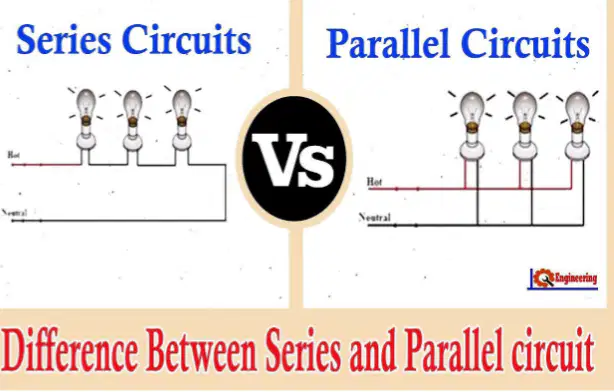
What is a characteristic of components in a series circuit?
Components are connected end-to-end; current flows through all.
Components are connected across the same two points; current divides.
Components are connected in a loop; current stops at each component.
Components are connected randomly; current flows through some.
How does current behave in a parallel circuit?
Current flows through all components equally.
Current divides across the components.
Current stops at each component.
Current flows in a single path.
How would a parallel connection of diodes behave differently from a series connection?
It allows more current to flow through.
It reduces the voltage across each diode.
It increases the resistance of the circuit.
It decreases the overall power consumption.
How does a parallel connection of diodes behave differently from a series connection?
It shares the current between the diodes.
It increases the total forward voltage required for conduction.
It decreases the resistance in the circuit.
It reduces the power consumption.
What is the primary purpose of an amplifier in an electronic circuit?
To decrease the strength of strong signals
To increase the strength of weak signals
To convert AC to DC
To store electrical energy
Which of the following is a key component of an amplifier?
Resistor
Capacitor
Transistor
Inductor
What is the primary purpose of an amplifier in an electronic circuit?
To increase the voltage
To decrease the current
To amplify the signal
To reduce noise
What is the primary purpose of an amplifier in an electronic circuit?
To decrease the strength of a strong signal
To increase the strength of a weak signal without significantly altering its original shape
To convert electrical energy into mechanical energy
To store electrical energy for later use
What is the primary purpose of signal processing?
To create new signals from scratch
To analyze, modify, and synthesize signals
To destroy unwanted signals
To convert signals into images
Which of the following is an example of an analog signal?
Binary code
Sound waves
Morse code
Digital clock display
What does filtering in electronic circuits do?
Strengthens weak signals
Converts signals to binary
Removes unwanted parts of a signal
Increases signal frequency
What is the role of amplification in signal processing?
Weakens strong signals
Converts signals to analog
Strengthens weak signals
Removes noise from signals
What is modulation in the context of signal processing?
Removing noise from signals
Converting one form of a signal to another
Amplifying weak signals
Filtering unwanted signals
How are filters and amplifiers used together to improve sound quality in speakers?
By increasing the volume
By reducing noise
By enhancing bass
By balancing frequencies
How do filters and amplifiers work together to improve sound quality in speakers?
By increasing unwanted frequencies and reducing audio signal
By removing unwanted frequencies and boosting desired audio signal
By decreasing both unwanted and desired frequencies
By amplifying unwanted frequencies and reducing desired audio signal
What is the primary function of an oscillator?
To amplify signals
To generate continuous, periodic signals
To convert AC to DC
To store energy
Which type of oscillator uses resistors and capacitors to generate low-frequency signals?
LC Oscillators
Crystal Oscillators
RC Oscillators
Voltage Oscillators
What type of signals do oscillators typically generate?
Sine waves, square waves, triangular waves
Digital signals
Random noise
Pulsed signals
Where are crystal oscillators commonly found?
Radios
Digital watches and computers
Televisions
Mobile phones
How do LC oscillators generate high-frequency signals?
By using resistors and capacitors
By using inductors and capacitors
By using quartz crystals
By using transistors
Which of the following is an example of a device that contains an oscillator?
Microwave
Smartphone
Refrigerator
Washing machine
Which device is an example of one that contains an oscillator?
Microwave oven
Digital clock
Refrigerator
Washing machine
What does a digital clock use to generate a stable frequency?
Mechanical gears
Crystal oscillator
Solar panel
Battery

