
 Worksheets
CHEMISTRY FUCN TEST
Total questions: 83
Worksheet time: 14mins


100 °C = _____ K
173 K
373K
273 K
0 K
Convert: 253 °C to K:
526 K
625 K
0 K
186 K
Convert: 0 K to °C
-273 °C
-273 K
273 °C
273 K
Convert: 186.5 K to °C
-86.4 °C
-50 °C
-68.4 °C
180 K
Convert: -45.9 °C to K:
227.1 K
400 K
0 K
Convert: 175 K to °C:
-98 °C
79 K
230.9 °C
-48.2 °C
As the temperature of a substance rises, the average kinetic energy of the particles making up the substance
increases
decreases
remains the same
A liquid's freezing point is -38°C and its boiling point is 357°C. How many Kelvins are there between the boiling point and the freezing point of this liquid?
319
357
395
592
Which temperature is equal to 20 K?
-253°C
-293°C
253°C
293°C
Absolute zero
indicates the complete absence of heat/energy
is the coldest possible temperature
is when all molecular motion stops
All of the above
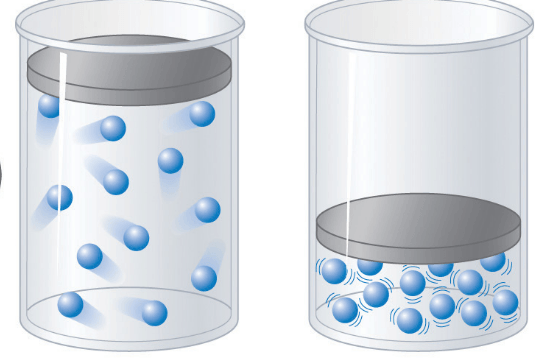

Hint: Boyle's Law
1 atm=101.325 kPa
The molar volume of a gas at STP occupies _____________.
22.4 L
0˚C
1 kiloPascal
12 grams
In a double replacement, ____________________
The reactants are usually a metal and a nonmetal
One of the reactants is often water
The reactants are generally 2 ionic compounds in aqueous solutions
Energy in the form of light or heat is often produced
If 2.00 L of a gas in a container at room temperature exerts a pressure of 4.00 atm. If the pressure doubles and the temperature remains the same, the volume would become ________.
16.0 L
2.00 L
4.00 L
1.00 L
If 7.00 grams of nitrogen gas are contained in a 5.00 L flask at 4.62 kPa. What is the temperature of the gas?
11.1 K
1.00 K
4.12 K
9.07 K
Which of the following statements is NOT true about what happens in all chemical reactions?
The ways in which atoms are joined together change
New atoms are formed as products
The starting substances are called reactants
The bonds of reactants are broken and new bonds of products are formed
Chemical equations must be balanced to satisfy ____.
The law of definite proportions
The law of multiple proportions
The law of conservation of mass
Avogadro's principle
What are the coefficients that will balance the skeleton equation below?
AlCl3 + NaOH → Al(OH)3 + NaCl
1,3,1,3
3,1,3,1
1,1,1,3
1,3,3,1
A sample of gas occupies 52.0 mL at 20℃ and 1.00 atm. What volume will it occupy at 40℃ and 1.00 atm?
62.4 mL
44.8 mL
55.5 mL
48.7 mL
How many moles of aluminum are needed to react completely with 1.2 mol of FeO?
2Al(s) + 3FeO(s) → 3Fe(s) + Al2O3(s)
1.2 mol
0.8 mol
1.6 mol
2.4 mol
What is the name of H2SO4?
hyposulfuric acid
hydrosulfuric acid
sulfuric acid
sulfurous acid
Which of the following shows both the correct formula and correct name of an acid?
HClO2, chloric acid
HNO2, hydronitrous acid
H3PO4, phosphoric acid
HI, iodic acid
When an equation is used to calculate the amount of product that could form during a reaction, then the value obtained is called the ____.
Actual yield
Percent yield
Minimum yield
Theoretical yield
The equation 2C3H7OH + 9O2 → 6CO2 + 8H2O is an example of which type of reaction?
Combustion reaction
Single replacement reaction
Double replacement reaction
Decomposition reaction

The table shows the composition of the gases that make up dry air. What is the partial pressure of the “other” gases?
0.99 kPa
2.55 kPa
3.01 kPa
4.49 kPa
Why does a collision with an airbag (a gas-filled bag) hurt less than a collision with a steering wheel (a solid)?
Particles of a gas have less mass than particles of a solid
Particles of a gas are smaller than particles of a solid
Gases are more chemically reactive than solids
Particles of a gas are spread apart and compressible, while particles of a solid are held firmly in one position
A process that absorbs heat is a(n) _________.
Exothermic process
Polythermic process
Endothermic process
Ectothermic process
The specific heat of ethanol is 2.44J/g˚C. How many kilojoules of energy are required to heat 50.0g of ethanol from -20.0˚C to 68.0˚C?
10.7 kJ
8.30 kJ
2.44 kJ
1.22 kJ
Which is an exothermic process?
Ice melting
Water boiling
Water evaporating
Water vapor condensing
Which is the most likely ∆H for an endothermic reaction?
0 kJ
-16 kJ
+16 kJ
There is no such thing as an endothermic reaction

The reaction shown is an ________________ reaction because it has a _____________ enthalpy.
Exothermic; negative
Exothermic; positive
Endothermic; negative
Endothermic; positive

Look at this picture of Argon off the periodic table. Which of the following is true for this element?
18 protons
40 protons
22 protons
21.9 protons

Look at this picture of Argon off the periodic table. Which of the following is true for this element?
18 neutrons
40 neutrons
22 neutrons
21.9 neutrons

Look at this picture of Argon off the periodic table. Which of the following is true for this element when it is neutral?
18 electrons
40 electrons
22 electrons
21.9 electrons
Which part of an atom is used to identify it?
number of protons
number of neutrons
number of electrons
When you two atoms with different masses, Carbon-12 and Carbon-13 for example, what type of atom do you have?
Neutral atom
Ion
Isotope
When you two isotopes of an atom, Carbon-12 and Carbon-13 for example, what has changed in the atomic structure?
Number of protons
Number of neutrons
Number of electrons
When you have an ion of an atom, O-2 for example, what has changed in the atomic structure?
Number of protons
Number of neutrons
Number of electrons
When you have a negative ion of an atom, O-2 for example, do you have a higher number of protons or electrons?
Number of protons
Number of electrons
When you have a positive ion of an atom, Na+1 for example, do you have a higher number of protons or electrons?
Number of protons
Number of electrons
Which of the following is correct?
Protons are positive, electrons are negative, neutrons are neutral.
Protons are neutral, electrons are negative, neutrons are positive
Protons are negative, electrons are positive, neutrons are neutral
Protons are positive, electrons are neutral, neutrons are negative
Al+3
This is an...
Neutral atom
ion
isotope
Al+3
The +3 tell you the
number of protons.
atomic mass.
charge of the atom.
Iodine-131
The -131 tells you the
number of protons.
atomic mass.
charge of the atom.
The atomic mass of an atom is equal to
number of protons plus number of neutrons
number of protons plus number of electrons
number of electrons plus the number of neutrons
What two subatomic particles must be equal for an atom to have no charge (neutral).
protons and neutrons
protons and electrons
electrons and neutrons

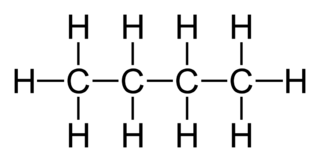
C3H8

Hydrocarbons burning is an example of what type of chemical reaction ?
neutralisation
endothermic
addition
exothermic
C5H12 + Br2 --> C5H11Br + HBr
This reaction is called____________________.
Substitution
Addition
Cracking
Combustion

